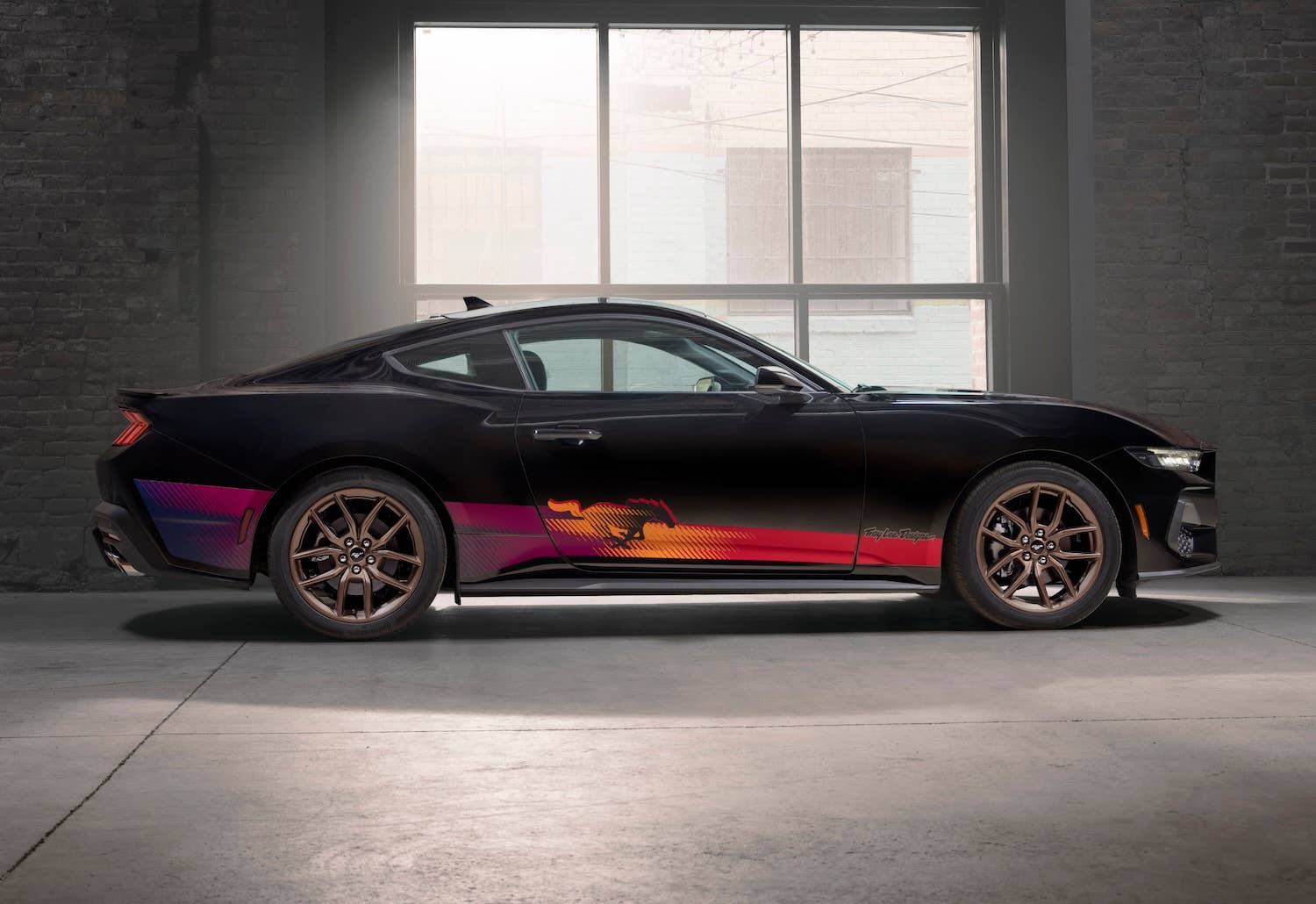
Ford is offering a limited-run 2026 Mustang TLD Signature Edition with just 550 units and a $3,000 appearance package; orders open March 27 and deliveries begin later this year. The package is based on the EcoBoost Premium coupe (unchanged 2.3L turbo engine) but adds GT exterior elements, unique Carmine Red interior and numbered dash badges. This is a low-volume, branding-driven product play likely to support dealer traffic and margin on options but has negligible impact on Ford’s broader financials.
Low-volume, design-led special editions are almost never material to OEM P&L on a standalone basis, but they act as high-ROI marketing and inventory-allocation levers. The real beneficiaries tend to be downstream: franchised dealers capture higher per-vehicle gross via option attach and service demand, while aftermarket/parts channels see incremental SKU lift when unique trim requires replacements or customization.
Watch for two timing windows: immediate order-cycle sentiment (days–weeks) and delivery/aftermarket monetization (quarters). Near-term equity moves will be driven by headline demand and social-media scarcity narratives; medium-term P&L effects surface through dealer margins, certified-pre-owned pricing, and service revenue in quarterly results. A reversal can come from macro consumer pullback or if allocation logistics create negative customer experiences that dent brand goodwill.
Consensus tends to treat these programs as marketing noise; the under-appreciated outcome is concentrated dealer-level economics and arbitrage in the used market that can meaningfully boost dealership cashflow per unit for a season. Monitor three metrics over the next 3–9 months: dealer retail gross per unit, CPO resale spreads for the model family versus segment, and option penetration for mid-tier trims — these will determine whether the halo stays cosmetic or converts to earnings leverage.
AI-powered research, real-time alerts, and portfolio analytics for institutional investors.
Overall Sentiment
mildly positive
Sentiment Score
0.18
Ticker Sentiment
