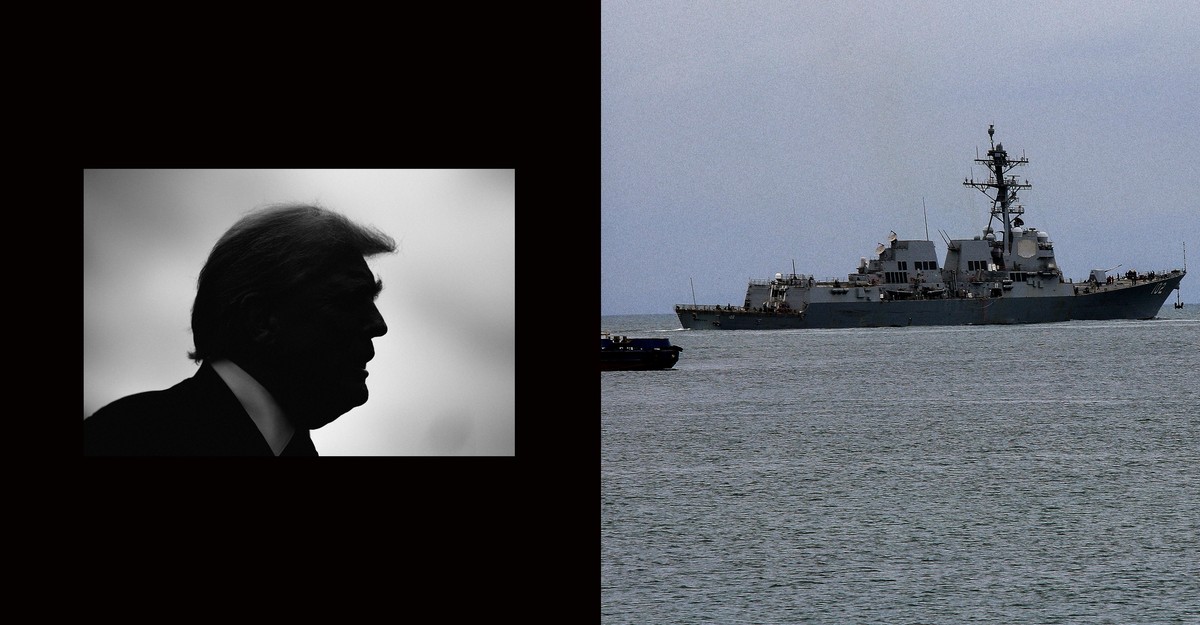
The article critiques the Trump administration's military strikes on suspected drug boats in the Caribbean, which have resulted in numerous fatalities and are questioned by legal experts for their legality and constitutionality. Critics argue these actions bypass due process, often target impoverished individuals rather than high-level traffickers, and are ineffective in curbing drug flow while hindering intelligence gathering. The piece suggests a potential underlying motive of Venezuelan regime change and warns that these extrajudicial killings undermine the rule of law, civil liberties, and constitutional checks, setting a dangerous precedent.
The Trump administration's military strikes in the Caribbean, targeting suspected drug boats, have resulted in at least 27 fatalities and are facing significant legal scrutiny from experts who deem them illegal or legally suspect. Despite a Harris survey indicating 71% public support for destroying drug-carrying boats, these actions bypass due process, raising concerns about the rule of law.
Evidence suggests these strikes often target impoverished fishermen, not high-level "narcoterrorists" as claimed, with a May 2025 Ohio State University analysis indicating crews are frequently coerced or economically desperate. Furthermore, the efficacy of these strikes in curbing drug flow is questioned, as fentanyl is not primarily trafficked via Caribbean boats, and traditional interdiction methods yield valuable intelligence, as noted in a 2025 DHS report.
The New York Times and Miami Herald suggest an underlying geopolitical motive: undermining Venezuela's Maduro regime by disrupting drug revenue, with NBC reporting potential strikes inside Venezuela. This shift from interdiction to lethal force, potentially for regime change, bypasses constitutional war powers and judicial oversight.
While the actions carry an "extremely negative" sentiment due to legal and ethical concerns, the associated market impact score is a low 0.15, suggesting limited direct financial market implications for broad institutional portfolios. However, the precedent set threatens civil liberties and the constitutional framework, posing long-term systemic risks.
AI-powered research, real-time alerts, and portfolio analytics for institutional investors.
Request DemoOverall Sentiment
extremely negative
Sentiment Score
-0.85
Ticker Sentiment
