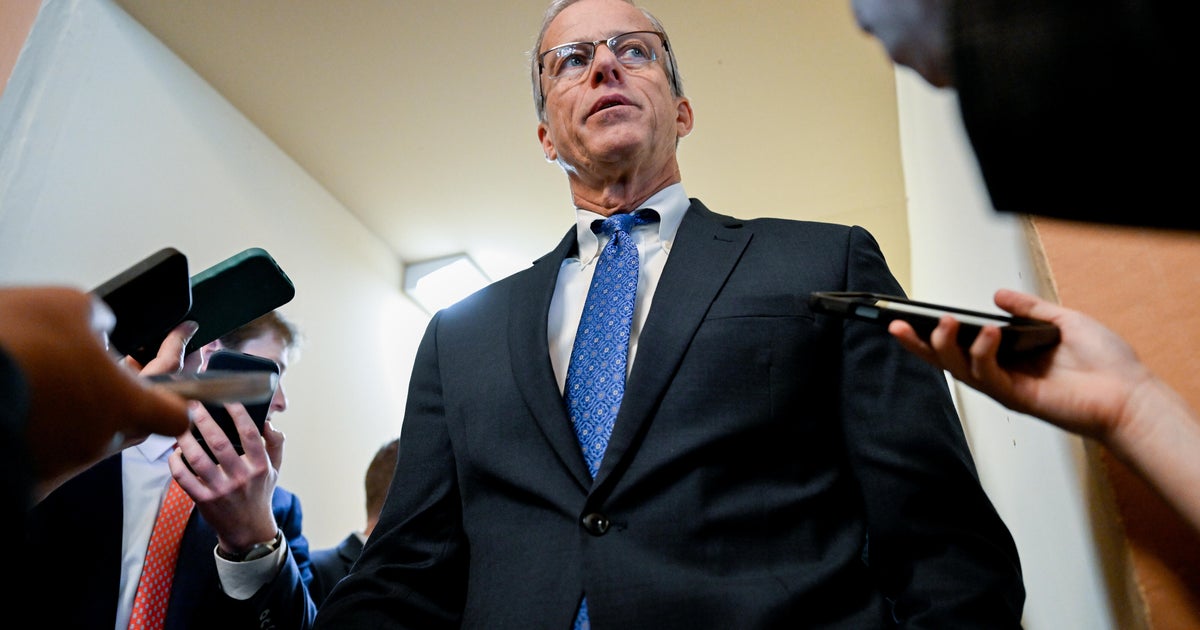
The 38-day Department of Homeland Security shutdown remains unresolved after President Trump urged Republicans to link DHS funding to the SAVE America Act (voter ID and proof-of-citizenship), a move that disrupted bipartisan negotiations and which Senate Majority Leader Thune called unrealistic. TSA staffing shortfalls have worsened—workers unpaid, long security lines, ICE agents redeployed—and Democrats continue to push to fund TSA and other non-ICE components separately while negotiations continue ahead of a scheduled two-week Senate recess.
The current DHS appropriations impasse materially raises the probability of a bifurcated funding outcome: a short-term continuing resolution (CR) to cover 'non-enforcement' components and a separate reconciliation/appropriations route for immigration enforcement. Assign ~60% odds to a split-CR within 7–14 days, ~30% to a contained, multi-week negotiation that preserves overall funding levels, and ~10% to a protracted deadlock exceeding 30 days; each path creates different revenue timing for federal vendors and local service providers.
Second-order winners will be vendors whose revenue is tied to modular, quickly re-contractable enforcement work (software, analytics, systems integrators) because a reconciliation route concentrates larger, backloaded contract awards; losers are organizations paid on daily operations and ancillary consumer-facing businesses that suffer margin hits from episodic operational friction. Expect municipal short-term liquidity to feel pressure at the margin: smaller airports and local governments that rely on predictable DHS pass-throughs can see commercial paper and GO/tax anticipation note spreads widen by 10–30 bps if the impasse lingers beyond two weeks.
Near-term market catalysts are procedural: breakpoints are the Senate’s recess schedule (end of week), floor maneuvers by GOP leadership, and any pivot to an omnibus or targeted CR. Tail risk is political linkage of unrelated legislation which would extend duration risk into months and materially raise volatility in security/defense contractors; conversely, a clean CR would rapidly compress risk premia in short-dated cashflows and reverse much of the immediate dislocation.
AI-powered research, real-time alerts, and portfolio analytics for institutional investors.
Request DemoOverall Sentiment
mildly negative
Sentiment Score
-0.30
