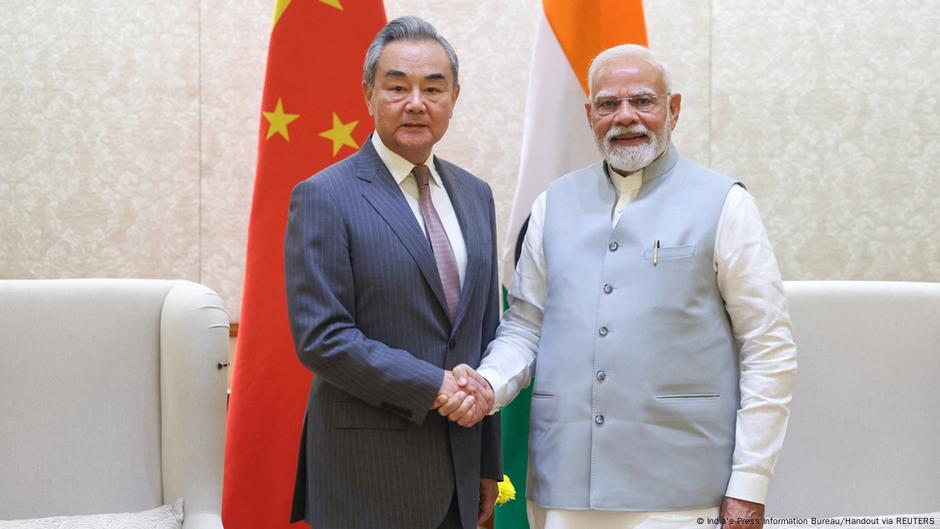
Indian Prime Minister Narendra Modi and Chinese Foreign Minister Wang Yi met, signaling significant progress in bilateral relations and agreeing to resume direct flights, expand trade, and ease visa rules after years of strained ties. This diplomatic thaw, which includes PM Modi's upcoming visit to China for the SCO summit, follows a 2020 border clash and occurs amidst increased U.S. tariffs on India, suggesting a potential recalibration of India's geopolitical and economic alignments.
A significant diplomatic thaw is underway between India and China, marked by a high-level meeting in New Delhi and concrete agreements to normalize economic and travel links. Both nations have committed to resuming direct flights, suspended since 2020, expanding trade and investment, reopening three border trade points, and easing visa rules. This progress, described by Prime Minister Modi as "steady," follows years of strained relations since a deadly 2020 border clash. The upcoming visit of PM Modi to China for the Shanghai Cooperation Organization (SCO) summit, his first in seven years, underscores a mutual commitment to restoring high-level engagement and stability. This rapprochement is developing against the backdrop of increased trade friction between India and the United States due to US tariff policies, suggesting a potential strategic recalibration by New Delhi that could reshape regional trade flows and alliances.
AI-powered research, real-time alerts, and portfolio analytics for institutional investors.
Request DemoOverall Sentiment
strongly positive
Sentiment Score
0.70
