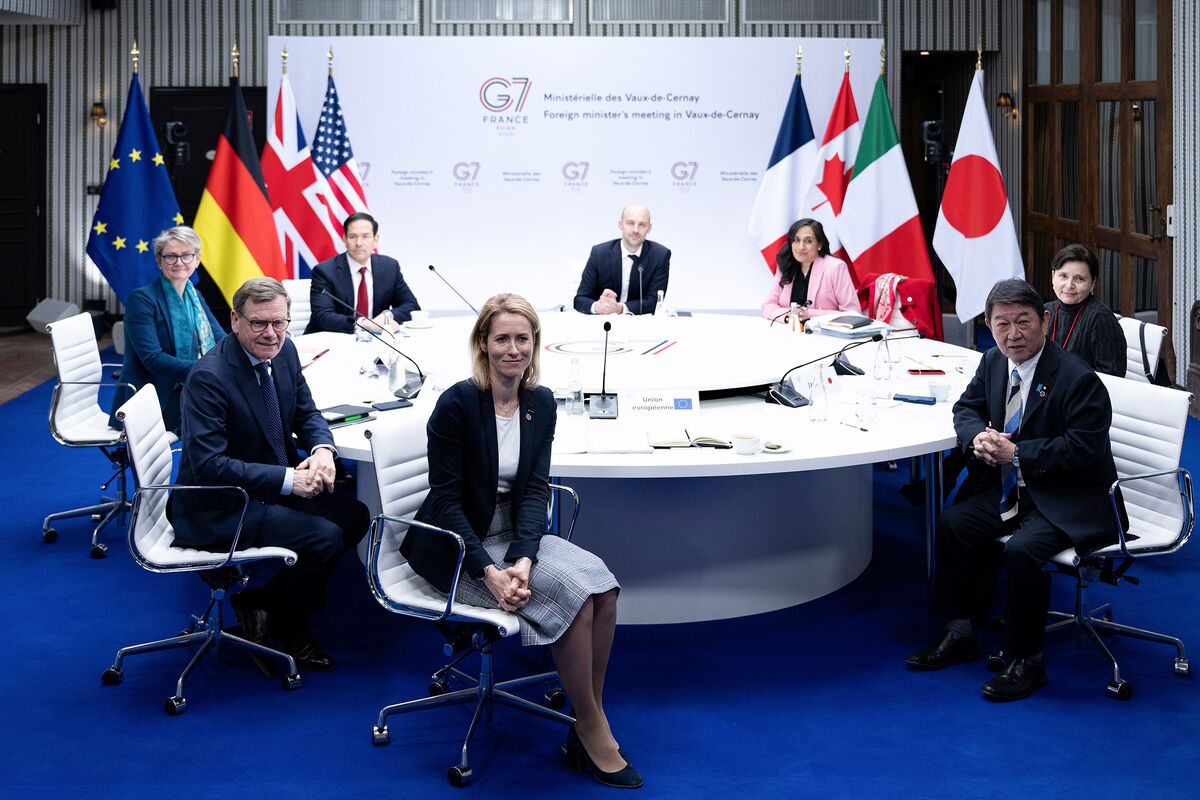
Rubio's visit to the G-7 comes as allies are resisting U.S. calls to join a fight in Iran, highlighting a weakening consensus among major democracies. The meeting outside Paris and commentary that the post-1975 order is fraying increase geopolitical uncertainty and could complicate coordinated sanctions, defense cooperation and diplomatic responses. Investors should monitor potential impacts on defense contractors and energy markets if splits deepen or escalate policy responses.
The fragmentation among traditional allies shifts the immediate market mechanism from collective kinetic responses to economic and covert levers — sanctions, export controls, cyber operations and maritime risk. That change favors firms providing ISR, cyber, logistics/insurance and precision munitions components where contract-visibility is multi-quarter to multi-year, and penalizes globalized supply chains whose margin is sensitive to route disruption and insurance spikes.
Second-order effects will show up in trade flows and procurement timelines: expect freight insurance premia and rerouting costs to lift regional shipping breakevens by an incremental 10–20% over 3–6 months, compressing margins for exposed importers and OEMs; conversely, small-cap specialized suppliers with export licenses but onshore production can see order books expand within 12–24 months. A single unilateral escalation remains a tail risk with a market reaction measured in days; more likely is a protracted period of fragmented policy that ratchets defense and surveillance budgets over 1–3 years.
Consensus is under-pricing the structural shift toward persistent non-kinetic tools. Markets price headline risk but not the multi-year procurement and reshoring cycles that follow sustained alliance reticence — a 10–20% valuation re-rating for select defense/ISR suppliers is plausible if budgets remain elevated for 2–3 years. For consumer-tech names tied to discretionary ad and engagement, the near-term impact is idiosyncratic and low-probability; use tactical hedges rather than directional exposure increases.
AI-powered research, real-time alerts, and portfolio analytics for institutional investors.
Overall Sentiment
mildly negative
Sentiment Score
-0.25
Ticker Sentiment
