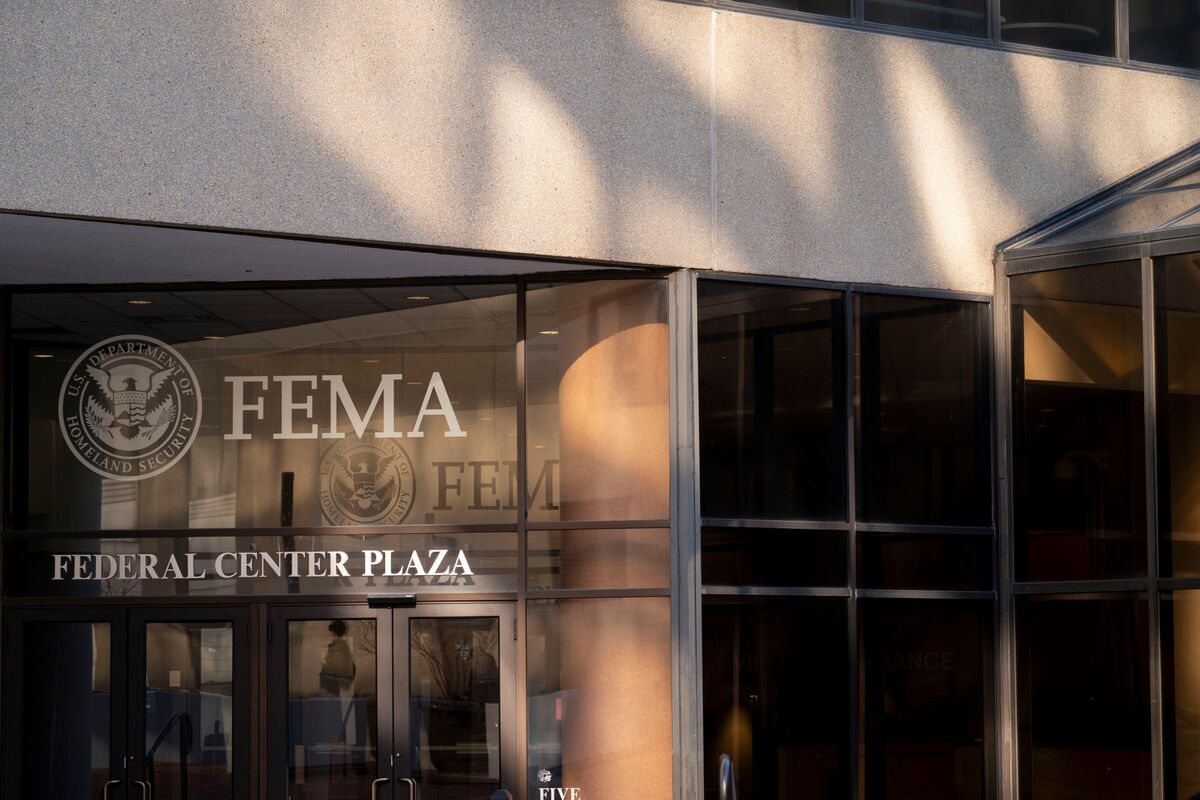
FEMA has instructed roughly 14 employees who were placed on paid administrative leave after signing a whistleblower letter criticizing President Trump’s cuts to disaster funding to return to work, following internal probes that the agency says have concluded. The employees, represented in part by the Government Accountability Project, had filed complaints with the Office of Special Counsel; one employee had already been dismissed. The episode raises governance and legal scrutiny around FEMA’s disaster-response staffing and budgetary criticisms but is unlikely to have direct market implications.
Market structure: Operational disruption at FEMA is a governance signal rather than a demand shock: direct beneficiaries are private insurers/reinsurers and emergency-contracting firms who can capture shifted federal work or higher pricing; losers are short-duration municipal credits in hurricane-prone states and smaller FEMA-dependent contractors. Expect a modest re-pricing: insurance premium rate hikes of 1–3% and contractor margin volatility ±200–400 bps over 6–12 months if federal funding remains uncertain.
Risk assessment: Tail risks include a major natural disaster coinciding with constrained FEMA funding (low-probability, high-impact) that would force surprise fiscal transfers or large insurer losses within 0–90 days; regulatory/legal tail from whistleblower litigation could raise compliance costs ~0.5–1% of operating expenses for FEMA contractors over 12–24 months. Hidden dependencies: election-driven budget cycles and FY26 appropriations (Dec–Mar voting window) materially alter outcomes; a single hurricane season can accelerate policy and pricing shifts.
Trade implications: Near-term (days–weeks) expect muted market moves; over 3–12 months scale into insurers/reinsurers and risk-management brokers while hedging regional muni exposure. Preferred instruments: long top-tier P&C insurers (CB, TRV) and reinsurer brokers (MMC) sized 1–3% each, offset by 3–6 month puts on broad muni ETF (MUB) sized 1–2% notional. Options for catastrophe spikes: buy 3–6 month OTM calls on CB/TRV for convexity and 1–2% allocation to CAT-bond ETFs if available.
Contrarian angle: Consensus treats this as political noise; it underestimates demand for private risk transfer and compliance spend — a 5–10% revenue tailwind to brokers/insurers is possible if FEMA funding is cut. The overreaction risk is that insurers already price catastrophe exposure; mispricing pockets exist in regional munis and smaller FEMA contractors where liquidity is thin and volatility can be >2x broader market during funding debates.
AI-powered research, real-time alerts, and portfolio analytics for institutional investors.
Request DemoOverall Sentiment
mildly negative
Sentiment Score
-0.25
