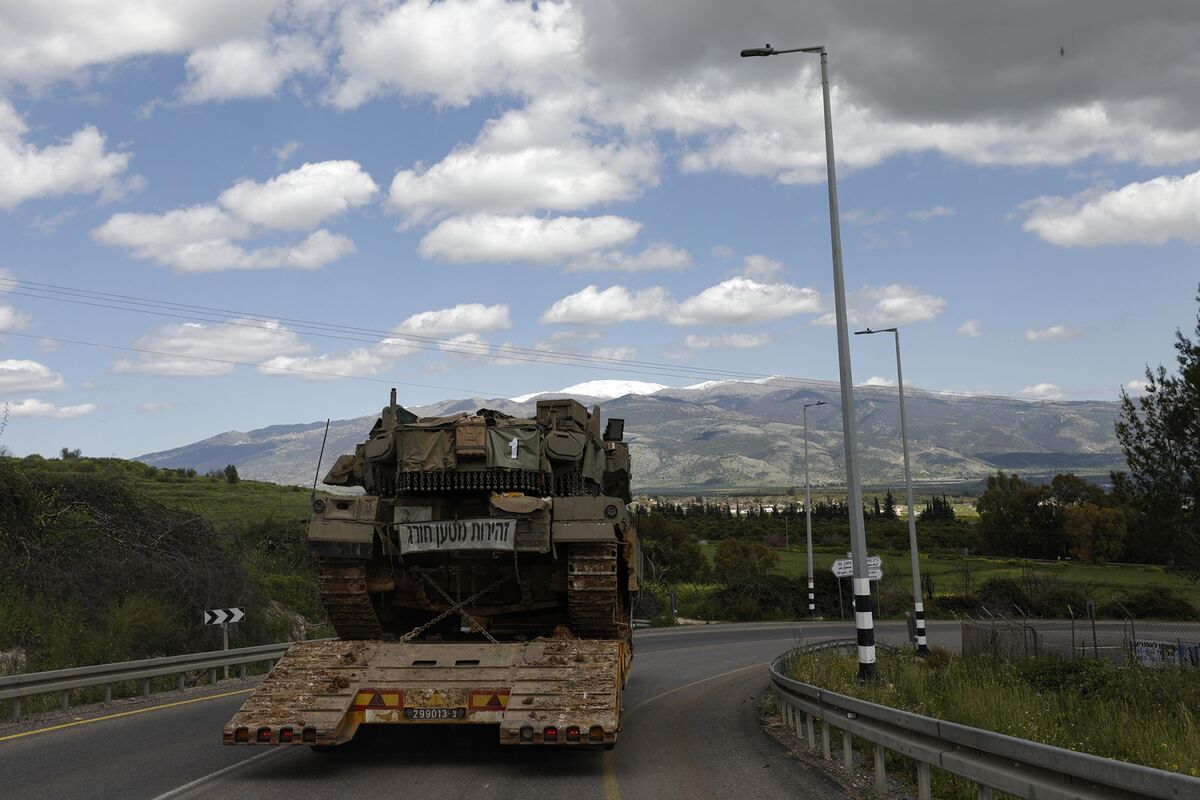
Israel announced it will establish a security zone inside southern Lebanon up to the Litani River (~30 km from the border) and prevent more than 600,000 residents from returning to their homes. The move materially raises regional geopolitical risk, likely prompting risk-off flows, upward pressure on oil and safe-haven assets, potential upside for defense contractors, and downside risk for Israel- and Lebanon-exposed EM assets.
The immediate market reaction will be a re-pricing of persistent low-intensity conflict risk in the Levant rather than a one-off shock — that favors firms selling durable surveillance, ISR, air-defense and precision-munitions solutions where multi-year procurement cycles and stockpile replenishment create recurring revenue. Expect war-risk insurance and marine war-premiums to reprice freight lanes in the eastern Mediterranean and Red Sea corridors within weeks, raising unit shipping costs for regional grain, metals and high-value manufacturing inputs and pushing freight-forwarding margins higher for several quarters.
Bank and sovereign credit spreads for Lebanon-adjacent counterparties will widen as fiscal and operational stress migrates from physical disruption to credit-event risk; European and regional banks with concentrated trade or private-wealth exposure face both asset-quality and FX funding squeezes over 3-12 months. Energy upside is path-dependent: a contained theater intensifies short-term volatility (days-weeks), while escalation to maritime chokepoints drives sustained premium in oil and shipping for months — treat oil as a convex risk, not a linear beta.
Second-order winners include modular construction and materials suppliers for post-conflict rebuild, and regional logistics hubs (Turkey/Cyprus) that can absorb redirected transshipment flows, creating a two-to-three quarter boost to volumes. The consensus risk-off trade (tech and EM weakness) is broadly right, but defence and insurance repricing is under-allocated given typical multi-year contract timelines and the stickiness of war-risk underwriting cycles.
AI-powered research, real-time alerts, and portfolio analytics for institutional investors.
Request DemoOverall Sentiment
strongly negative
Sentiment Score
-0.80
