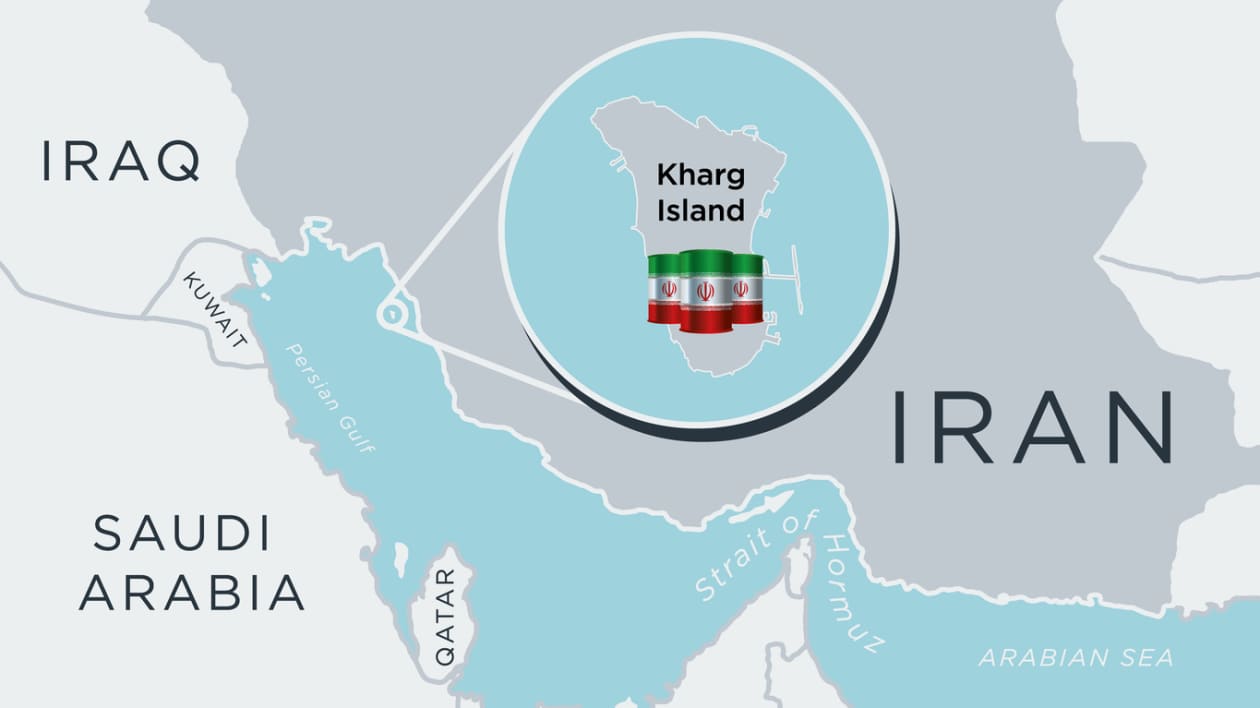
President Trump’s five-day pause on a planned U.S. attack on Iran ends this weekend, putting Kharg Island — Iran’s critical oil-export hub — at heightened risk of being targeted. The potential strike threatens to disrupt oil export flows and commodity markets, elevating geopolitical tail risks while diplomatic talks remain the stated goal for now.
Kharg is a structural choke point for crude flows from Iran; a localized hit there would instantly compress available seaborne crude to Asia and force re-routings that add both transit days and insurance premia. Model a limited disruption of 0.3–0.8 mb/d as enough to move Brent $3–$8/bbl in the week after a confirmed strike through a short-term physical squeeze and frantic cargo rebooking.
Second-order frictions will amplify realized price moves: bunker + war-risk insurance + time-charter differentials can add the equivalent of $0.5–$2.0/bbl to delivered cost for Asian refiners and effectively widen crude-to-product crack volatility by 200–400 bps. That flow shock also favors Gulf suppliers with export capacity (who can fill proximate demand) and owner-operators of VLCCs/AFRAMAXes, while mercantile refiners long forward product positions face margin erosion until parity supply is re-established.
Time horizons: in days we get volatility spikes (freight indices, insurance notices, prompt physical buybacks); in weeks the market tests substitution (Saudi/UAE incremental lifts, rerouted cargoes); in months strategic and political responses (SPR releases, sanctions adjustments, insurance normalization) can snap prices back. A rapid diplomatic de-escalation or credible incremental supply of 0.5–1.0 mb/d from other exporters is the most direct reversal; the tail risk is a broader regional escalation that shuts multiple export nodes, elevating prices structurally for months.
Contrarian angle: current risk premia likely overprices a sustained structural short unless multiple nodes are hit or shipping corridors are closed. If no physical outage is confirmed within 7–14 days, implied volatility and freight spreads should mean-revert materially — creating opportunities to monetize elevated option and time-charter levels rather than pure directional exposure.
AI-powered research, real-time alerts, and portfolio analytics for institutional investors.
Request DemoOverall Sentiment
strongly negative
Sentiment Score
-0.60
