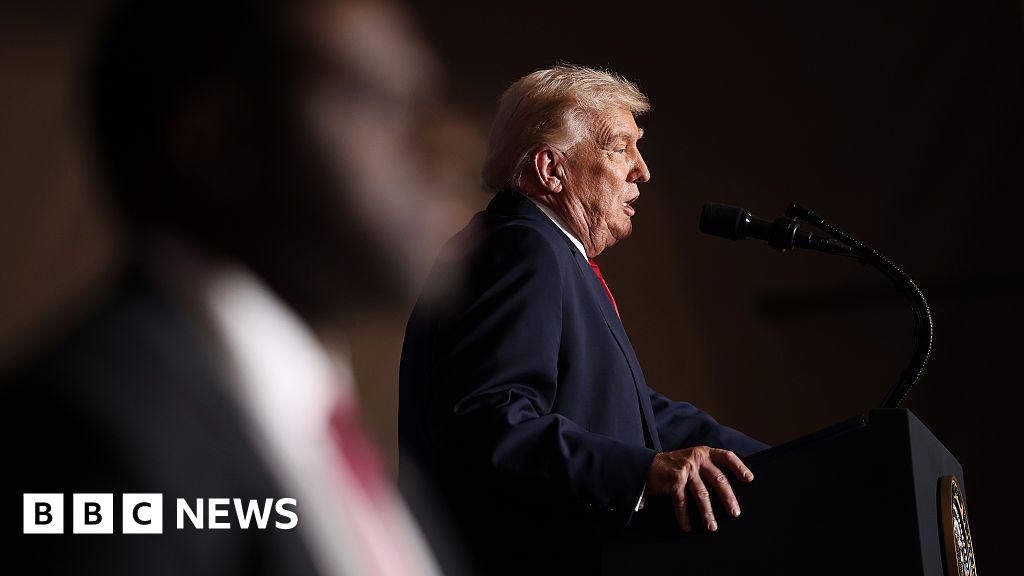
Two recent fatal shootings of US citizens by federal immigration officers in Minnesota sparked protests and bipartisan criticism, prompting the Trump administration to say it will "de-escalate" operations. DHS pulled the mission's local leader, deployed White House border official Tom Homan, and faces conflicting accounts after a preliminary CBP report and eyewitness statements; a federal judge has barred DHS from destroying or altering evidence. The incidents have intensified calls for withdrawal of roughly 3,000 immigration personnel from the region and could raise political and operational risk for future federal enforcement actions.
Market structure: Near-term winners are security/defense contractors and federal IT vendors (LHX, RTX, LDOS, PLTR, CACI) that provide force-protection, surveillance and case-management services; they can see lumpy contract extensions or reallocation of DHS spending by +$200–500m annually regionally. Direct losers are private-detention operators (GEO, CXW) and municipal services in Minnesota whose utilization and revenue growth could slip by 5–15% if federal detentions/deportation throughput is reduced or politically constrained.
Risk assessment: Tail risks include prolonged civil unrest or a politically driven withdrawal of federal teams causing contract cancellations (low prob, high impact) or, conversely, a re-escalation that boosts spending but raises litigation/regulatory costs for contractors. Immediate (days) volatility is headline-driven; short-term (30–90 days) depends on DHS/IG findings and state litigation; long-term (6–24 months) depends on budget appropriations and procurement cycles.
Trade implications: Prefer tactical long exposure to mid-cap defense/security suppliers with direct DHS revenue (LHX, LDOS, PLTR) and short/derivative exposure to GEO and CXW. Use 3–9 month options to express views: buy 3–6 month puts on GEO/CXW and 6–12 month call spreads on LHX/LDOS to limit premium. Rotate modestly into municipal-credit underweight for Minnesota munis (-0.5% to -1% duration tilt) and small short-term Treasury (BIL) as a volatility hedge.
Contrarian angles: Consensus underprices legal/regulatory risk — an adverse IG or DOJ finding within 30–90 days could reverse contractor gains and hammer stocks with DHS concentration; conversely, a quieting/de-escalation could leave contracts intact and create a relief rally. Historical parallels (post-2014 homeland security shocks) show +8–15% sector mean reversion in 6–12 months, so favor option structures that capture asymmetric upside while capping downside exposure.
AI-powered research, real-time alerts, and portfolio analytics for institutional investors.
Request DemoOverall Sentiment
moderately negative
Sentiment Score
-0.35
