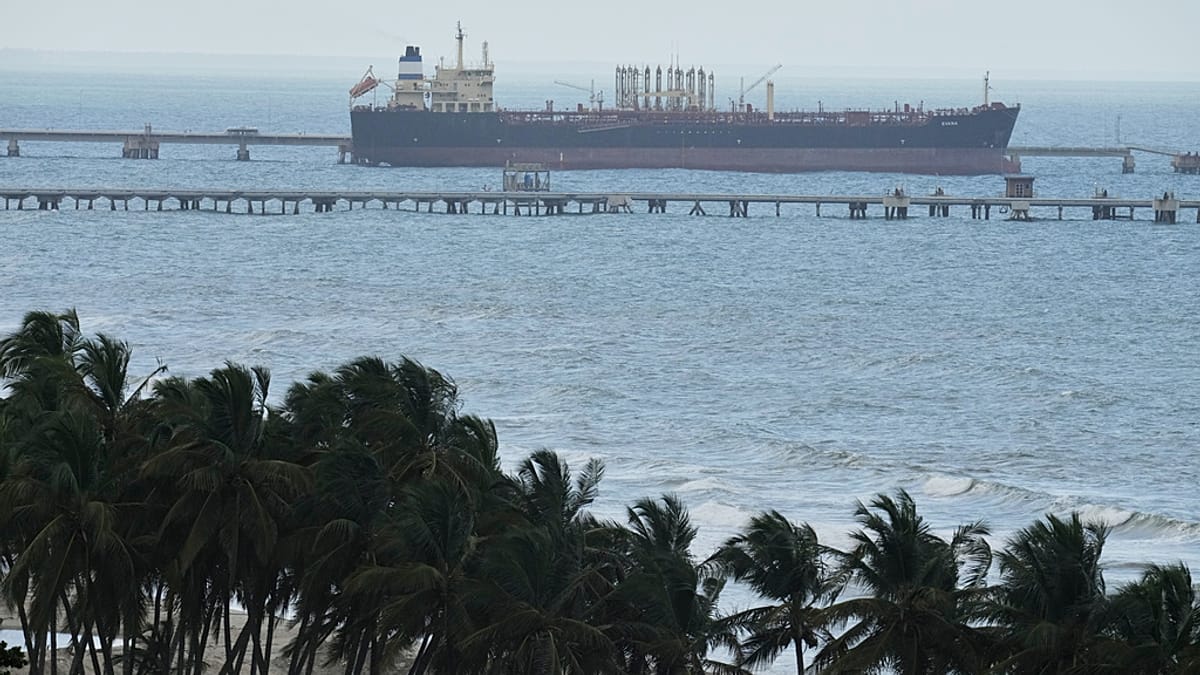
The US Coast Guard has pursued the sanctioned tanker Bella 1 for over 10 days after an interception attempt near Venezuela, during which the crew painted a Russian flag and claims Russian protection, complicating a court-authorized seizure tied to the vessel's history of moving Iranian crude. US officials say Bella 1 was empty after disabling its transponder following a September loading of Iranian crude and likely transferred cargo at sea; Washington is weighing diplomatic and legal options under UNCLOS while assembling a Maritime Special Response Team. The tanker is owned by Turkey-based Louis Marine Shipholding Enterprises, was sanctioned by the US Treasury in 2024 for alleged transfers on behalf of Hezbollah, the Houthis and Iran’s IRGC, and its flight/flagging raises risks of diplomatic escalation and potential disruption to sanction enforcement and regional maritime security.
Market structure: Immediate winners are integrated oil majors (XOM, CVX) and short-term Brent/WTI exposures as US interdiction raises perceived tail-risk to barrels transiting from the Middle East and Venezuela; losers are smaller tanker owners, opaque “shadow fleet” operators and counterparties (higher financing/insurance costs). Expect a discrete rise in tanker freight/TSR premiums and spot Brent volatility; a sustained interdiction campaign could lift Brent 5–12% over 1–3 months and keep tanker time-charter rates elevated 20–50% vs. prior baseline.
Risk assessment: Tail risks include a Russia–US diplomatic escalation from forcible boarding (low probability, high impact → oil +30%+ and EM FX selloff), or retaliatory cyber/denial of port access that disrupts trade lanes. Near-term (days) expect spikes in implied vol and FX flight-to-safety (USD up); short-term (weeks–months) see higher insurance premia (20–40%) and rerouting costs; long-term (quarters+) could be structural re‑routing and consolidation of tanker ownership. Hidden dependency: mid‑sea ship‑to‑ship transfers and flags of convenience create measurement risk — official seizure does not guarantee supply removal.
Trade implications: Tactical bias is long oil/majors and short small tanker equities/opaque owners. Favor 1–3 month energy volatility plays (buy calls/call spreads on XLE or BNO) and selective shorts in FRO/EURN/TNK where governance and sanction exposure is high. Rotate out of niche maritime insurers and small-cap shipowners into large integrated producers; rebalance if Brent moves ±6%.
Contrarian view: Consensus overstresses permanent supply loss; historical precedents (prior tanker incidents) show spikes often mean-revert in 6–12 weeks as shadow logistics adapt. If seizures are limited and Bella 1 is empty, implied vol and tanker equity dislocations will be overdone — opportunity to sell short-dated oil vol or buy underweighted long-dated barrels at lower marginal cost once realized volatility normalizes.
AI-powered research, real-time alerts, and portfolio analytics for institutional investors.
Request DemoOverall Sentiment
moderately negative
Sentiment Score
-0.35
