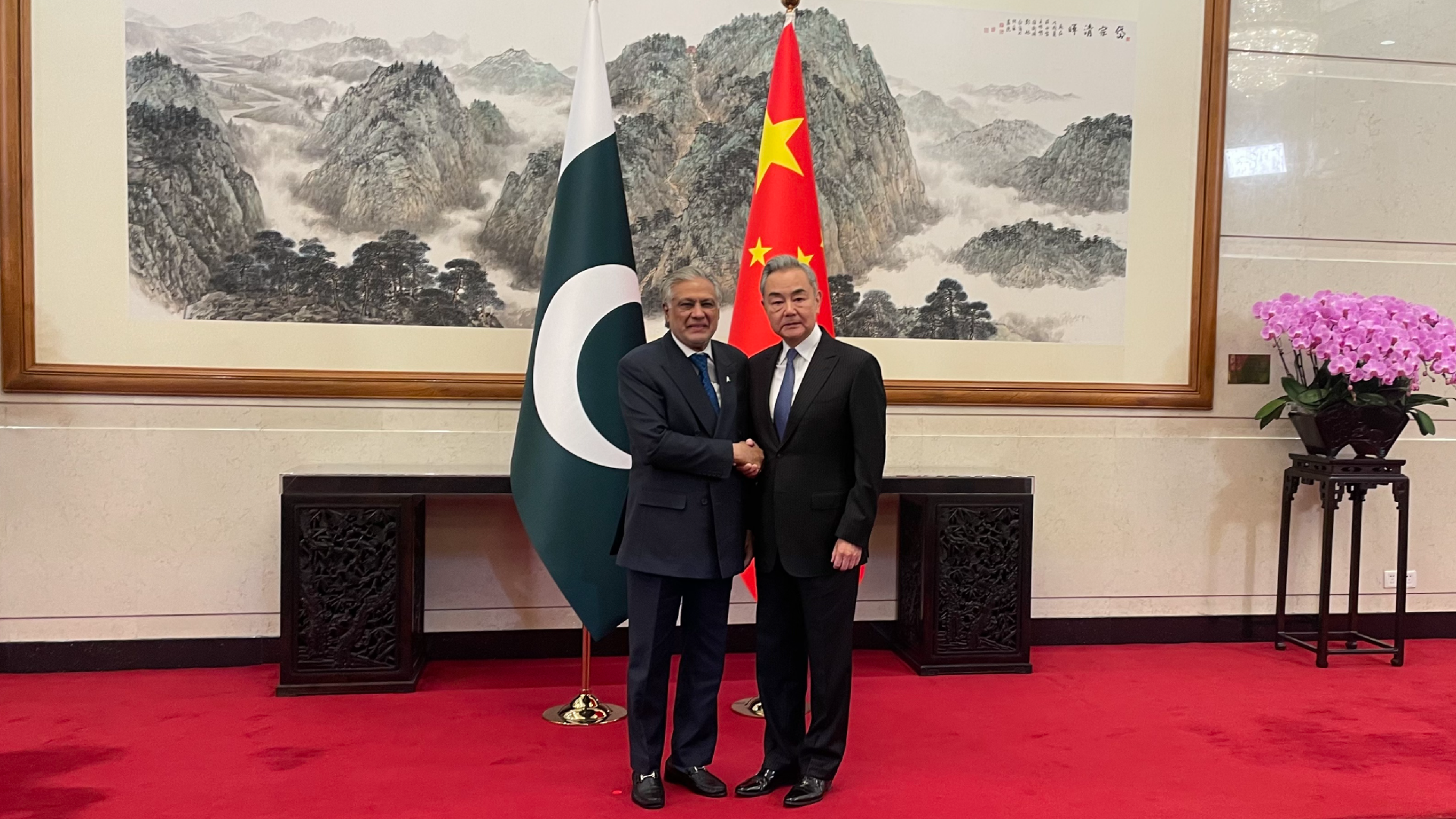
March 31, 2026: Chinese FM Wang Yi met Pakistani Deputy PM/Foreign Minister Mohammad Ishaq Dar in Beijing to coordinate Pakistan's mediation on Iran-related Middle East tensions; both sides proposed five measures aimed at restoring peace. China publicly backed Pakistan's mediation role and pledged joint efforts to end hostilities and reopen negotiations, while Pakistan warned the conflict has disrupted international energy supplies and harmed developing countries. The meeting also highlighted bilateral ties as the two countries mark the 75th anniversary of diplomatic relations.
China backing Pakistan as a diplomatic intermediary is a short calendar toehold that reduces the near-term geopolitical risk premium priced into oil and regional insurance rates — not because it eliminates root causes, but because it creates an additional, state-backed backchannel that can produce incremental de‑escalatory headlines within weeks. Mechanically, headline-driven volatility in Brent and Gulf tanker insurance (War Risk) is driven 60–80% by perceived negotiation pathways; adding a credible facilitator compresses headline frequency and amplitude, which historically translates into a 3–8% downward repricing of short-dated oil forwards over 30–90 days if no new kinetic events occur.
Second-order winners include insurers, commodity trading desks and regional ports that earn throughputs on certainty (weeks–months), while volatility sellers in energy options benefit from collapsing implied vol; second-order losers are short-dated protection sellers whose premia collapse and frontier EM carry trades that re-risk into risk assets. The larger structural wildcard is China deepening influence via diplomatic brokerage: over 6–24 months that tends to reorient state energy contracting and credit flows toward Chinese state borrowers and contractors (engineering, ports, LNG term contracts), subtly advantaging Chinese NOCs and contractors vs Western independents.
Tail risks remain asymmetric — a failed mediation or an unexpected military escalation would spike short-dated oil vol and GW/insurance rates within 48–72 hours and leave mediation-driven complacency exposed. Monitor five signal windows: headline cadence (daily), tanker War Risk rate changes (weekly), 1–3 month Brent forward curve shifts (weekly), Chinese state credit lines announcements to Pakistan or Gulf actors (30–90 days), and US diplomatic/force posture statements (hours–days) that can reverse the compression trend.
AI-powered research, real-time alerts, and portfolio analytics for institutional investors.
Request DemoOverall Sentiment
neutral
Sentiment Score
0.00
