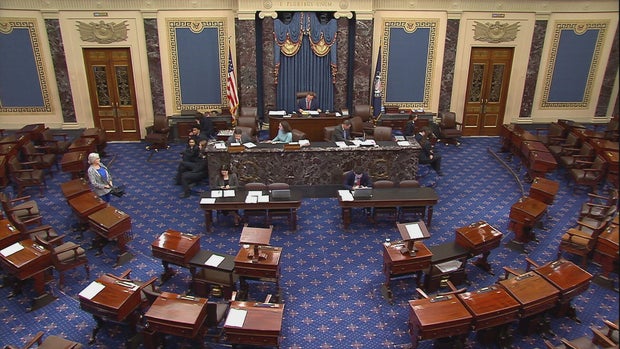
The U.S. government shutdown is poised to become the longest in history, with no immediate legislative path to resolution as the Senate has no vote scheduled on funding. Amidst the impasse, the USDA will utilize $4.6 billion in contingency funds to provide only 50% of November Supplemental Nutrition Assistance Program (SNAP) benefits, following court orders, while declining to fully fund them from child nutrition programs to avoid an unprecedented shortfall, a decision criticized by Democrats. This ongoing political gridlock, further complicated by President Trump's call to end the filibuster and warnings of escalating airport delays, signals increasing economic uncertainty and operational disruptions.
The ongoing U.S. government shutdown is set to become the longest in history, surpassing the 2018-2019 funding lapse, with no immediate legislative resolution as the Senate has no vote scheduled on a House-passed measure. This protracted political impasse, characterized by President Trump's calls to end the filibuster and Democratic demands for ACA tax credit extensions, signals deep-seated legislative gridlock, contributing to a strongly negative sentiment and a market impact score of 0.7. This indicates significant concern among financial analysts regarding the economic and operational stability.
The U.S. Department of Agriculture (USDA) will utilize $4.6 billion from contingency funds to provide only 50% of November Supplemental Nutrition Assistance Program (SNAP) benefits, falling short of the $9 billion needed for full payments. This partial funding, which could face delays of "a few weeks to several months" in some states due to system reconfigurations, highlights the direct economic strain on approximately 42 million Americans. The USDA explicitly declined to use child nutrition program funds to cover the shortfall, citing potential "unprecedented and significant shortfall" for those programs.
Beyond direct aid, the shutdown's operational impact is escalating, with Transportation Secretary Sean Duffy warning of worsening airport delays across major hubs like LA, Dallas, and Atlanta as air traffic controllers go unpaid. This disruption to critical infrastructure underscores the broader economic ripple effects of the prolonged funding lapse. The lack of a clear path forward, despite some senators forecasting a possible end this week, maintains high uncertainty.
AI-powered research, real-time alerts, and portfolio analytics for institutional investors.
Request DemoOverall Sentiment
strongly negative
Sentiment Score
-0.70
