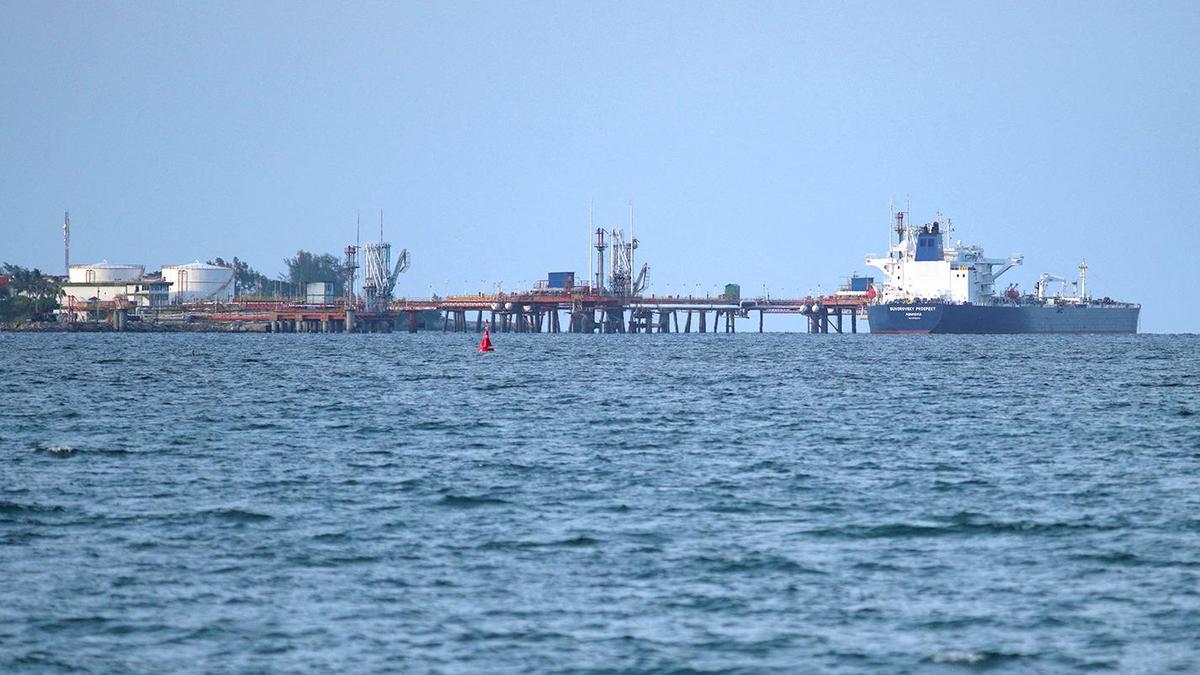
Ping Shun, a U.S.-sanctioned Iranian crude tanker carrying >100,000 tonnes, has signalled a destination change from Vadinar, India to Dongying, China, fuelling concerns about AIS spoofing and sanction-evasion via ship-to-ship transfers. The vessel was sanctioned in February for transfers with the National Iranian Tanker Company that allegedly obfuscated Iranian origin; India had a US general license allowing cargos loaded by March 20 to be delivered until April 19, but buyers were reportedly reluctant due to contractual and payments challenges. Separately, Indian-flagged LPG tanker Green Sanvi is transiting the Strait of Hormuz carrying ~46,000 tonnes of LPG bound for India.
This flow demonstrates how sanction-driven oil volumes can rewire maritime economics more than headline barrel counts. Expect a sustained premium on longer-haul VLCC voyages (Asia-bound re-routing) and on vessels willing to accept higher operational risk/insurance costs — a 10–30% move in spot VLCC time-charter equivalents over 2–8 weeks is plausible if a handful of similar sanctioned parcels re-emerge. That freight shock will show up as tighter available lift capacity for non-sanctioned sellers, compressing the usual arbitrage between Middle East Gulf and East Asia refiners.
Payment frictions and opaque provenance artificially increase on‑water floating storage and delivery slippage; operational delays of 2–6 weeks on contested cargoes would raise spot crack volatility by 30–60% relative to normal seasonal ranges. Chinese coastal refiners that can legally and operationally accept discounted, higher-sour barrels stand to capture incremental margin, while western-trading independents face higher counterparty and settlement risk — creating a divergence between physical refining economics and publicly traded integrated majors.
Key near-term catalysts: (1) US enforcement actions or asset seizures (days–weeks) that would force cargo diversion and spike insurance/freight; (2) a formal change in Chinese acceptance policy (weeks–months) that would normalize flows and remove the premium; (3) any military escalation in the Strait of Hormuz that would instantaneously reprice freight, insurance and crude risk premia. The asymmetric payoff favors optionality in shipping and China-refinery exposure while keeping downside hedges for seizure or escalation scenarios.
AI-powered research, real-time alerts, and portfolio analytics for institutional investors.
Request DemoOverall Sentiment
neutral
Sentiment Score
-0.05
