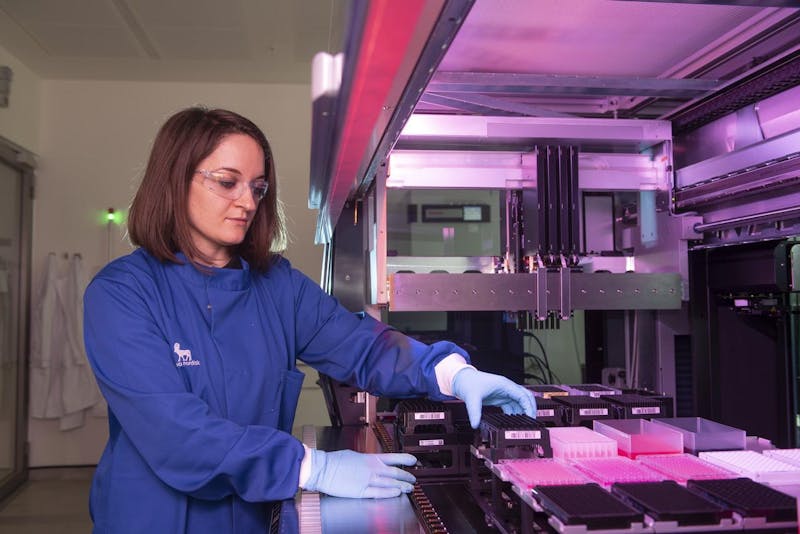
Novo Nordisk will cut ~400 roles (~20% of the Bloomington site's workforce) at the start of May; the site employs >1,800. The reductions follow Novo's $16.5B acquisition of Catalent in Dec 2024 and sit alongside a broader plan announced in Sept to eliminate 9,000 jobs globally (4,000 outside Denmark). Novo and the City of Bloomington say severance, outplacement and local support will be provided.
The announced site rationalization should improve per-unit manufacturing economics for the acquirer if executed without disrupting output; conservative modelling suggests a 1–3 percentage-point improvement to the acquired operations’ adjusted operating margin over 12–18 months, but only if throughput and quality metrics remain stable. A temporary increase in inventory and working capital is likely as management smooths production and avoids shortages, which will press near-term free cash flow and could depress quarterly EPS in the next 1–2 quarters even as run-rate benefits arrive later.
Competitive second-order effects cut both ways: local CDMOs and staffing vendors can capture displaced headcount and short-term contract work, improving their utilization and effective pricing by an estimated 50–150 basis points over the next 6–12 months. Conversely, vertical integration by a large pharma player reduces total addressable outsourcing spend long-term, creating structural pressure on independent CDMOs’ growth rates and making those with differentiated capabilities (sterile/aseptic fill-finish, biologics) relatively more valuable.
Governance and political risk is non-trivial — domestic labor reductions invite heightened scrutiny and potential regulatory or incentive negotiations at the municipal/state level, which can create both headline volatility and conditional concessions that change the economics of the site. Key catalysts to watch: the next quarter’s manufacturing KPIs (yield, batch failures), integration-related SG&A and restructuring charges, and any supply-disruption notices from major customers in the next 0–3 months.
A path to outperformance is clear but binary: if quality and supply are preserved, the market should re-rate the stock as synergies are realized over 6–18 months; if there are inspection failures or customer defections, downside could be sharp and quick. Monitor churn of specialized staff, number of unplanned production interruptions, and guidance reconciliation versus consensus as high-signal metrics to adjudicate which path is unfolding.
AI-powered research, real-time alerts, and portfolio analytics for institutional investors.
Request DemoOverall Sentiment
strongly negative
Sentiment Score
-0.60
Ticker Sentiment
