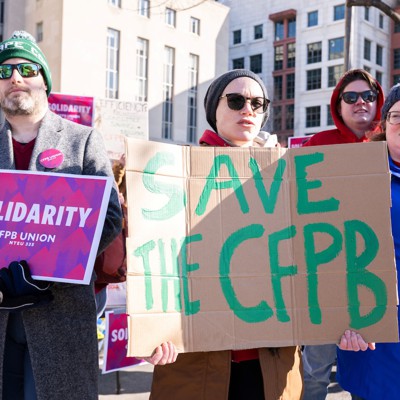
The Consumer Financial Protection Bureau will furlough much of its workforce on Dec. 31 and transfer outstanding litigation to the Justice Department after the Trump administration stopped drawing its statutory funding from the Federal Reserve, officials told staff. DOJ has established an Enforcement and Affirmative Litigation Branch that acting CFPB enforcement chief Mike Salemi said would house the bureau’s work starting in 2026; he said the bureau’s 170 enforcement employees are slated for unpaid leave and the CFPB union called the move unlawful and warned DOJ may dismiss cases. The action follows April reduction-in-force notices for roughly 1,500 employees (about 88% of the bureau) and prolonged court battles over layoffs, and signals a material shift that could curtail independent consumer-financial enforcement and reframe litigation priorities as the administration advances Stuart Levenbach’s nomination to lead the CFPB.
The Consumer Financial Protection Bureau will furlough much of its workforce on Dec. 31 and transfer outstanding litigation to the Justice Department after the Trump administration stopped drawing its statutory funding from the Federal Reserve, officials told staff. Acting enforcement chief Mike Salemi said the bureau’s 170 enforcement employees are slated for unpaid leave and that DOJ’s newly created Enforcement and Affirmative Litigation Branch is where he assumes CFPB work will be housed beginning in 2026. CFPB previously issued reduction-in-force notices on April 17 for roughly 1,500 staff (about 88% of the agency) and those actions have been entangled in court pauses and appeals all year.
The agency’s union labelled the move unlawful and warned DOJ could dismiss CFPB cases, signaling acute litigation and operational risk for ongoing enforcement matters; employees report they are “working till we aren’t,” underscoring short-term continuity risk. The transfer of cases to DOJ and the administration’s nomination of Stuart Levenbach to run CFPB indicate a political and governance-driven shift that could reprioritize consumer-financial enforcement.
For regulated banks, fintechs and firms facing CFPB actions, this creates a multi-year window of legal and regulatory uncertainty with clear catalysts—Dec. 31 furloughs and the 2026 DOJ transition—that will influence litigation outcomes, settlement dynamics and enforcement intensity.
AI-powered research, real-time alerts, and portfolio analytics for institutional investors.
Request DemoOverall Sentiment
mildly positive
Sentiment Score
0.25
