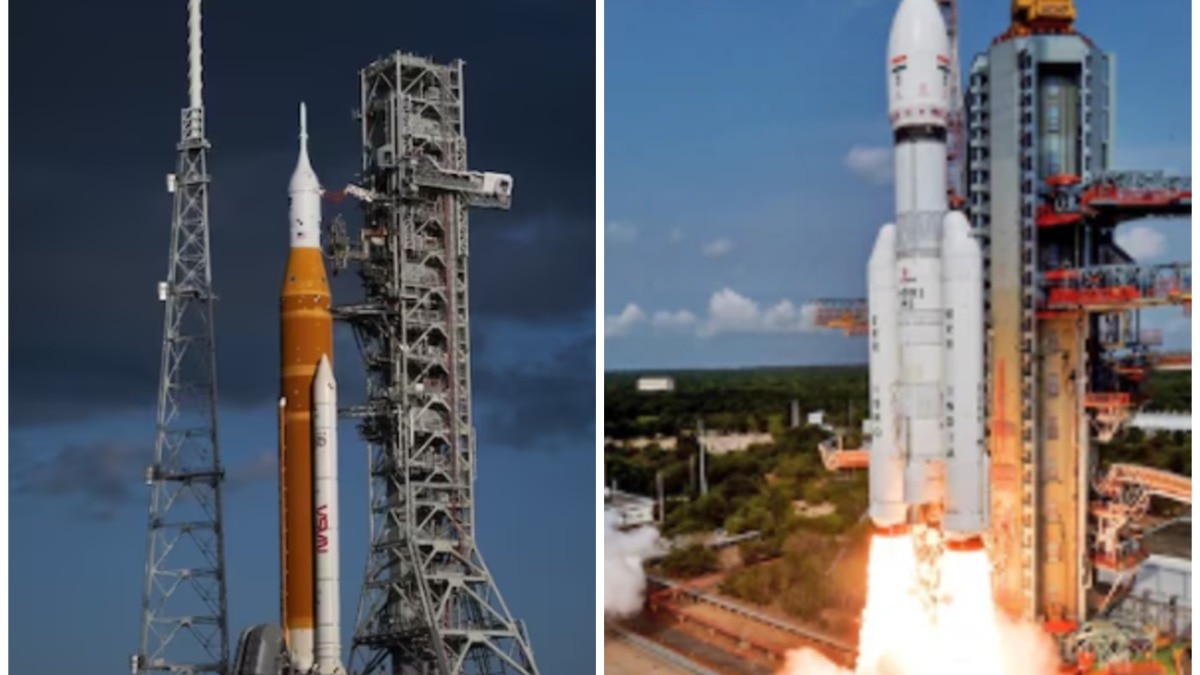
Artemis II will send four astronauts around the Moon for about 10 days to validate deep-space systems ahead of future lunar landings. India’s Chandrayaan-3 successfully soft-landed near the Moon’s south pole in August 2023, and India has tested docking maneuvers and is planning Chandrayaan-4 as part of stepwise human-capable development. India joining the Artemis Accords positions it in the international framework for lunar activity and potential coordinated access to south-pole resources such as water ice.
Artemis II's technology validation and India’s stepwise operational progress create a bifurcated market: large systems integrators keep winning big infrastructure awards, but modular, lower-cost payloads (landers, sensors, ISRU pilots, cryo-storage) become investible niches where margins can scale faster. Expect procurement to shift from bundled prime contracts toward task-specific suppliers; that unbundling favors mid-cap specialist suppliers of guidance, thermal control, and high-TRL smallsat bus components.
Supply-chain second-order effects: India’s lower-cost manufacturing and iterative test cadence will compress pricing for routine lunar services (landing/telemetry/rovers) and push Western primes to subcontract more work, pressuring prime-level margin retention over 12–36 months. Conversely, companies owning unique orbital imaging, navigation, or cryogenic ISRU IP (sensors, vacuum robotics, power systems) see outsized negotiating leverage if they can demonstrate flight heritage within the next 9–24 months.
Key risks and catalysts are timing- and political-driven. Short-term (days–months) catalysts: Artemis II telemetry and publicized vendor awards; medium-term (6–24 months): Indian docking/crew tests and Chandrayaan-4 payload contracts; long-term (2–5 years): commercial ISRU regulatory clarity under the Artemis Accords. Reversals come from program delays, major mission failure (which tightens budgets), or a rapid commoditization of lunar services that forces price competition and margin compression.
Contrarian view: the market currently prices defense primes as the primary Moon winners; that overlooks how modular architectures and the Accords lower barriers for non-prime entrants. If even one mid-cap specialist proves repeatable lunar flights/ISRU demos in 12–18 months, re-rating across that cohort could outpace primes — while ETFs and crowded “space” names will likely experience mean reversion on any short-term disappointments.
AI-powered research, real-time alerts, and portfolio analytics for institutional investors.
Request DemoOverall Sentiment
neutral
Sentiment Score
0.10
