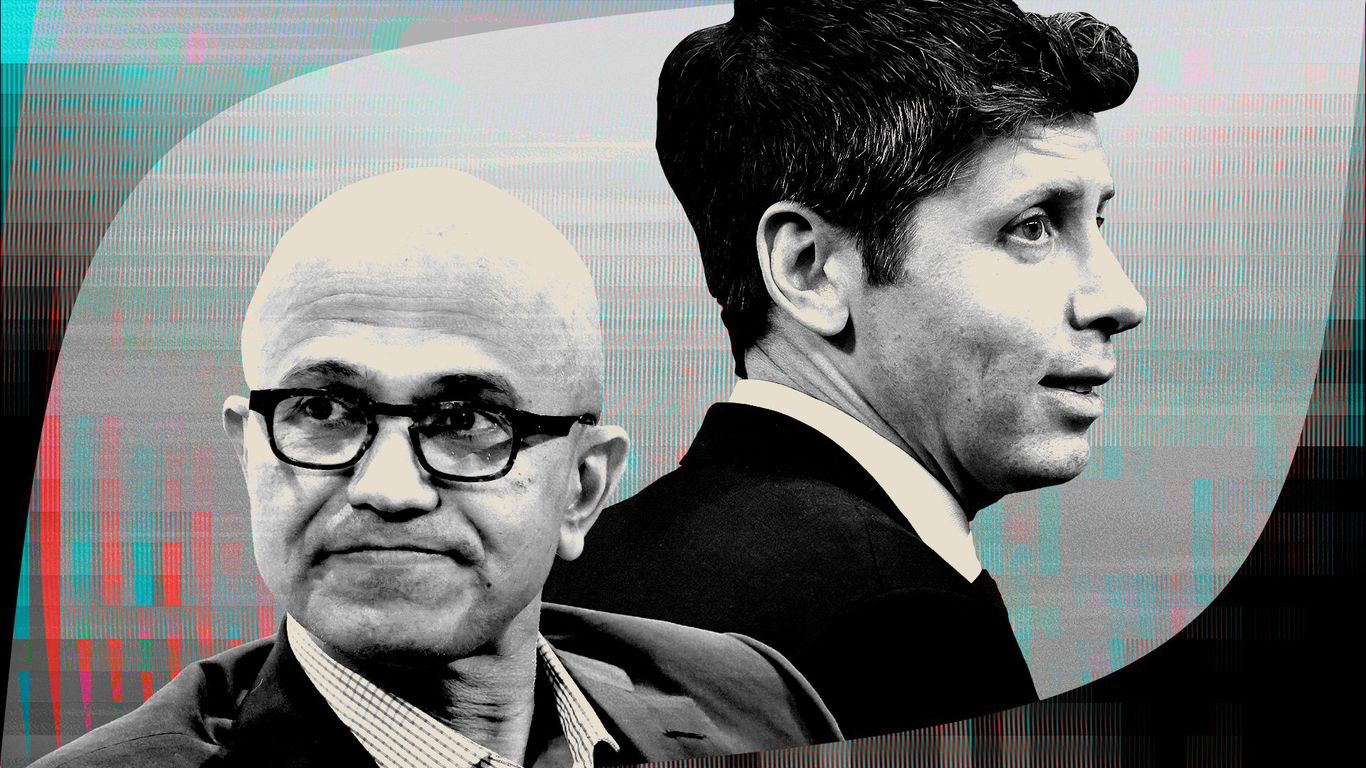
Microsoft and OpenAI are in tense negotiations to amend their partnership agreement, impacting the future of their AI alliance. Key sticking points include Microsoft's access to intellectual property from OpenAI's acquisition of Windsurf, the restructuring of OpenAI to meet investor commitments, and the extent of Microsoft's access to OpenAI's technology as it approaches artificial general intelligence. OpenAI is reportedly seeking to exchange Microsoft's future profit rights for a 33% stake in the restructured company, while Microsoft expands its own AI capabilities and diversifies its model offerings.
Microsoft and OpenAI are engaged in critical, high-stakes negotiations to redefine their strategic AI partnership, a development carrying a moderately negative sentiment (score -0.5) and a high market impact score (0.85), particularly for Microsoft (ticker sentiment -0.7). The discussions, reportedly ongoing for months, center on OpenAI's proposed corporate restructuring, which requires Microsoft's approval to translate its current share of OpenAI profits into a specific equity stake, with one report suggesting OpenAI wants Microsoft to forego future profit rights for a roughly 33% stake. Key points of contention include Microsoft's access to intellectual property from OpenAI's recent acquisition of coding startup Windsurf, especially given Microsoft's ownership of the competing GitHub, and the terms governing Microsoft's access to OpenAI's technology if it achieves artificial general intelligence. The situation is underscored by OpenAI reportedly considering an accusation of antitrust violations against Microsoft, highlighting escalating tensions. In response to this uncertainty and the inherent 'coopetition' dynamic, both entities are visibly pursuing alternative strategies: Microsoft is bolstering its internal AI capabilities, evidenced by key hires like Mustafa Suleyman and Jay Parikh to head AI units, and diversifying its Azure AI offerings with non-OpenAI models such as xAI's Grok. Concurrently, OpenAI is diversifying its compute infrastructure beyond Microsoft, having initiated the Stargate project with Oracle and SoftBank, and more recently, engaging with Google Cloud. While a joint statement expresses optimism for continued collaboration, the negotiations reveal fundamental disagreements over IP, future control, financial arrangements, and server business allocation that could significantly reorder the AI landscape.
AI-powered research, real-time alerts, and portfolio analytics for institutional investors.
Request DemoOverall Sentiment
moderately negative
Sentiment Score
-0.50
Ticker Sentiment
