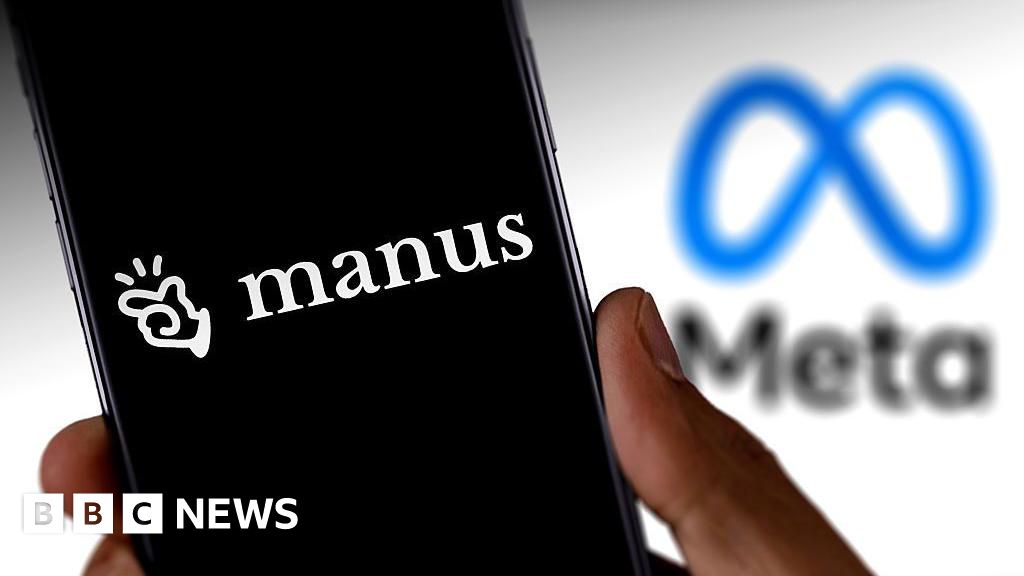
Meta is acquiring Chinese‑founded AI start‑up Manus — now based in Singapore — in a deal Bloomberg and the Wall Street Journal suggest could exceed $2 billion; Meta said Manus talent will join its teams to deliver general‑purpose, autonomous agents across consumer and business products, including Meta AI. Manus's technology, which aims to plan and execute tasks independently, will continue to be operated and sold under Meta, underscoring Meta's broader, capital‑intensive push into AI (including a recent $14 billion investment for 49% of Scale AI) to accelerate product development and talent acquisition and strengthen competitive positioning in the AI market.
Market Structure: Meta's >$2bn buy of Manus is a targeted vertical integration play that strengthens Meta's product moat in consumer and workplace AI agents; direct winners are META and AI-infrastructure suppliers (NVDA, MSFT indirectly), while pure-play agent/LLM vendors (C3.ai - AI) and smaller startups face pricing and talent squeeze. Expect incremental share gain in consumer AI experiences over 6-24 months as Meta bundles agents into 1B+ DAU products, pressuring startup M&A valuations and enterprise LTVs.
Risk Assessment: Key tail risks are regulatory/geopolitical scrutiny of a China-founded team (CFIUS/FTC/SEC inquiries) and integration/talent flight that could force impairments >$1-2bn in downside scenarios; probability low-medium but impact material within 0-12 months. Short-term (days-weeks) watch for IV compression and sentiment; mid/long-term (3-24 months) execution and monetization are primary drivers.
Trade Implications: Efficient plays are overweight META (direct exposure to agent monetization) and select semiconductor exposure (NVDA) for infrastructure upside; hedge execution risk with defined-risk option structures. Pair trades (long META, short small-cap AI/LLM names like AI) capture relative re-rating as Meta internalizes agent spend and commoditizes some external demand over 6-12 months.
Contrarian Angles: Consensus may underweight integration complexity and regulatory friction — the market could be underpricing a 20-40% downside if a formal probe/ban emerges. Conversely, the move could be underappreciated for driving ad/productivity ARPU uplift of 3-7% over 12-24 months if agents materially increase engagement; time positions to product milestones and regulatory newsflow.
AI-powered research, real-time alerts, and portfolio analytics for institutional investors.
Request DemoOverall Sentiment
moderately positive
Sentiment Score
0.40
Ticker Sentiment
