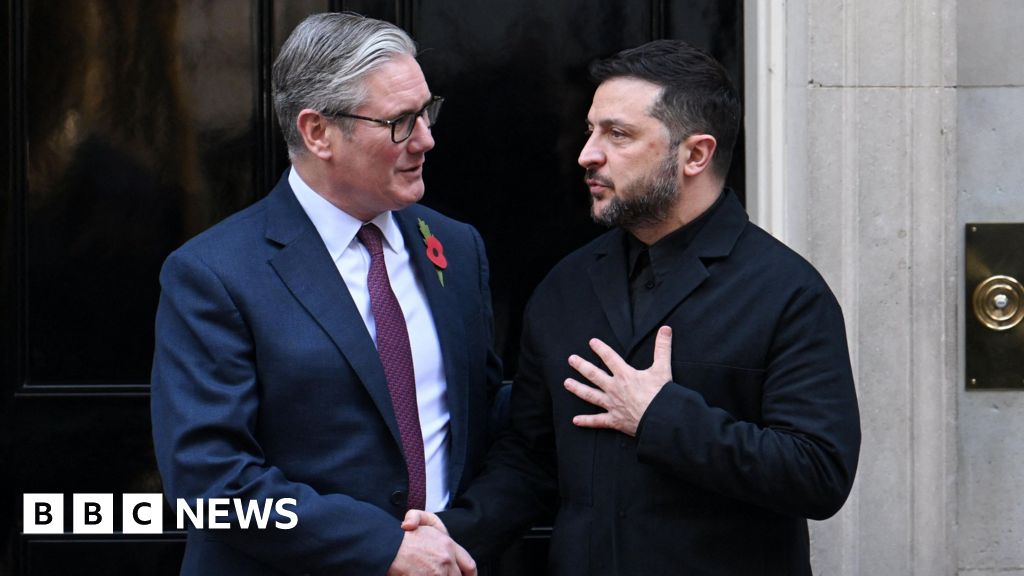
Ukrainian President Volodymyr Zelensky will meet UK Prime Minister Keir Starmer alongside French President Emmanuel Macron and German Chancellor Friedrich Merz in London to coordinate Europe’s response to a US-led peace proposal that would require difficult territorial concessions. The talks follow intensive negotiations in Florida and Moscow involving US envoys and Russia, amid US pressure for Kyiv to accept a multi-point plan; disputes remain over security guarantees, the role of a proposed Multinational Force Ukraine, and complex arrangements for the Zaporizhzhia nuclear plant’s future energy allocation. Political friction — including public criticism from former US President Donald Trump — and European scepticism about troop deployments keep the outlook uncertain, maintaining elevated geopolitical and energy risk that could influence defense spending, European energy markets and investor positioning.
Market structure: European push to shape any Ukraine settlement reinforces a multi-year increase in defense demand while keeping energy security premiums elevated. Direct winners are large prime contractors (LMT, RTX, NOC) and defense ETFs (ITA) plus commodity/uranium plays (URA) from nuclear risk; losers include Western European cyclical consumer names and regional banks with Ukraine exposure. Cross-asset: expect USD strength and safe-haven demand into USTs on headline risk, wider Euribor/EU sovereign spreads on escalation, and higher realized/implied volatility in oil and gas (Brent, TTF) for 1–3 months.
Risk assessment: tail risks include NATO deployment escalation (low-probability, high-impact), a nuclear incident at Zaporizhzhia, or rapid US-pushed concessional peace that collapses defense demand. In the next 0–14 days headlines can move defense/energy equities ±5–12%; over 3–12 months policy decisions (multinational force formation, EU defense budgets) could lift contractors’ revenue forecasts by ~10–25%. Hidden dependencies: US political calculus (Trump advisers) and leaks will drive sudden sentiment shifts; watch Russian statements and EU cabinet votes as catalysts.
Trade implications: tactically favor 3–12 month long exposure to defense (LMT, RTX, NOC or ITA) and uranium (URA) and short European cyclical risk (VGK or FEZ) as a hedge; size initial long positions 1–3% NAV each. Use options: buy 3–6 month ITA or LMT 15–20% OTM call spreads to cap cost, and purchase 1-month VIX calls or buy protection (ATM puts) on FEZ as event insurance. Enter within 5–14 days; cut exposure if a credible peace draft is signed within 30 days or if defense names rally >15%.
Contrarian angles: consensus assumes either immediate peace or perpetual high-intensity war; the more probable outcome is a frozen conflict with sustained EU defense capex — a bullish multi-year structural trade for primes that markets may underprice. Conversely, near-term overreaction to conciliatory rhetoric could create >10% buying opportunities in defense names; historical parallel: post‑2014 Crimea rearmament produced multi-quarter outperformance for primes. Unintended consequence: Europe may favor non-impartial reassurance forces, boosting demand for logistics and dual-use suppliers over frontline troop equipment.
AI-powered research, real-time alerts, and portfolio analytics for institutional investors.
Request DemoOverall Sentiment
moderately negative
Sentiment Score
-0.40
