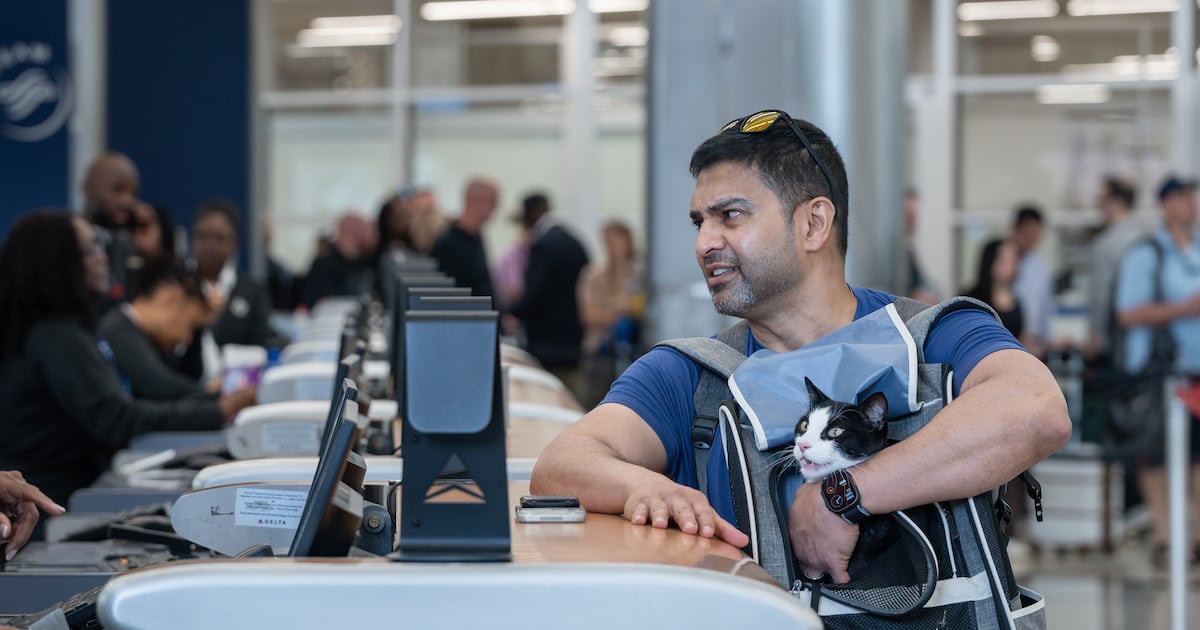
Delta extended a travel waiver allowing passengers with itineraries touching Atlanta through March 30 to rebook without penalty onto new flights through April 6. The move responds to ballooning TSA security waits at Hartsfield-Jackson—officials estimate waits could reach up to four hours—as TSA workers remain unpaid during a partial government shutdown. Operationally this is a localized negative: it raises short-term rebooking costs and customer-disruption risk at ATL but is unlikely to materially change Delta’s longer-term financial outlook.
A hub-concentrated carrier will suffer outsized operational and revenue-management friction when security staffing shocks occur; the immediate P&L effect is driven by rebooking costs, higher pax IRROPS recovery, and incremental station and crew positioning expenses. Expect a concentrated 2–6 week window of elevated opex and yield dilution as revenue managers sacrifice fare integrity to avoid involuntary denied boardings; this is not a structural demand hit but a margin event that compounds if staffing issues persist.
Second-order winners include point-to-point low-cost carriers and regional feeders with lower single-hub concentration, which can pick up market share on stressed O&D pairs and see outsized unit revenue improvements on short notice. Airport concession and parking revenues suffer transiently while carriers with diversified hubs can reallocate capacity with lower disruption costs, pressuring market share metrics for the affected hub carrier into the next comp week.
Key catalysts: federal funding/agency decisions can normalize staffing in days-to-weeks and quickly reverse the operational premium priced into the stock; conversely, protracted workforce exits or policy moves to privatize screening would push higher secular opex or capex on airlines and airports over months-to-years. Tail risk: sustained reputational damage accelerating corporate travel diversification or contract renegotiations with large accounts could depress yields on a multi-quarter horizon, not just a near-term hiccup.
Consensus is underestimating the asymmetric optionality of short-term goodwill programs — they blunt churn but crystallize costs. If regulators act within 7–14 days the trade is overstated; if the staffing shortfall forces repeated waivers across multiple hubs the market is underpricing a multi-quarter margin drag for hub-heavy carriers.
AI-powered research, real-time alerts, and portfolio analytics for institutional investors.
Request DemoOverall Sentiment
mildly negative
Sentiment Score
-0.25
Ticker Sentiment
