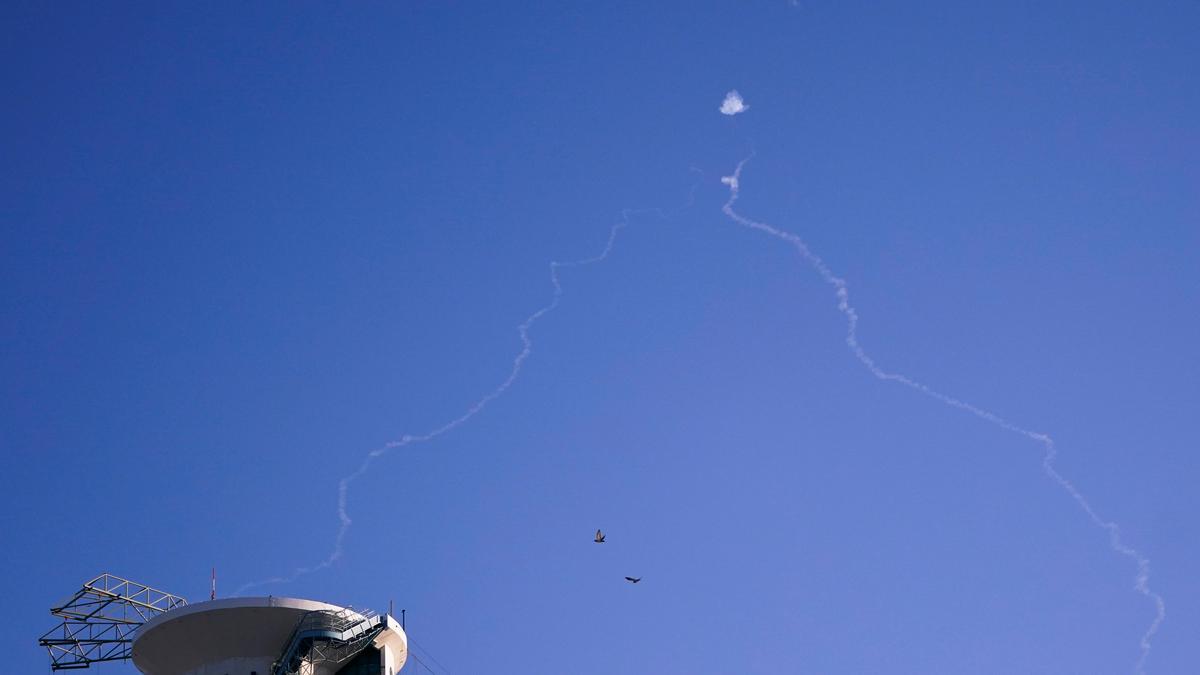
Israel reportedly sent Iron Dome air defense batteries and personnel to the United Arab Emirates during the war with Iran, underscoring deepening security cooperation under the Abraham Accords. Iran targeted the UAE more than any other country in the conflict, and the UAE has since reported multiple missile and drone attacks despite the ceasefire. The news highlights elevated geopolitical risk in the Gulf and potential implications for regional defense coordination.
This is less a one-off military anecdote than proof that Gulf air-defense demand is moving from procurement cycle to wartime urgency. The second-order winner is the integrated air-defense stack: interceptors, command-and-control, sensors, counter-UAS, and distributed power/communications resilience. Even without direct public equity exposure to the specific system in the article, the signal is that regional buyers will now value “operability under fire” over headline-platform specs, which should widen budgets for layered defense and rapid-deployment support services over the next 6-18 months.
The UAE’s response also has a market implication: it raises the cost of being seen as under-protected in the Gulf, which should accelerate spending not only in the UAE but across Saudi Arabia, Qatar, and Bahrain. That creates follow-on demand for U.S. and Israeli defense primes, select European missile-defense vendors, and logistics firms tied to maintenance, airlift, and hardened infrastructure. A less obvious beneficiary is cyber and secure-communications providers, since real-time sensor fusion and battle management become more valuable when adversaries are testing missile-drone saturation.
The risk is that investors overprice permanence in the implied security premium. If the ceasefire holds and the missile/drone tempo decays over the next 30-90 days, the urgency trade can fade quickly, especially in names that already rerated on Middle East escalation. Conversely, a renewed attack cycle would likely shift spending from discretionary modernization into emergency replenishment, which is far more favorable for munitions and sensor inventory sellers than for long-cycle platform contractors.
Contrarian view: the bigger market move may be in resilience capex, not traditional defense. The UAE story suggests governments may prioritize hardened airports, power systems, telecom redundancy, and automated perimeter defense—areas that are often underrepresented in pure-play defense baskets. Investors focused only on missiles may miss the broader multi-year buildout of civilian-military infrastructure hardening.
AI-powered research, real-time alerts, and portfolio analytics for institutional investors.
Request DemoOverall Sentiment
neutral
Sentiment Score
0.00
