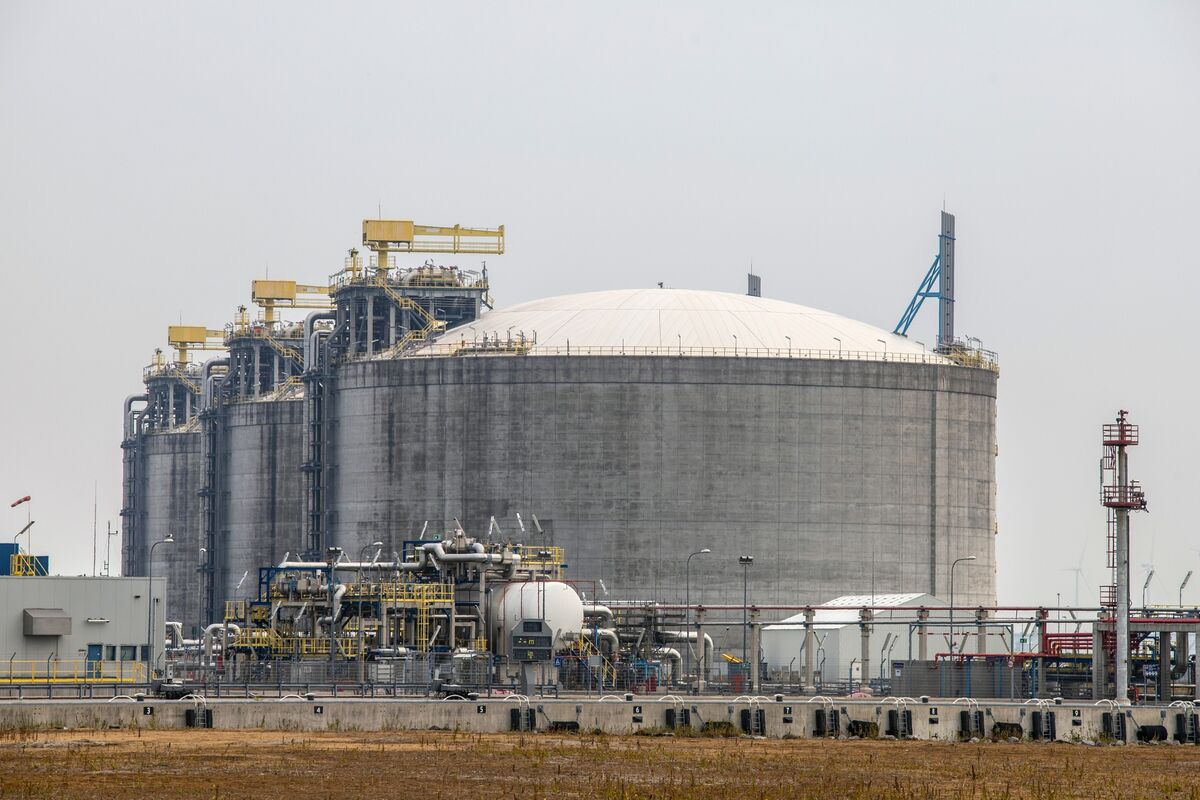
Dutch gas storage is about 6% full, the lowest for this time of year since at least 2010, and German inventories are roughly 22%; Europe enters the stockpiling season with critically low reserves. The shortfall, combined with Middle East conflict disrupting flows, will force Europe to compete more with Asian buyers for supplies, raising the risk of higher gas prices and supply stress.
Immediate price mechanics will be governed by arbitrage dynamics between Asian JKM and European TTF and by LNG shipping/berth capacity; expect the TTF-JKM basis to widen materially if spot cargoes are rerouted to Europe, creating multi-week tightness and volatile front-month TTF moves (20–40% swings) ahead of refilling. Short-term charter and insurance friction can amplify delivered-cost shocks: a 25–100% rise in short-term LNG time-charter-equivalent (TCE) rates is a credible multiplier to European landed prices before new tonnage or scheduled cargoes re-equilibrate over 3–6 months.
Second-order demand responses matter as much as supply headlines: marginal industrial curtailments (chemicals, fertilizers, glass) and redirected feedstocks will shave European gas demand by low single-digit percentage points if prices spike, but these actions lag by weeks and create lumpy negative feedbacks into power markets and carbon prices, lifting merchant generation margins even as industrial GDP exposure rises. Policy responses — coordinated EU demand-reduction programs or temporary compulsory purchases — are high-probability catalysts within 2–8 weeks and would blunt price upside while creating fiscal/tariff risk for utilities and traders.
The consensus pricing of persistent tightness may be overdone in one key respect: floating storage and last-mile commercial arbitrage have historically closed extreme squeezes within 1–3 months once freight and insurance normalize; conversely, escalation in the Middle East (Suez chokepoint or insurance blacklists) would create a fat-tail that is underpriced today. Net-net, this is a high-conviction short-term supply shock trade with a binary tail on geopolitical escalation that pushes outcomes from elevated volatility to regime change in regional energy security over 6–24 months.
AI-powered research, real-time alerts, and portfolio analytics for institutional investors.
Overall Sentiment
strongly negative
Sentiment Score
-0.65
