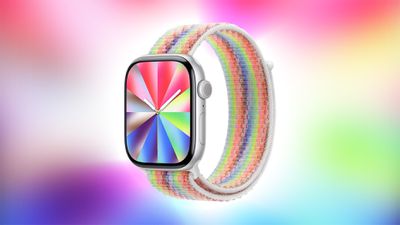
Apple launched a new Pride Edition Sport Loop for Apple Watch priced at $49 in the U.S., available now online in 40mm, 42mm, and 46mm sizes and in stores later this week. The company also introduced a Pride Luminance watch face and matching iPhone/iPad wallpaper, both tied to the upcoming watchOS 26.5, iOS 26.5, and iPadOS 26.5 releases. The announcement is largely routine product/newsflow with limited expected market impact.
This is less about direct revenue than about Apple’s ability to keep monetizing its installed base through low-friction, high-margin accessories and software skins. The key incremental signal is not the band itself but the coordinated software drop across watch, phone, and tablet: Apple is using seasonal content to drive engagement, remind users of platform cohesion, and likely stimulate a small but measurable attach-rate lift into June. For AAPL, that supports the narrative that Services and accessories can keep offsetting slower hardware replacement cycles without needing a meaningful product cycle. The second-order winner is the retail and e-commerce plumbing around Apple’s ecosystem. Limited-edition drops tend to create short-duration traffic spikes, which can lift conversion on adjacent accessories and increase basket size more than the flagship item contribution would imply. The risk is that this type of launch is increasingly formulaic; if consumers treat it as routine rather than collectible, the demand impulse can fade from days to hours, making the revenue impact negligible even if engagement remains high. From a competitive standpoint, this is another reminder that Apple’s moat is behavioral, not just technical. Competing OEMs can match hardware features, but they struggle to replicate synchronized software, identity-driven merchandising, and the ecosystem effect that nudges users to stay within the same device family. The contrarian view is that the market already prices Apple as a software/services compounder, so incremental accessory launches like this are more useful as sentiment support than as a catalyst for multiple expansion. The bigger watch item is whether this serves as a soft signal for broader ecosystem monetization ahead of WWDC and iOS 27. If Apple keeps layering small monetization levers into system updates, it reinforces a steady-arb thesis: low headline growth, but durable margin and cash-flow resilience. That makes downside on AAPL more dependent on macro or China demand shocks than on product cadence alone.
AI-powered research, real-time alerts, and portfolio analytics for institutional investors.
Request DemoOverall Sentiment
mildly positive
Sentiment Score
0.15
Ticker Sentiment
