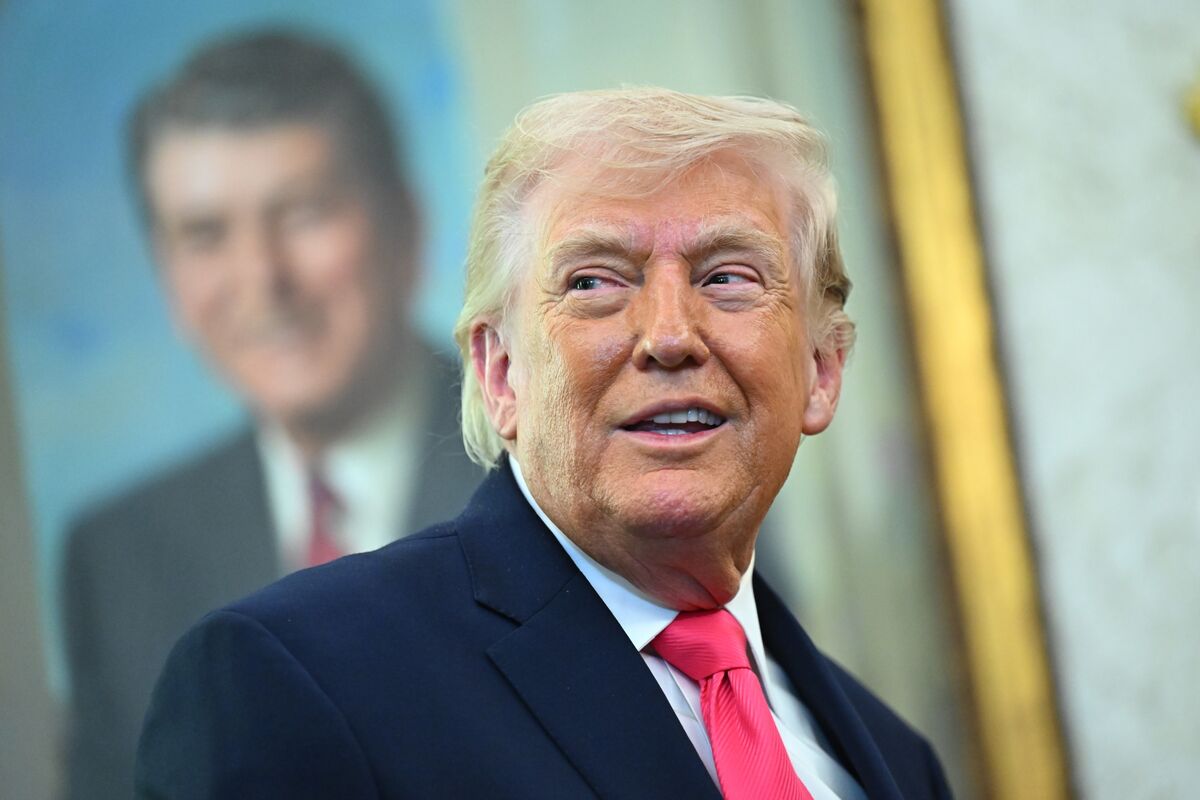
President Trump appointed Mark Zuckerberg (Meta), Marc Andreessen, Larry Ellison (Oracle) and Jensen Huang (Nvidia) to a new presidential technology council focused on AI policy and science issues; David Sacks will chair the council alongside White House Science and Technology Policy Director Michael Kratsios. The move signals greater White House engagement with leading tech and venture figures on AI and crypto policy but is primarily political/ advisory and unlikely to produce immediate market-moving outcomes.
Policy influence concentrated in industry veterans is a structural positive for large incumbent suppliers to AI compute and enterprise AI stacks because administrative nudges (procurement, visa policy, export control cadence) lower adoption friction and shift incremental enterprise spend toward integrated providers. Expect a multi-quarter acceleration in hyperscaler and large-enterprise RFQs for validated, certified stacks (hardware + stack + services) where Nvidia and Oracle are natural beneficiaries; this favors suppliers with pre-certified roadmaps and large installed bases, not bleeding-edge niche startups.
Second-order effects: tighter GPU and advanced-node supply funding cycles will amplify TSMC/ASML capacity signaling and raise bargaining power for dominant silicon vendors, potentially compressing margins at smaller AI chip challengers while widening gross margins at incumbents that can monetize both silicon and software subscriptions. On the software/ad side, any tangible easing of regulatory constraints would permit faster model deployment into ad personalization and enterprise products, raising medium-term revenue per-user for platforms that already own the data and distribution layer.
Key tail-risks and reversal paths are political and reputational rather than purely commercial — a high-profile model failure, export-control re-tightening, or bipartisan antitrust push (domestic or EU-driven) could reverse any short-term regulatory tailwind within 6–18 months. Near-term market reaction will be muted (days–weeks) until concrete policy drafts or procurement directives appear; the real opportunities and hazards crystallize over 6–24 months as budgets and contracts reset.
AI-powered research, real-time alerts, and portfolio analytics for institutional investors.
Overall Sentiment
neutral
Sentiment Score
0.00
Ticker Sentiment
