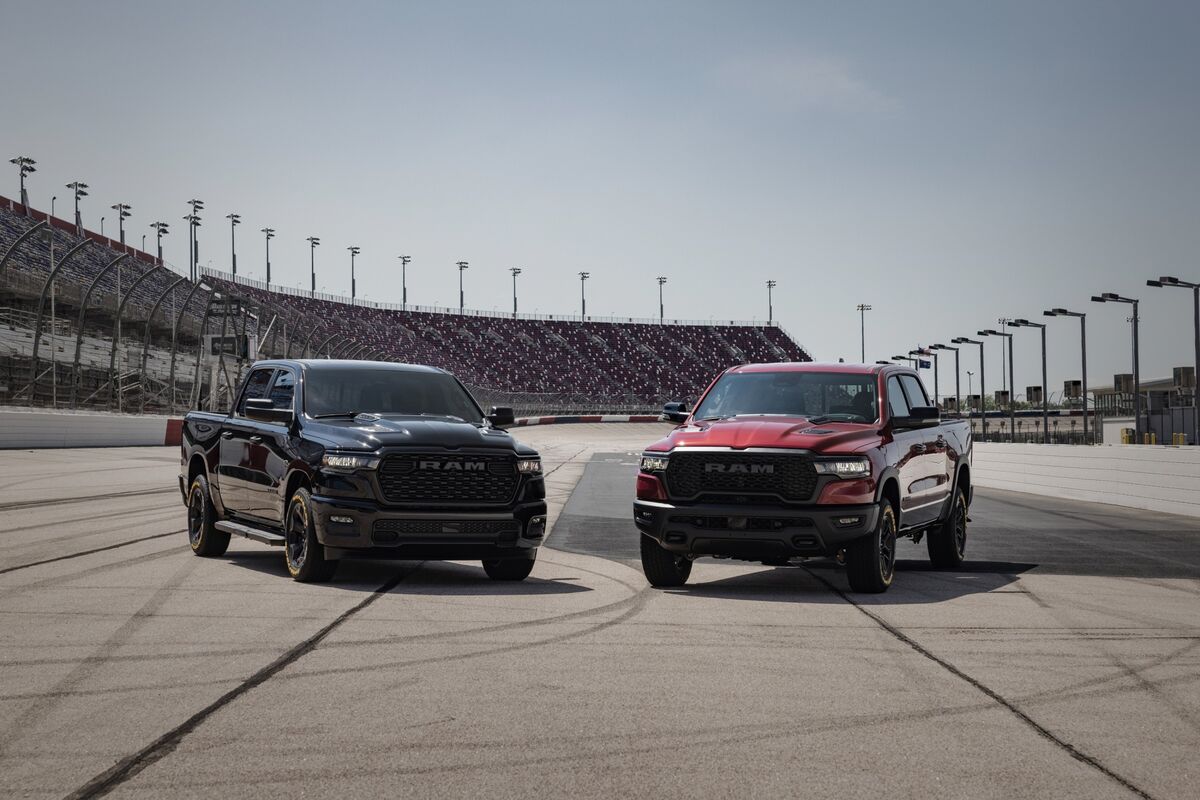
Ram is reintroducing the Hemi V8 engine option for its 1500 pickup trucks in 2025, a move aimed at boosting sales and appealing to traditional truck buyers amidst growing competition from hybrid and electric models. The decision reverses a previous discontinuation of the Hemi and reflects a strategic effort to recapture market share by catering to customer demand for powerful gasoline engines, particularly as Ford's F-150 remains a strong competitor.
Stellantis N.V. (STLA) is strategically reintroducing the Hemi V8 engine option for its Ram 1500 pickup trucks in 2025, reversing a prior discontinuation, in a bid to reclaim lost sales and appeal to traditional buyers demanding powerful gasoline engines. This decision aims to bolster Ram's competitiveness against rivals like Ford's F-150 and address a persistent segment of consumer demand, even as the automotive market increasingly shifts towards hybrid and electric vehicles. The move signifies a tactical effort to regain market share by directly responding to customer preferences for internal combustion engines in the pickup segment. However, the mixed sentiment score of -0.05 associated with STLA suggests the market perceives this as a nuanced development, potentially balancing short-term sales benefits against the alignment with long-term electrification strategies, reflecting a moderate market impact score of 0.4.
AI-powered research, real-time alerts, and portfolio analytics for institutional investors.
Request DemoOverall Sentiment
mixed
Sentiment Score
-0.05
Ticker Sentiment
