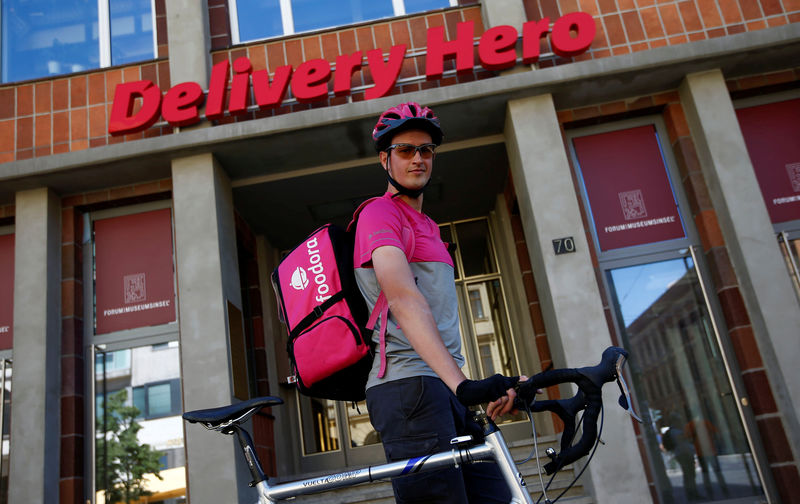
Delivery Hero agreed to sell its Taiwan foodpanda operations to Grab for $600 million in cash, with the deal expected to close in H2 2026 on a cash-free, debt-free basis. Delivery Hero said it will use net proceeds to repay debt and for general corporate purposes; Taiwan generated €1.5 billion GMV and reported positive adjusted EBITDA (ex-allocated group costs) in 2025. The sale is the first transaction under a strategic review led by JP Morgan and marks Grab’s ninth market and first outside Southeast Asia. The transaction requires regulatory approvals and a complex operational separation to transition customers, vendors and delivery partners to Grab.
This transaction is best read as proof-of-concept for Delivery Hero’s asset-recycling playbook and Grab’s willingness to buy optionality at the margins of its footprint. Expect Delivery Hero to accelerate targeted carve-outs of mid-market geographies where local scale and payments/last-mile integration are weak; that reduces group complexity but leaves a leaner, higher-margin core that still needs clear unit-economics traction to re-rate. For Grab, the move materially increases execution risk (cross-border integration of payments, merchant contracts and couriers) but also creates a concentrated path to demonstrate cross-sell of fintech/grocery offerings in a higher-ARPU market — success would justify a multiple premium, failure would compress it sharply.
Regulatory approvals and transition execution are the two highest-probability binary catalysts; a delayed or rocky migration (merchant churn, courier attrition) can undercut GMV and produce visible guidance misses within 1-4 quarters. The time arbitrage favors option-like exposure: 6–18 months is the window for approvals and integration clarity, while 12–36 months is when multiple expansion or contraction will show up in cashflow conversion. Tail risks include adverse regulatory rulings in the target market, a tighter funding/credit backdrop exposing post-sale covenant sensitivity, or a macro slowdown that reduces discretionary delivery frequency and deflates the strategic rationale.
Consensus focuses on headline cash proceeds; it underweights integration execution and the repeated pattern of strategic reviews producing only partial deleveraging unless proceeds are paired with operational margin improvements. The smarter read is event-driven optionality: the first sale de-risks the balance sheet but raises the bar for subsequent M&A or reinvestment decisions — each follow-on divestment will be judged on local GMV sustainability and the ability to redeploy capital into higher-return verticals within the parent app ecosystem.
AI-powered research, real-time alerts, and portfolio analytics for institutional investors.
Request DemoOverall Sentiment
moderately positive
Sentiment Score
0.35
Ticker Sentiment
