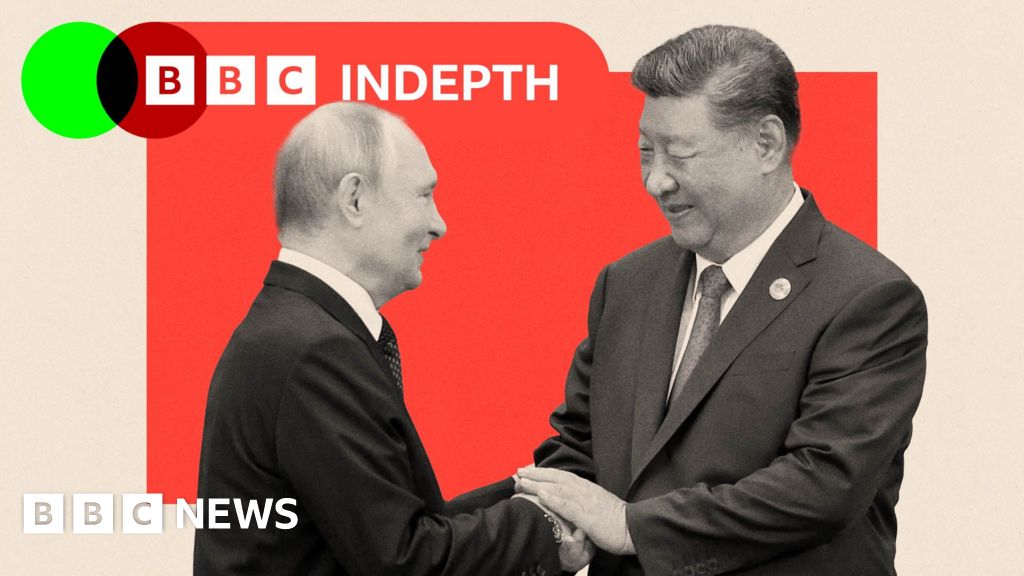
China-Russia ties remain resilient despite growing asymmetry, with China supplying more than 90% of Russia's sanctioned technology imports and Russia increasingly dependent on Chinese trade and energy. The proposed Power of Siberia 2 pipeline could deliver 50 billion cubic metres of gas to China, underscoring the strategic importance of the relationship. The article suggests the partnership is flexible rather than a formal alliance, limiting immediate market shock but reinforcing geopolitical fragmentation.
The key market implication is not “China backs Russia,” but that Russia has become a constrained but still useful appendage in China’s de-risking architecture. That means Beijing can extract discounted energy, military learning, and sanctioned components while keeping enough distance to preserve optionality with the West; the asymmetry is a feature, not a bug. For markets, that lowers the probability of a near-term Russia policy rupture, but raises the probability of gradual Chinese substitution into every pocket of Russia’s industrial base that Western suppliers vacate.
Second-order effects matter more than headline geopolitics. If Russian energy flows deepen into China, it tightens the strategic link between Asian LNG pricing, European gas repricing, and shipping insurance/risk premia in a more persistent way than spot headlines suggest. The bigger winner is Chinese industrial and defense supply chains that can absorb sanctioned inputs and stress-test components in a live conflict environment; the loser is any Western exporter assuming a cyclical reopening of Russia as a premium market. That also means the Ukraine war increasingly functions as an R&D subsidy for Chinese systems integration.
The contrarian view is that the relationship is durable precisely because it is impersonal and transactional, not because it is ideologically strong. Consensus underestimates how much mutual mistrust actually stabilizes the arrangement: neither side wants formal obligations, so there is less chance of alliance-breaking disappointment. The main break risk is not diplomacy with Washington, but a Russian elite backlash if Beijing becomes too openly extractive, or a China-Taiwan crisis that forces Beijing to choose between preserving Western economic channels and maintaining Russia as a geopolitical spoiler.
Over a 3-12 month horizon, the most investable edge is in relative pricing of sanctioned supply chains versus broad EM or Europe beta: the trade is about who gains incremental bargaining power from a frozen geopolitical bloc system. Any sign of a large Russian gas contract with China would be a medium-term bearish catalyst for European gas volatility, but only modestly bullish for Chinese equities unless domestic demand improves. The bigger alpha is in identifying Western companies with hidden Russia/China adjacency that can be displaced by Chinese substitutes faster than consensus models assume.
AI-powered research, real-time alerts, and portfolio analytics for institutional investors.
Request DemoOverall Sentiment
neutral
Sentiment Score
-0.05
