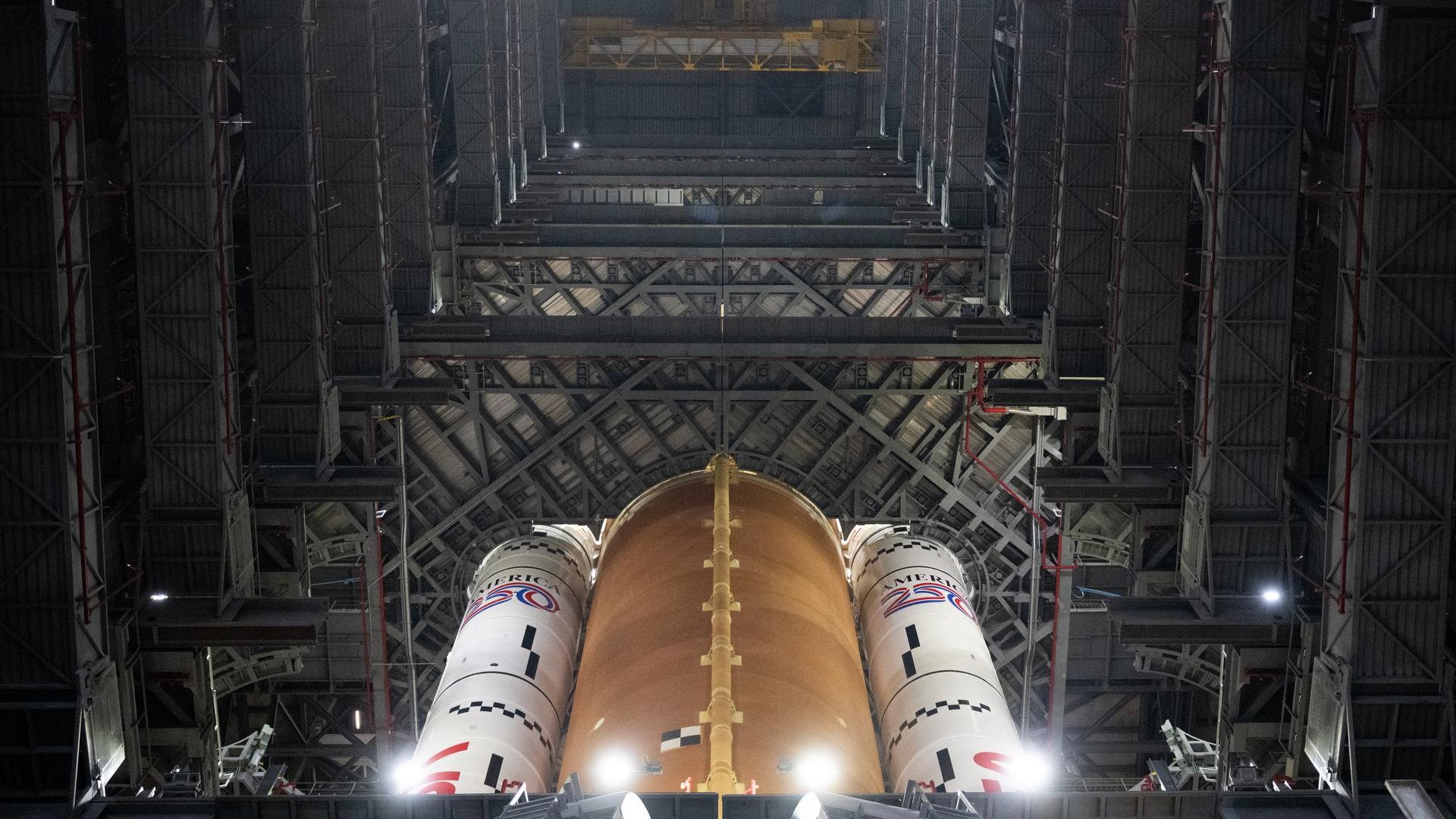
NASA plans to roll the Space Launch System and Orion stack to Launch Pad 39B on Jan. 17, weather and technical readiness permitting, using Crawler-Transporter 2 for a 4-mile, up-to-12-hour transfer. Artemis 2 will carry four astronauts on a 10-day lunar flyby; officials will conduct pad checkouts including a wet dress rehearsal to load more than 700,000 gallons of cryogenic propellant before a flight readiness review. An official launch date will be set after tests, with the target window spanning Feb. 6–April 10 and 15 discrete possible launch days; prior wet dress issues on Artemis 1 underscore schedule and technical risk. Operational readiness, weather, commodity replenishment and range scheduling are cited as the primary constraints on attempting launches within the listed opportunities.
Market structure: A successful Artemis 2 rollout and clean wet-dress will revalue prime aerospace contractors (Lockheed Martin LMT, Northrop Grumman NOC, Aerojet Rocketdyne AJRD, Boeing BA) by reducing program execution risk and increasing near-term NASA spend visibility; expect a 3–10% positive re-rating across majors on demonstrable technical progress within 1–3 months. Suppliers of cryogenic infrastructure and industrial gases (Linde LIN, Air Products APD) see modest order visibility upside; commercial launch pure-plays (if public) get relatively less incremental NASA revenue. Pricing power shifts modestly to primes due to political capital behind SLS continuation, but repeated delays keep margin compression risk alive.
Risk assessment: Tail risks include a crewed-flight failure (low probability, >-30% equity shock for primes), major cryogenic leak during wet dress (probability ~10–25% based on Artemis 1 history) causing multi-month slips, or Congressional budget reallocation to commercial partners (medium probability over 12–24 months). Immediate catalysts: wet dress (Jan 17+), Flight Readiness Review (2–6 weeks), formal launch date (within Feb 6–Apr 10 window). Hidden dependencies: Eastern Range scheduling, helium/cryogen supply chains and insurance/litigation exposures that can amplify price moves.
Trade implications: Tactical long in LMT/NOC and AJRD through 3–9 month call spreads captures upside if tests pass; hedge with small BA puts or short position to protect vs execution headlines. Use ETF exposure (ITA) to express sector view while shorting high-volatility commercial-space equities (e.g., SPCE) as relative underperformers. Option structures: buy limited-risk call spreads and sell premium (short OTM puts) only after a confirmed clean wet dress to avoid being short into headline risk.
AI-powered research, real-time alerts, and portfolio analytics for institutional investors.
Request DemoOverall Sentiment
neutral
Sentiment Score
0.05
Contrarian angles: Markets may underprice political inertia—Congress and NASA are likely to sustain SLS-related spend even after setbacks, implying structural revenue for primes over 3–5 years; conversely, a clean Artemis 2 could paradoxically accelerate scrutiny and competition for lunar contracts (benefit to SpaceX if public). Historical parallel: Apollo-era prime re-rating post-success, but long-term returns were muted as program spend tapered—treat gains as event-driven, not permanent multiple expansion. Unintended consequence: a high-profile failure would transfer funding to commercial providers quickly, making BA/LMT/NOC vulnerable beyond the immediate shock.
