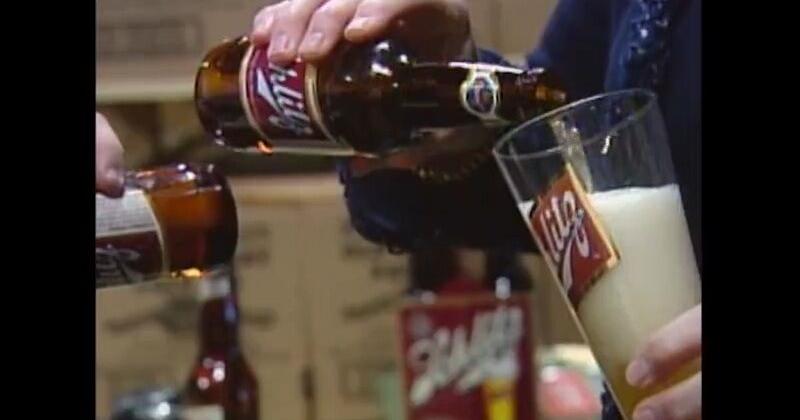
Pabst Brewing has ceased production of Schlitz after 177 years, with the brand retired because volumes fell below required minimums. Wisconsin Brewing will brew one final batch on May 23, and farewell events are planned for May 29-30 and June 27. The news is largely symbolic and nostalgic, but it signals continued weakness in demand for the legacy beer brand.
This is less a brand obituary than a signal of how brutally concentrated the bottom of beer economics has become. When a legacy regional label can no longer clear production minimums, it implies the industry’s long tail is being stripped of optionality: contract brewers will increasingly rationalize away low-velocity SKUs, while the surviving brands gain a bit more shelf and tap space without needing to outspend on marketing. The second-order winner is not just larger beer brands, but also local on-premise accounts that can use scarcity/narrative to lift margin on farewell events and limited releases. The immediate fundamental read-through is mildly negative for value-seeking consumer staples portfolios because this is another data point that brand equity alone is no longer enough to preserve volume in mature alcohol categories. Over the next 6-18 months, expect more portfolio pruning by regional and private-label owners as they prioritize high-throughput SKUs and de-emphasize legacy labels with weak velocity; that should modestly improve gross margin quality but at the cost of top-line mix breadth. If this pattern broadens, the competitive advantage shifts toward companies with national distribution, pricing power, and disciplined innovation cadence rather than nostalgia-driven retention. The contrarian angle is that the headline looks worse for demand than the earnings impact likely is. A tiny, declining SKU disappearing is usually a rounding error financially, but these retirements can mark a local peak in sentiment that temporarily boosts adjacent brands and taproom traffic through scarcity. The risk is not the lost volume itself; it's whether management teams use this as cover to accelerate broader pruning, which can depress reported revenue for a few quarters before margins recover. For investors, the cleanest expression is to favor beer platforms with scale and pricing power over fragmented regional operators; the former can absorb SKU rationalization while preserving distribution economics. Near term, the event is more useful as a read-through on consumer trade-down and legacy brand decay than as a direct catalyst, but if you see additional retirements across adjacent portfolios, that becomes a stronger short signal for niche beverage wholesalers and a positive margin catalyst for the top two or three national brewers.
AI-powered research, real-time alerts, and portfolio analytics for institutional investors.
Request DemoOverall Sentiment
mildly negative
Sentiment Score
-0.25
