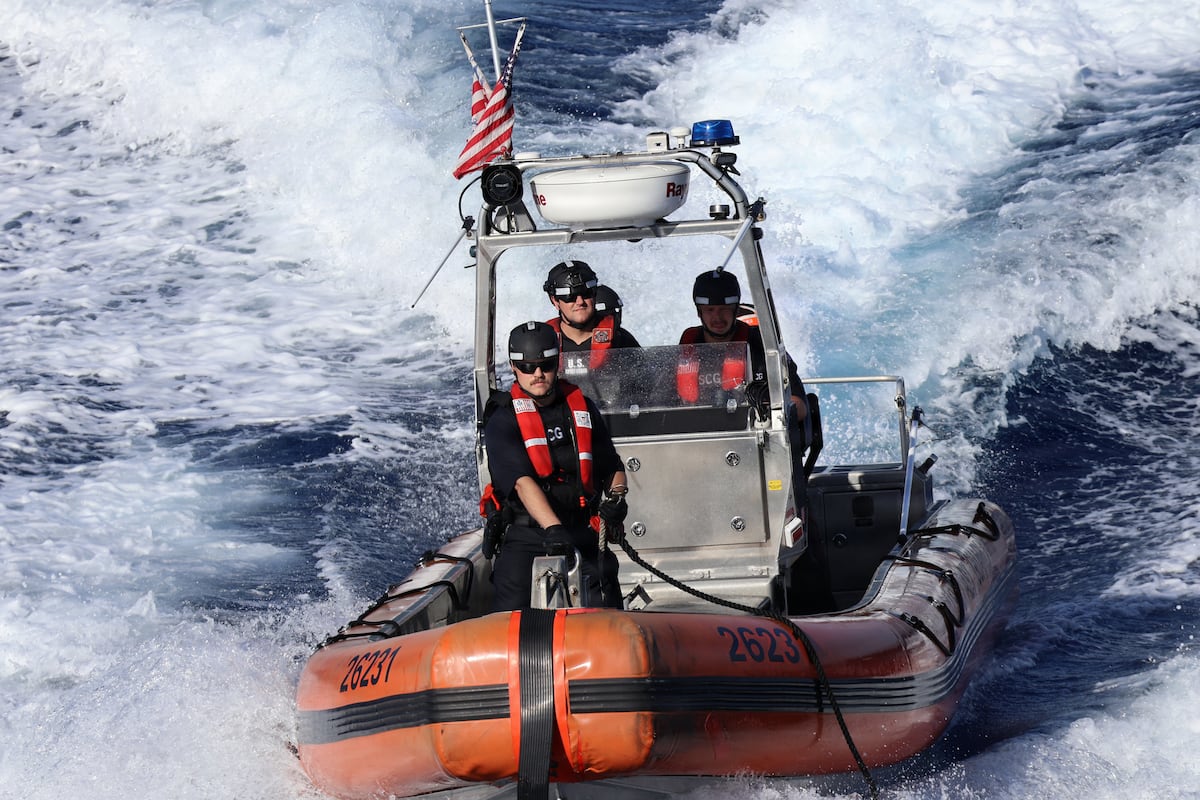
The Coast Guard is operating under a DHS funding lapse, with civilian employees missing full pay from Feb. 16 through early April and emergency funding potentially expiring this week. The shutdown has already led to unpaid utility bills at some family housing units, halted non-emergency operations and maintenance, and forced some families to take on debt or delay medical care. The service is seeking $15.6 billion for fiscal 2027, including $14.1 billion in discretionary funding, but appropriations remain stalled in Congress.
The immediate marketable effect is not on defense primes, but on the operational reliability of federal logistics: when a maritime service is forced into cash-preservation mode, maintenance deferral compounds faster than headline budget risk implies. That creates a near-term degradation path for cutters, aircraft, training throughput, and contracting cadence that can spill into smaller shipyards, maintenance vendors, simulators, and specialty suppliers with slower order conversion than the big primes. The second-order winner is the larger, better-capitalized prime ecosystem if Congress eventually fronts loads spending into FY27, because delayed work tends to be catch-up work, but the path there is jagged. The real catalyst window is the next 1-3 weeks, not the annual budget cycle. If pay uncertainty persists through the next payroll dates, expect measurable productivity loss, higher attrition among civilian specialists, and a harder backlog in training pipelines that takes quarters to unwind even after a funding fix. That kind of workforce stress is especially damaging in a constrained labor market for maritime technicians, creating hidden inflation in labor costs and longer lead times for service-ready platforms. Consensus is likely underestimating how quickly these episodes become an acquisition delay story rather than a pure appropriations story. The strategic irony is that a service seeking to expand capacity may end up with more nominal funding but worse execution if Congress does not restore continuity; that favors contractors with diversified federal exposure and balance sheets over niche providers reliant on one program or one depot lane. In other words, the headline is political dysfunction, but the investable implication is higher execution risk premium for small-cap government services and logistics names tied to DHS-adjacent workflows.
AI-powered research, real-time alerts, and portfolio analytics for institutional investors.
Overall Sentiment
strongly negative
Sentiment Score
-0.55
