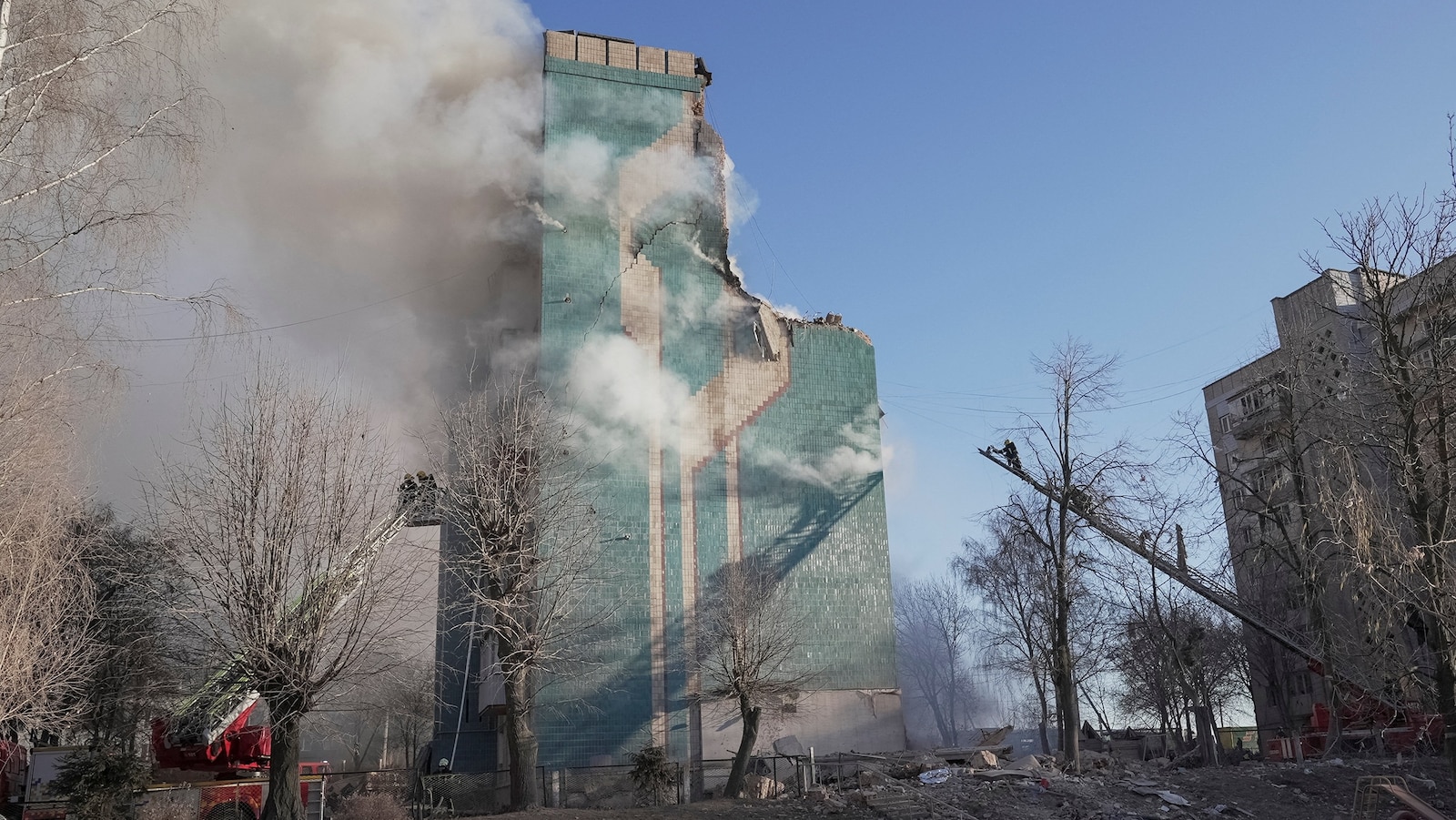
A massive overnight Russian strike on Ukraine—reported by Kyiv as 476 drones and 48 missiles launched, the largest November attack and the most since Oct. 30—killed at least 20 people in Ternopil, injured dozens in Kharkiv and other regions, and saw Ukrainian defenses claim to have downed or suppressed 442 drones and 41 missiles. NATO forces in Poland and Romania scrambled fighters and put ground-based air defenses on maximum alert after a drone penetrated about five miles into Romanian airspace (later lost on radar); allied jets from Poland, the Netherlands, Norway and Spain and German Patriot systems were involved in the response, while Russia said it shot down 80 Ukrainian drones. The strikes and cross-border incursion heighten regional escalation risk, reinforce Ukrainian calls for stronger air defenses, and coincide with a high-level U.S. Army delegation visiting Kyiv to try to revive stalled peace talks—developments that could sustain defense demand and keep geopolitical risk premia elevated.
Russian forces launched what Ukraine described as 476 drones and 48 missiles overnight — the largest November attack and the most intensive since Oct. 30 — with Ukrainian air defenses reporting they downed or suppressed 442 drones and 41 missiles while impacts from 34 drones and seven missiles were reported across 14 locations. At least 20 people were killed and 66 injured in a strike on two nine‑story residential buildings in Ternopil, nearly 50 were injured in Kharkiv, and Ukraine mobilized roughly 500 rescuers at nine active locations, underscoring sustained civilian toll and infrastructure damage.
NATO members in Poland and Romania scrambled fighters and put ground‑based air defenses on maximum alert after a drone penetrated about five miles into Romanian airspace and was later lost on radar; allied jets from Poland, the Netherlands, Norway and Spain and German Patriot systems were involved, while Russia reported downing 80 Ukrainian drones. The strikes coincided with a U.S. Army delegation visit to Kyiv, highlighting heightened diplomatic and military engagement amid stalled peace talks.
The episode elevates near‑term regional escalation risk and reinforces Ukrainian and NATO demand for layered air‑defense and counter‑drone capabilities, which should keep geopolitical risk premia elevated. Operational strain on Ukrainian defenses and recurring high‑volume drone/missile barrages imply continued requirements for munitions, interceptors and sustainment support, while cross‑border incidents increase political and market sensitivity to further escalation.
AI-powered research, real-time alerts, and portfolio analytics for institutional investors.
Request DemoOverall Sentiment
strongly negative
Sentiment Score
-0.70
