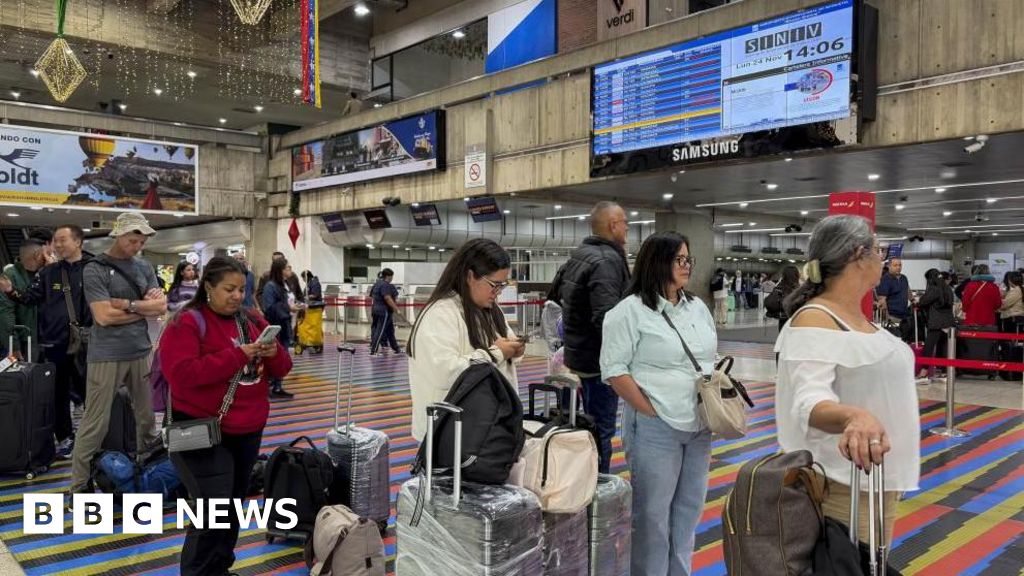
Venezuela's aviation authority (Inac) ordered international carriers to resume flights within 48 hours or face loss of clearance after many airlines suspended service following a US FAA notice citing "heightened military activity" around Maiquetía. Affected carriers include Iberia, Air Europa, Plus Ultra, Gol, Latam, Avianca, TAP and Turkish Airlines, while Copa and state-owned Conviasa have continued operations; IATA warned that rescinding clearances would further isolate Venezuela. The ultimatum and concurrent US naval buildup and strikes in the Caribbean elevate geopolitical and operational risk, curtailing connectivity and posing downside revenue and credit pressure for carriers and Venezuela-exposed assets.
Market structure: Immediate winners are carriers still operating to Caracas (Panama’s Copa Holdings - CPA) and cargo/charter operators that can pick up displaced passenger and freight flows; losers are legacy carriers with suspended routes (IAG, LTM, GOL exposure) facing short‑term revenue loss, increased fuel/insurance costs and route churn. War‑risk and maritime insurance pricing power shifts to insurers/reinsurers (AON, MMC, RNR) as premiums reprice; refiners of heavy sour crude could see input volatility if Venezuelan exports are disrupted by sanctions or naval interdiction.
Risk assessment: Tail risks include a full international air blockade, targeted strikes on civil aviation assets, or formal US sanctions on PDVSA that would trigger >20% moves in Venezuelan heavy crude differentials and force re‑routing costs of +5–10% for Latin America carriers. Immediate (48–72h) operational risk is highest; short term (weeks–3 months) sees insurance and route reallocation effects; long term (3–18 months) political fragmentation could permanently curtail connectivity and increase sovereign default probability. Hidden dependencies include insurance claims backlog, refiner crack spread adjustments, and contagion to Colombian/Caribbean aviation hubs.
Trade implications: Favor tactical long exposure to Copa (CPA) sized 1.5–2% of portfolio for 1–3 months to capture market‑share gains; pair with a 2% short in LATAM ADR (LTM) or Gol (GOL) given higher Venezuela exposure and liquidity risk, with 15% stop‑loss. Buy 3‑month Brent call spread (allocate 0.5–1% of portfolio) to capture a >5% crude move; take 1–2% position in broker/reinsurer equities (MMC/AON or RNR) for a 3–9 month horizon to play premium repricing.
Contrarian angles: Consensus overstates Venezuela’s direct oil volume impact (exports are modest) so pure oil longs can be crowded and should be sized small and protected; conversely market may underprice operational uplift to regional hubs—Copa could sustainably grow yields by 3–6% if suspensions persist >30 days. Historical parallels (Libya 2011) suggest shocks are often resolved within 1–3 months; set objective exits: unwind oil calls on <+3% price move or after 90 days, trim airline pair after 30–90 days if FAA/NATO advisories are lifted.
AI-powered research, real-time alerts, and portfolio analytics for institutional investors.
Request DemoOverall Sentiment
moderately negative
Sentiment Score
-0.45
