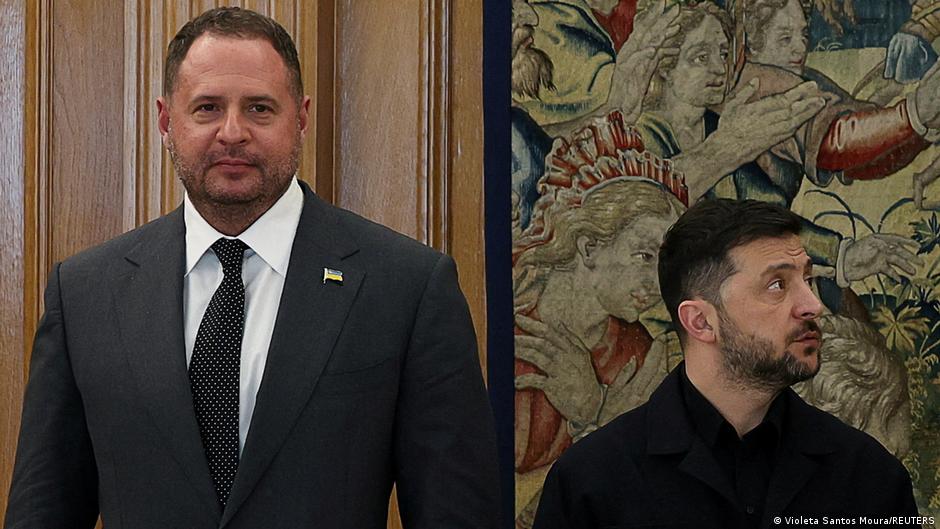
Ukraine's anti-corruption agencies filed charges against former presidential chief of staff Andriy Yermak over an alleged money-laundering scheme involving 460 million hryvnia ($10.5 million) tied to a luxury development near Kyiv, with bail set at $3.2 million. The case also implicates figures close to President Volodymyr Zelenskyy, including Timur Mindich, raising reputational and political risk for the presidency even though Zelenskyy is not currently under investigation. Market impact is likely limited, but the scandal could pressure Ukraine's domestic politics and governance narrative.
This is less a single-person corruption headline than a governance shock that increases the probability of elite fragmentation inside Kyiv. The second-order effect is that any deterioration in trust around the presidential circle makes coalition management harder at the exact moment Ukraine needs to sustain external financing, military aid, and domestic compliance with unpopular reforms. In practice, markets should think in terms of a slower bleed in political optionality rather than an immediate policy rupture. The near-term beneficiary is the anti-corruption institutional camp: NABU/SAP gain credibility with Western sponsors, which can translate into more leverage over aid conditionality and reform sequencing. The loser is the executive branch, because every new allegation raises the cost of discretionary decision-making, increases internal loyalty tests, and creates a broader chilling effect across procurement, construction, and energy-adjacent contractors that rely on informal access. That matters because even without direct budget hits, a rise in perceived state opacity tends to slow investment, delay project awards, and widen the discount rate investors apply to Ukraine-linked assets. The key catalyst window is 1-6 months, not days: the immediate market reaction should remain contained unless investigators broaden the net toward higher-tier political or wartime financing channels. The real tail risk is post-war succession politics, where compromised networks become usable as leverage in an election environment; that is when reputational damage can convert into policy paralysis or a sudden reshuffling of patronage. The counterview is that Western backing and wartime immunity can suppress headline risk for longer than bears expect, so the trade should be sized as a governance event with optionality, not as an imminent regime crisis. For broader markets, the read-through is modest but negative for Ukraine reconstruction equities and regional EM risk premia. Contractors and developers with Ukraine exposure are vulnerable to slower permitting and higher counterparty risk, while defense names may be partially insulated because aid urgency increases when political credibility deteriorates. The best expression is via relative trades rather than outright macro shorts.
AI-powered research, real-time alerts, and portfolio analytics for institutional investors.
Request DemoOverall Sentiment
strongly negative
Sentiment Score
-0.65
