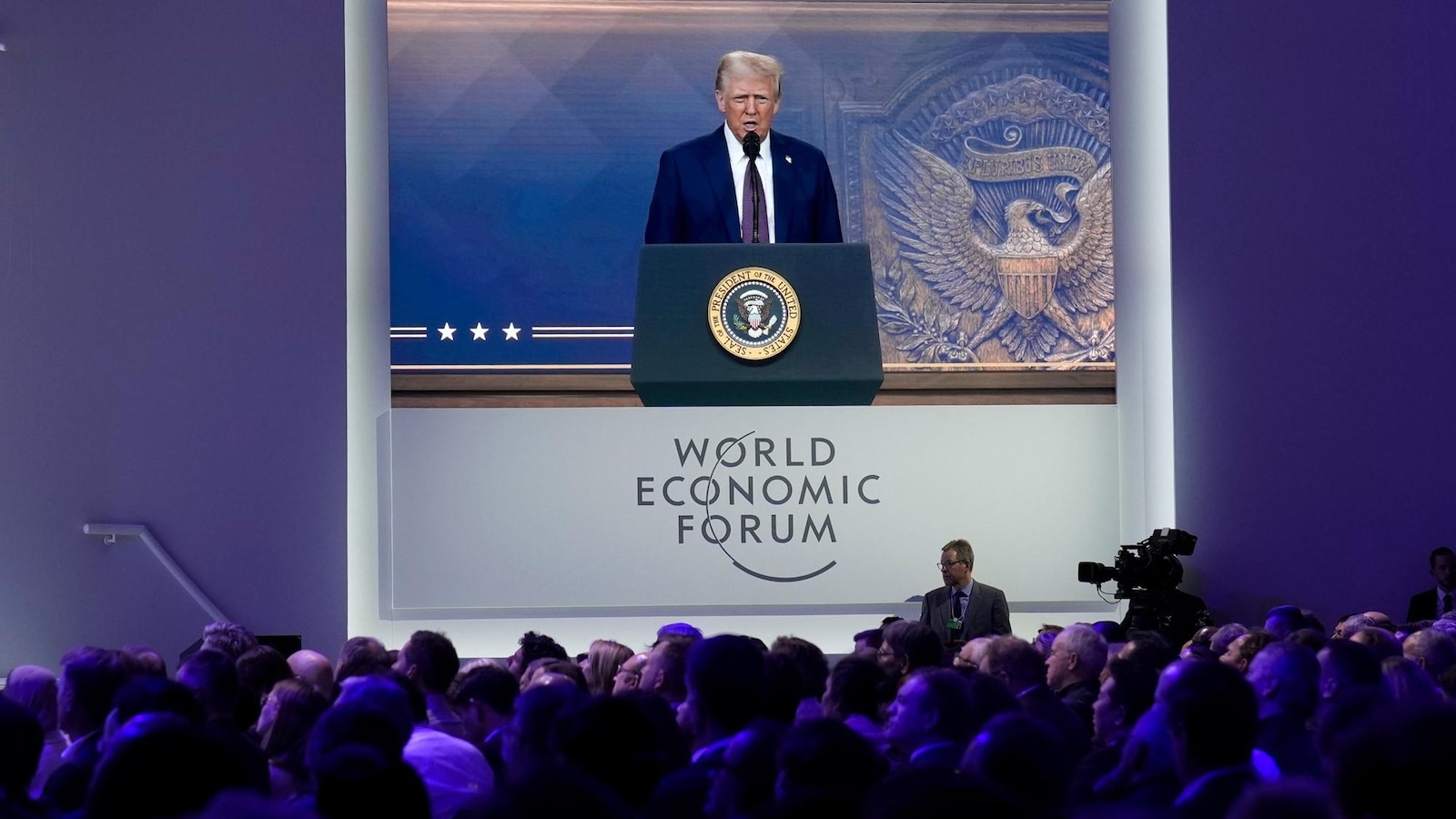
U.S. President Donald Trump will lead a record-large U.S. delegation to the World Economic Forum annual meeting in Davos next week, running through Jan. 23, accompanied by five Cabinet secretaries and other senior officials. The forum expects about 3,000 participants from 130 countries, including 850 CEOs and 64 heads of state to date, while China’s delegation will be led by Vice Premier He Lifeng, signaling elevated geopolitical and trade discussions and potential high-level policy engagement and deal-making opportunities.
Market structure: Davos with a high-profile U.S. delegation raises the odds of headline-driven rotates between risk-on cyclicals and safe-haven assets. Short-term winners: large-cap multinationals if conciliatory language on trade emerges (benefit concentrated in exporters and financials); losers: EM and supply-chain exposed small caps if protectionist rhetoric resurfaces. Expect incremental shifts in sector flows rather than structural market-share changes absent concrete policy actions over months.
Risk assessment: immediate (days) risk is headline volatility — VIX spikes of +20–40% intraday are plausible around surprise tariff/sanctions announcements; short-term (weeks/months) risk is policy implementation (tariffs, export controls) that can compress margins by 1–5% for supply-chain exposed sectors; long-term (quarters/years) outcomes hinge on sustained US-China stance altering capex and reshoring decisions. Tail risks include abrupt new tariffs or financial sanctions that disrupt semiconductor and shipping supply chains, producing >10% moves in affected equities.
Trade implications: the event favors tactical, low-gamma positions sized conservatively — favor ETFs and liquid large caps for quick execution. Cross-asset impacts: expect USD and Treasuries to react to risk tone (risk-on -> weaker USD, steeper yields) and oil/gold to move on geopolitical dialogue; volatility catalysts will be joint statements, tariff headlines, and bilateral meetings (watch US–China communiqué).
Contrarian angles: consensus treats Davos as ceremony; that underprices policy signaling risk from a Trump-led, Cabinet-backed delegation. Historical parallels (2018 trade talks) show small Davos headlines can precede multi-month trade shifts; mispricing likely exists in defense (LMT/RTX) and shipping/commodity names where a small probability of escalation would be under-hedged. Unintended consequence: pro-protectionist messaging could briefly boost domestic cyclicals while sowing longer-term input-cost pressures that markets will reprice over 3–12 months.
AI-powered research, real-time alerts, and portfolio analytics for institutional investors.
Request DemoOverall Sentiment
neutral
Sentiment Score
0.00
