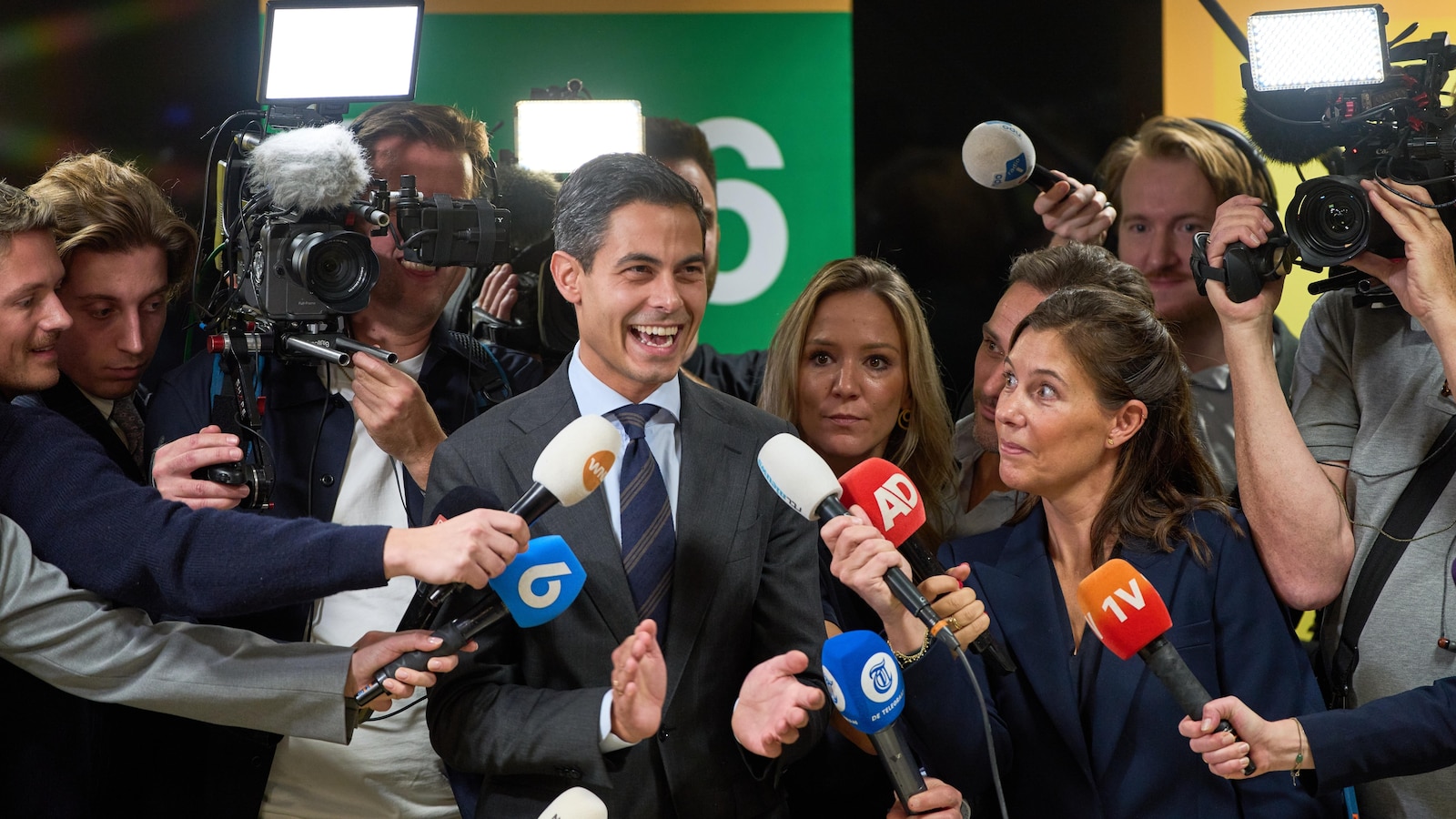
The Dutch national election concluded with the centrist D66 party narrowly winning against Geert Wilders’ far-right Party for Freedom, with both securing 26 parliamentary seats. As the largest party, D66 will now lead the complex process of forming a coalition government, a task expected to take weeks or months given the fragmented political landscape. This result marks an 11-seat loss for Wilders' party compared to its previous performance, indicating a notable shift in the country's political composition.
The Dutch national election concluded with the centrist D66 party narrowly securing a win over Geert Wilders’ far-right Party for Freedom (PVV). Both parties obtained 26 parliamentary seats, with D66 holding a marginal 28,000-vote advantage. This outcome positions D66 to initiate the complex process of forming a new coalition government.
The result represents a significant political shift, marking an 11-seat loss for Wilders' PVV compared to its performance two years prior. This decline suggests a retreat from the previous surge in far-right support. Wilders' past inability to maintain a stable four-party coalition, plagued by infighting and failure to address migration, likely contributed to this electoral setback.
The fragmented Dutch political landscape indicates that forming a stable governing coalition will be a protracted process, potentially taking weeks or months. While D66 leads this effort, the narrow margin and diverse political interests could lead to prolonged negotiations. The neutral market sentiment and low market impact score suggest that the immediate financial implications are not perceived as significant, but prolonged political uncertainty could introduce future volatility.
AI-powered research, real-time alerts, and portfolio analytics for institutional investors.
Request DemoOverall Sentiment
neutral
Sentiment Score
0.00
