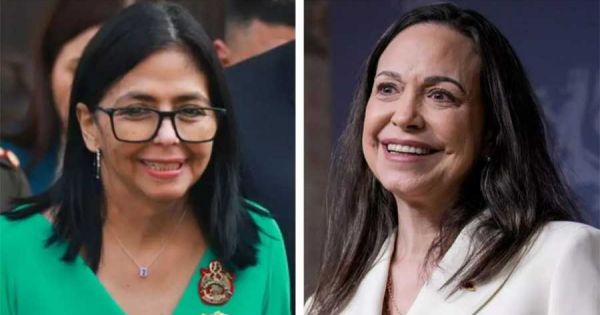
Caretaker Venezuelan President Delcy Rodríguez is seeking to travel to Washington for talks with the Trump administration about steps for the transition government, potentially coinciding with opposition figure María Corina Machado’s visit; analysts have also floated a possible three-way encounter. Rodríguez remains a sanctioned official whose US entry would require a Treasury waiver undergoing multiple political and internal reviews, while a US team has arrived in Caracas to assess reopening the shuttered Baruta embassy compound and Venezuela plans a reciprocal delegation—developments that could modestly alter diplomatic normalization prospects and risk perceptions for Venezuelan assets.
Market structure: A credible US-Venezuela engagement is a win for buyers of heavy/sour crude and refiners that process it (PBF, VLO, MPC) and a latent negative for Brent/WTI price power if Venezuelan exports resume at scale. Sovereign/PDVSA credit would rerate from distressed toward recovery value, benefiting high-beta EM debt/EM equity indices (ILF, EEM) while pressuring safe-havens (GLD, TLT) if de-risking occurs. Financial intermediaries (insurers, shipping) gain fee pools once sanctions cleared; US energy majors with Venezuelan footprints (CVX) see optionality value but regulatory/reputational take-up will be gradual.
Risks: Tail outcomes include a diplomatic reversal or US Treasury denial of a waiver, which would spike risk premia and asset-risk aversion in days; a worst-case military escalation or sanctions snapback could collapse prices and EM assets in weeks. Realistic timeline: embassy/technical teams -> 1–3 months; phased sanctions relief -> 3–12 months; material oil flow restoration -> 6–18 months (scenario uplift +0.3–0.6 mbpd). Hidden dependencies: banking/insurance reopening and tanker availability are binding constraints that add 3–9 month lags beyond political agreements.
Trade implications: Favor selective, tactical positions: long heavy-crude-processing refiners (PBF, VLO) and a 1–2% opportunistic long in ILF/EEM on any official US waiver within 30 days; hedge with 3–9 month Brent/WTI put spreads (buy 6-month Brent 3%–6% OTM put spread) to protect against diplomatic failure. Avoid outright long PDVSA paper until legal pathways and correspondent banking are visible; prefer short-dated volatility plays rather than directional oil futures until export trajectories are confirmed.
Contrarian angle: The market likely underestimates implementation friction — sanctions relief ≠ immediate barrels. Historical parallel: Iran 2015 added ~0.5 mbpd only after 6–12 months and sent oil down ~$8–12; expect similar lag. Thus, an over-rapid bearish oil trade is risky; prefer relative value (refiners vs. exploration) and credit-recapture players rather than naked oil shorts. Monitor Treasury waiver decision and Lloyd’s/Insurers’ reopening as binary triggers.
AI-powered research, real-time alerts, and portfolio analytics for institutional investors.
Request DemoOverall Sentiment
neutral
Sentiment Score
0.00
