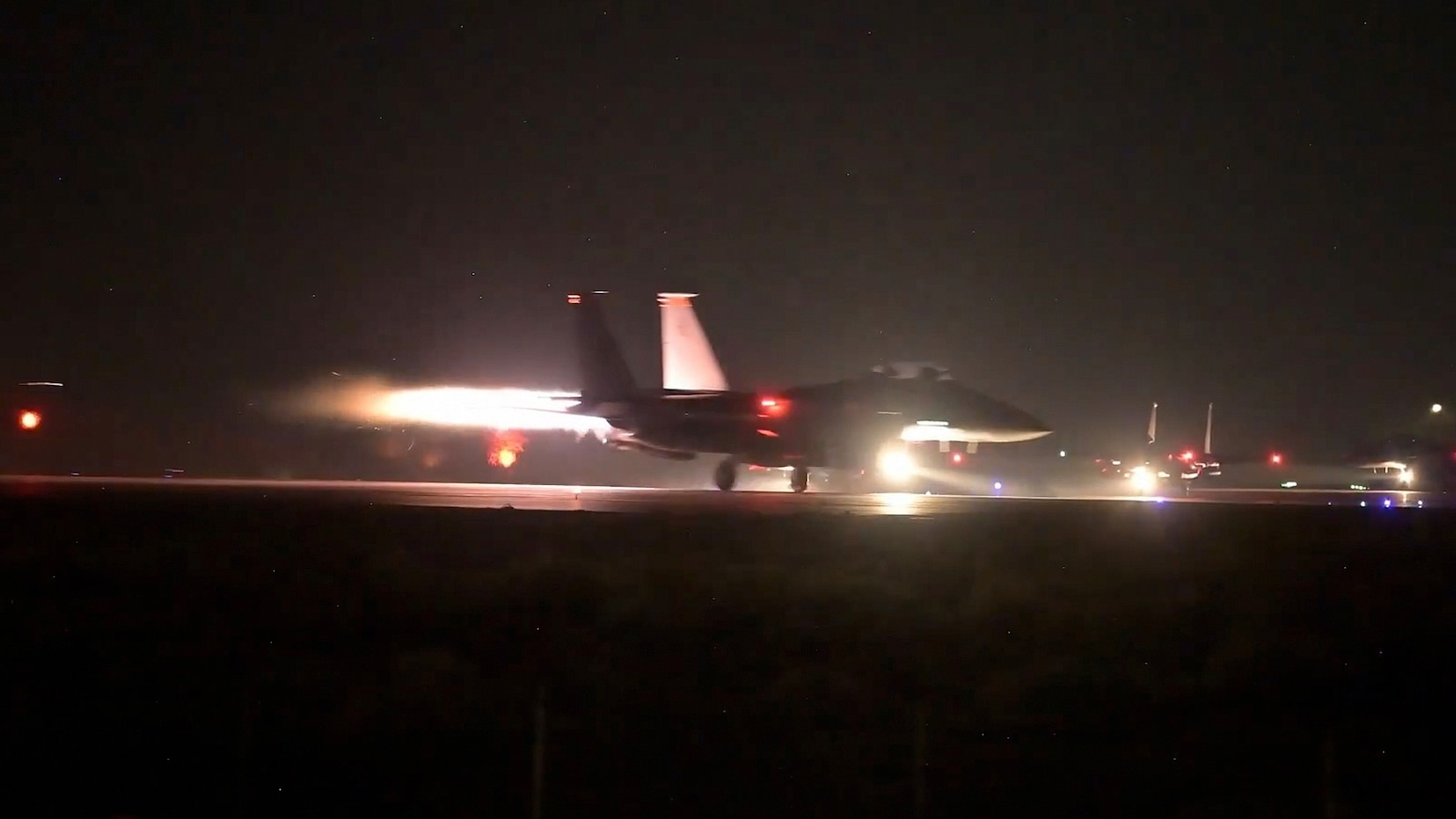
The U.S. launched "Operation Hawkeye Strike," carrying out retaliatory strikes in central Syria that struck more than 70 ISIS targets with roughly 100 munitions using F-15s, A-10s, Apache helicopters and HIMARS, with Jordanian aircraft participating. The action was a direct response to a Dec. 13 ambush in Palmyra that killed two Iowa National Guardsmen and a U.S. civilian interpreter, and CENTCOM says 1,500–3,000 ISIS fighters remain in Syria/Iraq; about 1,000 U.S. troops are currently deployed in Syria (100–150 at At Tanq Garrison). For investors, the operation represents a limited, punitive escalation aimed at degrading ISIS remnant capabilities but raises regional risk-off considerations that could briefly pressure risk assets and energy-related exposures.
Market structure: Defense primes (LMT, RTX, NOC, GD, LHX) and suppliers of precision munitions/ISR are the immediate beneficiaries as governments reprioritize readiness; expect a 3–8% knee-jerk re-rating in these names over days if rhetoric escalates. Energy producers and oil-service firms (XOM, CVX, HAL) can see 5–12% directional moves if supply routes or sentiment shift; travel, airlines (AAL, UAL) and EM tourism-exposed equities are first-order losers. Cross-asset flows should push safe-haven bids into USTs and gold (GLD) in the immediate days, pressuring yields down ~10–25bp and lifting implied equity volatility +15–40% short-term.
Risk assessment: Base case is limited punitive strikes (low-probability of broad war), but tail scenarios (regional escalation, attacks on oil infrastructure) carry outsized impacts: assign ~10–20% chance over 3–6 months that Brent spikes >15% quickly. Hidden dependencies include U.S. domestic politics and Congressional defense appropriations which determine sustained contract flows (3–12 month lag). Key catalysts to watch in the next 7–30 days: casualty reports, oil-infrastructure incidents, Jordan/Syria state responses, and Congressional statements on funding.
Trade implications: Tactical: establish small, option-defined longs in defense (buy 3-month call spreads on LMT and RTX, 1–1.5% portfolio each) to capture a 10–20% upside tail while limiting capital at risk. Hedging: buy 30-day ATM SPY puts equal to 0.5–1% portfolio to protect vs. a >3% market drawdown; allocate 1–2% to XLE or 3-month Brent call options if WTI > $80 trigger to benefit from supply-risk spikes. If 10yr yield drops >15bp, add 1–2% TLT as a tactical safe-haven for days–weeks.
AI-powered research, real-time alerts, and portfolio analytics for institutional investors.
Request DemoOverall Sentiment
moderately negative
Sentiment Score
-0.35
Contrarian angles: The market may overpay for headline defense exposure; historical limited strikes (2017–2018) produced transient defense rallies that faded within 3–6 months absent sustained procurement commitments. Underappreciated winners: mid-cap ISR/cyber names (LHX, TTWO? select contractors) with faster contract conversions and less political scrutiny. Consider pairing a long on select ISR/cyber suppliers with a short or underweight in airlines/tourism for 3–6 month horizon to exploit asymmetric re-rating.
