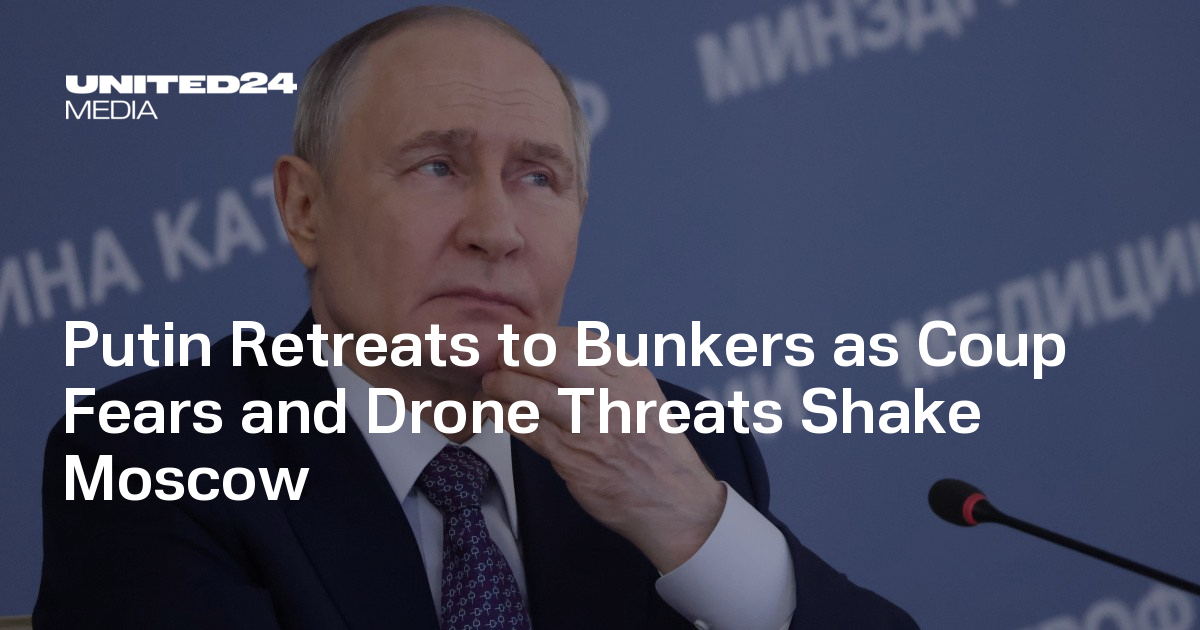
Putin is reportedly shifting to fortified bunker facilities in Russia’s Krasnodar region after heightened coup and drone-assassination fears, while Moscow faced another overnight drone attack on May 4 with debris found about 6 km from the Kremlin. The FSO has expanded protection to at least ten senior military officials and tightened security across the presidential administration, including two-tier screening and restrictions on internet-enabled devices. The escalation underscores rising internal security stress in Russia and a meaningful increase in geopolitical risk.
This is less about a single security event and more about a regime shift toward internal fragility. When a leader is forced into bunker-style operating patterns, the market implication is widening coordination failure inside the coercive apparatus: more duplicated security layers, slower decisions, and a higher probability of miscalculation around succession, arrests, and attribution of attacks. That tends to reduce policy optionality over the next 1-3 months and raises the chance of abrupt, symbolically important escalations designed to reassert control. The second-order effect is on the war economy, not just Moscow optics. More resources will be diverted to point defense, surveillance, and elite protection, which is structurally negative for offensive capacity and logistics efficiency over a 1-2 quarter horizon. It also increases stress on the domestic tech stack: comms shutdowns, device bans, and electronic-warfare dependence create bottlenecks for civil administration, defense contractors, and any vendor reliant on state procurement execution. For markets, the key transmission is risk premium rather than immediate macro shock. The longer-term bullish case for hardline posture is real—internal insecurity often incentivizes external escalation—but that is offset by degraded command cohesion and rising elite faction risk, which can produce stop-start policy and episodic retrenchment. The consensus is likely underpricing the chance that a visible security failure inside Moscow accelerates succession jockeying and a broader clampdown that is economically negative but politically destabilizing. The cleanest tradeable expression is not a direct Russia beta bet, but a hedge against wider geopolitical spillover and European risk repricing. Tail risk is a successful insider attack or high-visibility breach in the capital within days to weeks, which would likely trigger a sharper military response and a jump in energy, defense, and cyber names. Conversely, if the Kremlin can restore the perception of control over 4-8 weeks, some of the fear premium should fade, but the underlying governance impairment remains.
AI-powered research, real-time alerts, and portfolio analytics for institutional investors.
Request DemoOverall Sentiment
strongly negative
Sentiment Score
-0.55
