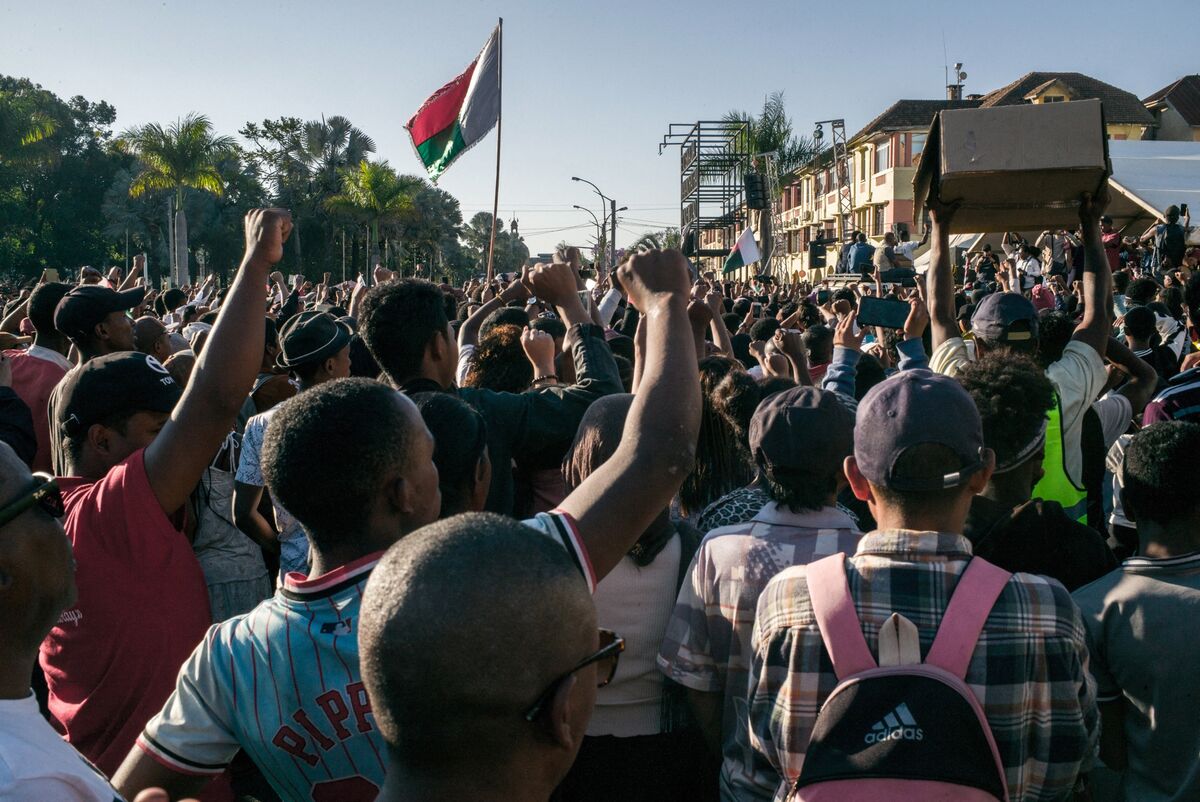
Madagascar's President Andry Rajoelina has dissolved the National Assembly and Senate with immediate effect, escalating the nation's political crisis amid ongoing protests demanding his resignation and an impending impeachment vote by opposition lawmakers. This decisive action signals heightened political instability in the Indian Ocean island nation, potentially impacting investor confidence and the broader economic outlook.
Madagascar's President Andry Rajoelina has dissolved both the National Assembly and Senate with immediate effect, a decisive move amidst escalating political turmoil. This action follows widespread protests demanding his resignation and an impending impeachment vote initiated by opposition lawmakers, indicating a severe constitutional crisis. This unilateral dissolution signals a significant deterioration of democratic governance and heightened political instability within the Indian Ocean island nation. The associated "strongly negative" sentiment and "uncertain" tone, alongside a market impact score of 0.55, underscore substantial concerns regarding the nation's economic outlook and investor confidence. Such an abrupt dismantling of legislative bodies typically introduces considerable uncertainty, potentially deterring foreign direct investment and increasing sovereign risk. This environment could lead to capital flight and hinder economic development, impacting any existing or planned investments in the region.
AI-powered research, real-time alerts, and portfolio analytics for institutional investors.
Request DemoOverall Sentiment
strongly negative
Sentiment Score
-0.75
