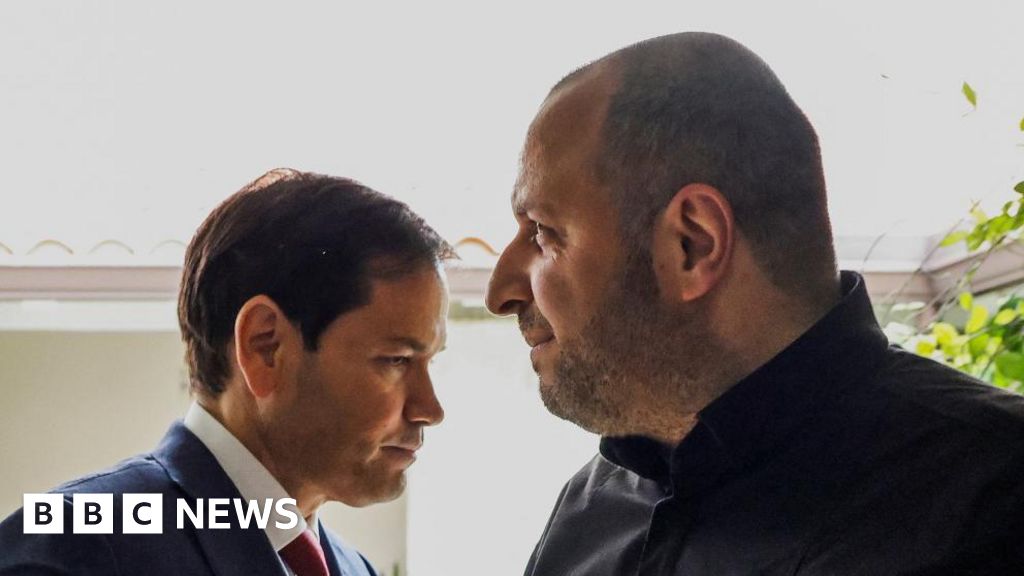
Senior US and Ukrainian officials met in Florida for talks described as "productive" by participants, with the Ukrainian delegation led by new chief negotiator Rustem Umerov after Andriy Yermak's departure; US envoys Steve Witkoff and Jared Kushner attended and Witkoff is due to visit Moscow. Key sticking points remain, chiefly the disposition of territory Russia controls or annexed, even as participants including Marco Rubio and President Zelensky signalled cautious optimism about reaching a deal; the conflict has resulted in large casualties and at least seven million refugees since Russia's February 24, 2022 invasion, leaving geopolitical risk and defense-related uncertainty elevated for markets.
Market structure: A credible near-term ceasefire would disproportionately hurt defense contractors and energy-export-exposed firms while helping commodity exporters (grain) and reconstruction-oriented industrials. Expect 5–15% downside pressure on pure-play defense ETFs (ITA) and 3–8% downward pressure on Brent/WTI within 1–3 months if a deal gains traction, while wheat (WEAT) and corn (CORN) supply could increase and cap prices by ~10% over 3–6 months.
Risk assessment: Key tail risks include a deal collapse or sanctions shock that re‑escalates fighting (spiking oil >15% and defense volatility), or a back‑channel agreement that leaves sanctions intact (muted Russian asset repricing). Near term (days–weeks) watch Witkoff/Kushner visits and Zelensky–Macron talks; medium (1–3 months) is confirmation of territorial arrangements; long term (12–36 months) is reconstruction financing and capex flows into Ukraine/EU.
Trade implications: Primary trades are short defense/long reconstruction cyclicals and event options around oil/commodities. Volatility should compress in equities and commodities if momentum toward a deal continues — favor directional option spreads (put spreads on XLE, call spreads on CRH/CAT) sized 1–3% portfolio. Fixed income: modest long duration EM/EU sovereign exposure if risk premium compresses (target 6–12 month window).
Contrarian angles: Markets underprice sanction persistence and political risk — a “deal” that leaves frozen assets or banking restrictions will prevent clean Russian asset reentry, limiting ruble/equity rallies. Conversely, reconstruction demand is multi‑year and likely underallocated; owning select construction names with 12–36 month horizon captures that asymmetric upside even if near‑term politics remain messy.
AI-powered research, real-time alerts, and portfolio analytics for institutional investors.
Request DemoOverall Sentiment
neutral
Sentiment Score
0.15
