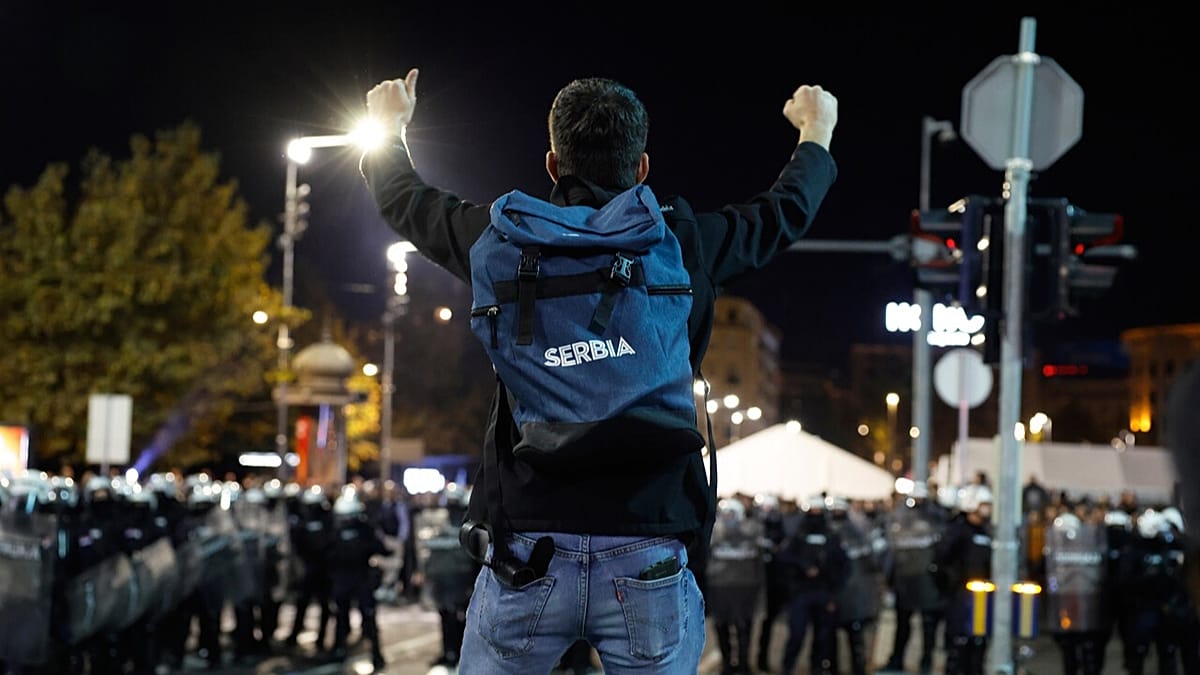
Student-led protests in Belgrade, Serbia, escalated into violent clashes with police and supporters of President Aleksandar Vučić, resulting in 37 arrests and injuries. The unrest, stemming from a fatal train station awning collapse and allegations of corruption, demands accountability for victims and snap elections, highlighting significant political instability and ongoing tensions in the country.
Violent clashes erupted in central Belgrade between student-led protesters and supporters of President Aleksandar Vučić, resulting in at least 37 arrests and one police officer injured. These confrontations, marked by the throwing of bottles, flares, and stun grenades, underscore escalating political tensions in Serbia.
The unrest stems from a fatal train station awning collapse in Novi Sad a year prior, which protesters attribute to alleged corruption and disregard for construction safety rules during renovation work. Demonstrators are demanding accountability for the 16 victims and calling for snap elections, challenging the current government's legitimacy.
The ongoing occupation of a tent camp outside the parliament building by Vučić's supporters, coupled with a recent 'act of terror' shooting incident, highlights significant political polarization and potential for further instability. This environment of sustained civil unrest and demands for political change introduces elevated governance risks.
AI-powered research, real-time alerts, and portfolio analytics for institutional investors.
Request DemoOverall Sentiment
neutral
Sentiment Score
0.00
