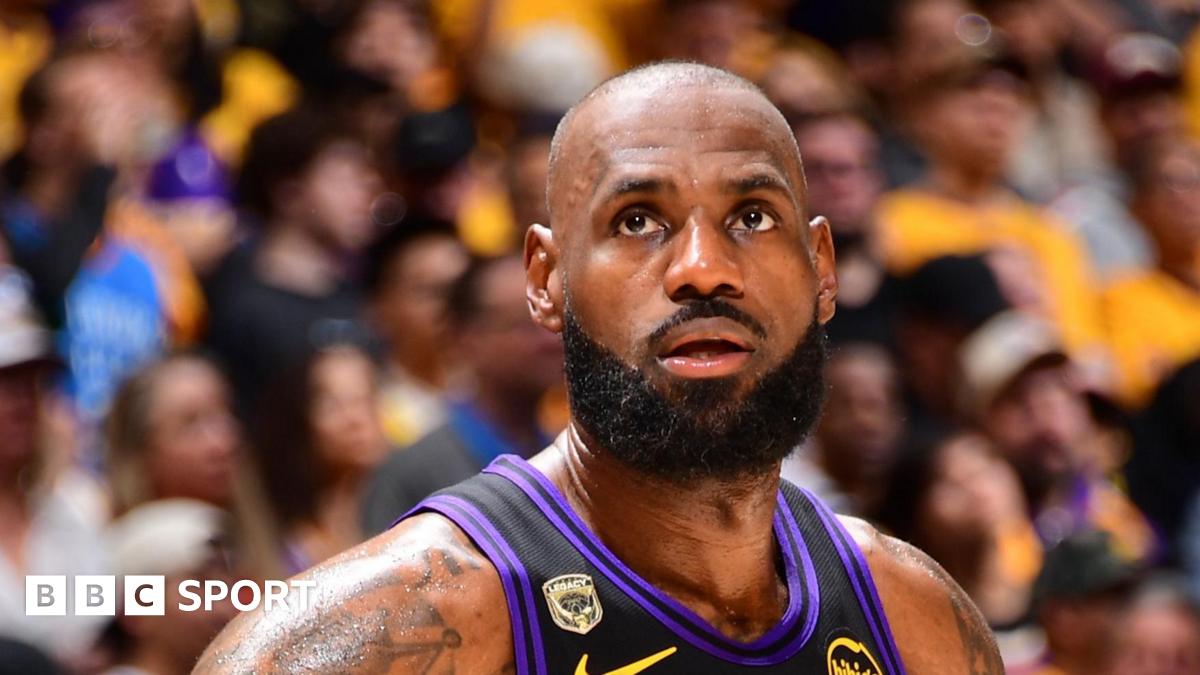
LeBron James, 41, said he is unsure what the future holds after the Lakers were eliminated 4-0 by the Oklahoma City Thunder in the Western Conference semi-finals. James is out of contract in the summer and indicated he will consult with his family before deciding whether to continue playing. The article is primarily sports reporting with no material financial-market implications.
This is primarily an uncertainty event, not a fundamental shock, but it matters because superstar retirement decisions can move NBA media economics, ticketing, and jersey/licensing demand at the margin. The bigger second-order effect is on the Lakers’ next 12 months: if this is a true exit window, the franchise shifts from a title-contention asset to a transition/rebuild asset, which typically compresses premium-seat pricing power and local sponsorship urgency before national TV interest fully normalizes.
The market should also think about timing. Retirement ambiguity tends to create a short-lived sentiment bid around any appearance of “last season,” followed by a fast fade if he returns on a short contract or special farewell tour. The option value sits with the league and broadcasters more than the team: if he plays one more year, ESPN/ABC, streaming partners, and NBA media inventory get another season of elite attention concentration; if he leaves, attention disperses to younger playoff stars, which is healthier long term but less monetizable in the near term.
Contrarian view: the consensus may be overestimating the binary nature of the decision. At this stage, the more likely outcome is not a clean retirement but a leverage-maximizing one-year extension or a controlled farewell structure that preserves optionality. That would support a tradeable spike in LAL-related sentiment without changing the underlying aging-asset risk profile, which argues for fading any overreaction in the franchise equity story rather than chasing it.
For investors, the cleanest expression is through media exposure rather than the team itself: the decision affects content demand, not operating cash flow in a way that is easy to isolate. The real risk is a mismatch between headline-driven fan enthusiasm and the slower-moving economics of arena revenue and sponsorship renewals, which typically reprice over months, not days.
AI-powered research, real-time alerts, and portfolio analytics for institutional investors.
Request DemoOverall Sentiment
neutral
Sentiment Score
-0.05
