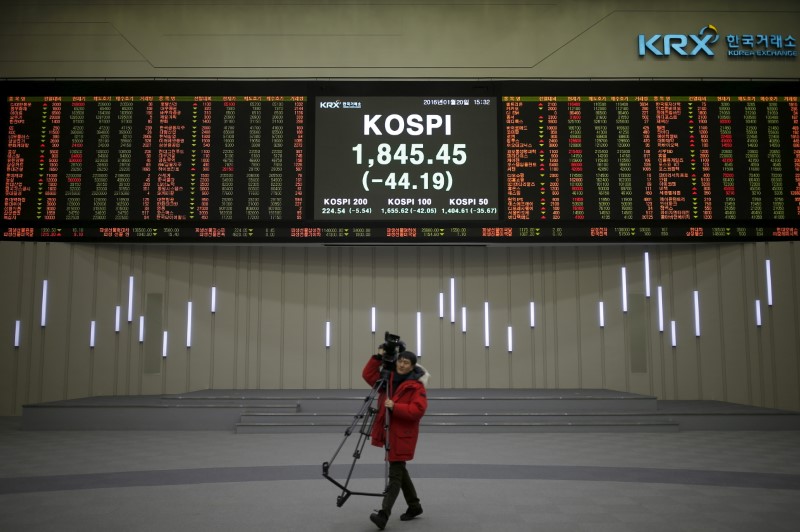
The KOSPI plunged 5.8% to 5,409.17 as South Korea named Shin Hyun-song as incoming BOK governor, a pick viewed as more hawkish which prompted fears of earlier rate hikes. Analysts flagged energy shocks from the Iran conflict, KRW depreciation and elevated household debt as catalysts that could push a pre-emptive hike as soon as July (with May not ruled out if the Middle East situation worsens); the BOK has held rates at 2.50% since July 2025 after cumulative cuts of 100bps earlier. The combination of geopolitical risk and a perceived shift toward tighter monetary policy triggered a regional risk-off move in Asian markets.
Market repricing toward earlier-than-expected tightening in Korea creates a front-end yield shock and a steeper curve over the next 6–12 months; front-end instruments should see the fastest move (2y–5y). A 50–75bp repricing in the 2y yield is plausible within 3–6 months if risk premia from energy/FX pressures persist, which will mechanically tighten domestic funding for household and SME borrowers.
A weakening KRW amplifies pass-through inflation and raises input costs for energy- and commodity-importing corporates; firms with large USD revenues but local currency liabilities gain an earnings hedge, whereas domestically exposed consumer, retail and property-linked companies face margin compression and higher default risk. Second-order supply-chain winners include large cap exporters with global pricing power (pricing power + FX tailwind), while smaller suppliers with high local-currency debt are likely to be forced into capex postponement, worsening domestic cyclical employment.
Geopolitical-driven energy shocks are the dominant tail risk in the near term (days–weeks) and will exacerbate the policy vs growth trade-off — persistent energy-driven CPI upside increases the odds of pre-emptive hikes, but a sharp FX stabilization or coordinated oil-price decline would reverse the risk premium quickly. Monitor three catalysts: (1) front-end yield jumps, (2) KRW moves beyond stress thresholds (~5–10% moves from current levels), and (3) domestic credit spreads widening; any two together signal a regime shift from risk-off to systemic credit tightening.
AI-powered research, real-time alerts, and portfolio analytics for institutional investors.
Overall Sentiment
strongly negative
Sentiment Score
-0.60
Ticker Sentiment
