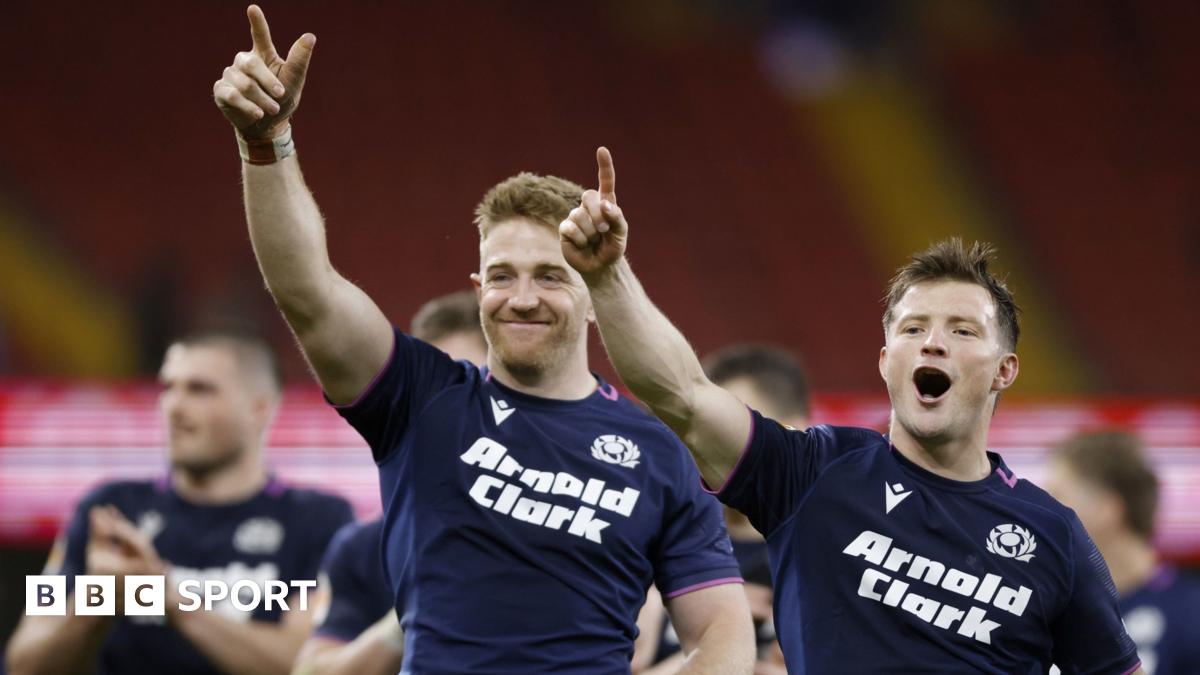
Scotland produced a dramatic come-from-behind win over Wales in Cardiff, overturning a 20-5 deficit to win after George Turner’s late try and Finn Russell’s penalty, with Darcy Graham and Russell also key to the turnaround. The result leaves Scotland top of the Six Nations table (subject to France beating Italy), preserves momentum ahead of home France and away Ireland fixtures, and underscores Scotland’s resilience and improved tournament prospects despite an error‑streak performance.
Market structure: Scotland’s upset is a demand shock for live-sports inventory — higher TV audiences and betting handle around surprise outcomes. Winners: broadcasters/streamers with Six Nations exposure (ITV.L, CMCSA) and bookmakers with diversified books (FLTR, DKNG) plus local hospitality (JDW.L, MAB.L) for match-day footfall; losers are marginal — small leisure operators that depend on predictable schedules. Pricings: ad CPMs and short-dated option/betting-implied vol should reprice +10-30% around key fixtures over the next 30–60 days.
Risk assessment: Tail risks include a major player injury, Covid/resurgence attendance restrictions, or a regulatory crackdown on gambling (beta shock to FLTR/DKNG) — low prob but >5% impact on short-term EBITDA. Time horizons: immediate (days) = higher handle/IV; short-term (weeks/months) = ad revenue and retail footfall swings ±1–4%; long-term (quarters) = renegotiation power on rights if viewer uplift sustains (+5–10% bid appetite). Hidden dependency: incremental revenue is rights-holder and sponsor-contract specific — not broad-based.
Trade implications: Capture volatility in betting/broadcaster names and local hospitality reversion. Tactical plays: short-dated volatility buys in FLTR/DKNG around Scotland’s next fixtures; 1–3% directional exposure to JDW.L for match windows. Rotate into broadcasters (ITV.L, CMCSA) if next two Scotland games sustain +10% TV rating uplift versus baseline, then lock gains via covered calls.
Contrarian angles: Consensus treats national tournament shocks as fleeting — but repeated upsets can lift multi-year rights bids and merchandise sales (1–3% incremental growth). Reaction likely underdone in broadcaster valuations and overdone in travel incumbents exposed to international tourism (TUI.L); regulatory risk for bookmakers is the crowd’s main unknown and should be hedged, not ignored.
AI-powered research, real-time alerts, and portfolio analytics for institutional investors.
Request DemoOverall Sentiment
neutral
Sentiment Score
0.05
