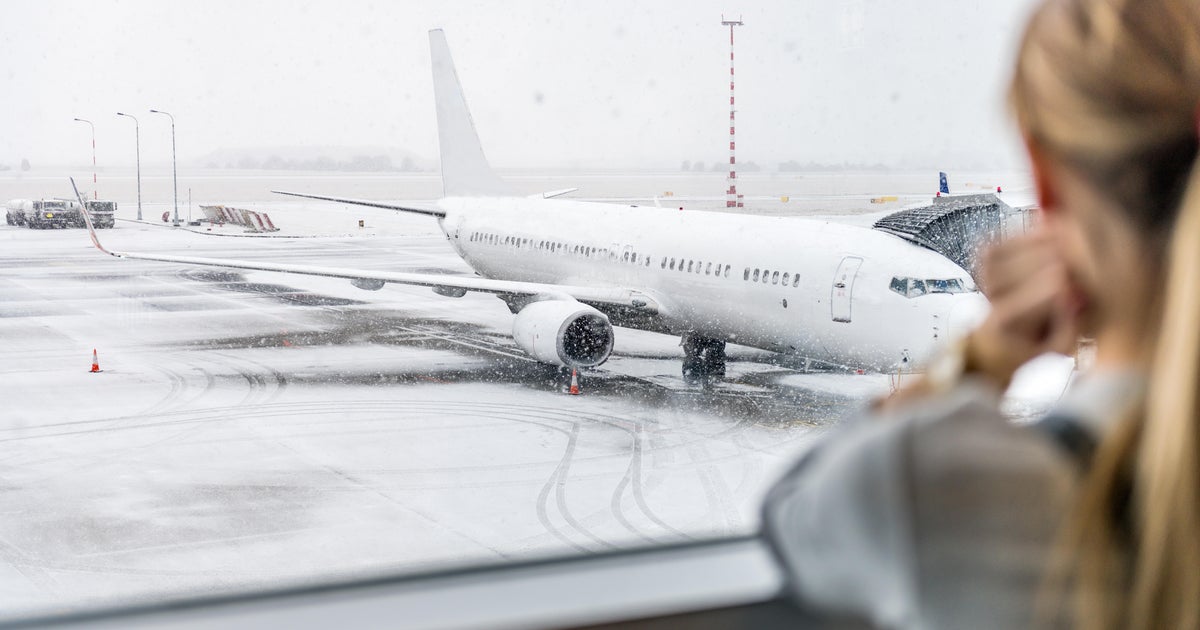
A large winter storm dubbed Winter Storm Fern is forecast to impact as many as ~230 million people across the U.S., prompting major carriers to issue travel waivers and likely increasing cancellations and delays over the weekend. American, Delta, Frontier, JetBlue, Spirit, Southwest and United have announced varying fee waivers and rebooking windows (notable examples: American for tickets bought before Jan. 19 for travel Jan. 23–25 across 34 airports; Delta allowing rebooks through Jan. 28; United waivers for tickets bought before Jan. 20 for travel Jan. 24–26 with rebook travel by Jan. 28). Travel-insurance demand is rising — Hopper reports a 17% increase in purchases of its “Disruption Assistance” policy (costing roughly 10% of a trip) — underscoring both elevated operational risk for carriers and incremental ancillary demand for disruption products.
Market structure: Short-term winners include travel-insurance vendors, rebooking platforms and ground transport providers that capture displaced demand; losers are legacy carriers (AAL, UAL) that bear waived fees and rebooking costs. Expect a 0.5–2% hit to quarterly revenue for affected carriers if disruption impacts ~1–3% of booked passengers (200–230M people in storm footprint); pricing power is limited because waivers compress ancillaries and force margin dilution. Cross-asset: expect near-term equity volatility in airline names, +5–20bp widening in lower‑rated airline credit spreads, temporary downward pressure on jet-fuel crack spreads and modest bid for U.S. Treasuries as a flight-to-safety hedge.
Risk assessment: Tail risks include multi-day hub closures (>48–72 hours) that cascade into multi-week crew/aircraft misalignments, raising recovery costs materially beyond current estimates. Immediate window: days (cancellations, waivers); short-term: weeks (rebooking, revenue recognition); long-term: quarters (potential customer loyalty impact if recovery mismanaged). Hidden dependencies: crew duty-time limits, overnight de-icing fleet availability and spare-parts logistics; a >5k-flight cancellation event is a breakpoint that shifts losses from manageable to systemic for cash-poor carriers. Catalysts: worsening weather forecasts, FAA ground stops, or simultaneous power failures at major hubs.
Trade implications: Tactical plays favor short-dated volatility and relative-value pairs: buy puts or vol on weaker balance-sheet carriers (AAL, UAL) while taking selective long exposure to better-capitalized LUV or ancillary/insurer enablers. Use 1–6 week horizons for options and 4–8 weeks for equity pairs; if an airline equity gap widens >7–10% on the event, consider layering. For fixed income, small (~0.5–1%) purchases of short-dated airline CDS or buying protection via high-yield bond puts can be efficient if spreads widen >15–30bp.
Contrarian angles: The market underestimates two offsets: (1) waivers preserve future revenue (customer goodwill) limiting long-term share loss, and (2) a spike in ticket-insurance uptake and lower short-term fuel consumption may partially offset fee losses. Historical parallels (polar vortex events 2013–2014) show sharp 3–8% equity drawdowns with mean reversion inside 2–6 weeks; if a carrier is down >8% on the storm, that may be an overreaction-driven buying opportunity. Unintended consequence: elevated ancillary insurance sales could increase per-passenger ancillary revenue by $5–15 over the next 1–3 months.
AI-powered research, real-time alerts, and portfolio analytics for institutional investors.
Request DemoOverall Sentiment
mildly negative
Sentiment Score
-0.25
Ticker Sentiment
