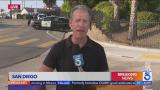
The fast-moving Sandy Fire has grown to 1,364 acres with 0% containment, prompting evacuation orders in multiple Simi Valley zones and warnings in Thousand Oaks, Agoura Hills, West Hills, and Chatsworth. At least 500 firefighters are responding, school classes were canceled, and officials say no injuries have been reported so far. The fire is producing smoke impacts across the San Fernando Valley, while other smaller SoCal brush fires were also reported amid windy conditions.
This is a localized infrastructure-and-liability shock rather than a broad macro event, but the second-order effects matter. The immediate winners are firms with embedded wildfire exposure protection: utilities with strong balance sheets and regulated recovery frameworks, insurers that have already de-risked California property books, and contractors tied to debris removal, emergency response, and grid hardening. The losers are the opposite: California-centric homeowners' carriers, landowners in the WUI, and any utility name where the market still prices an open-ended liability tail.
The key market variable is not the acreage today; it is whether this becomes a pattern of repeated wind-driven starts in the same geography over the next 2-6 weeks. That raises the odds of claims frequency compounding, school disruption, and business interruption across a wider ring of suburban services, even if the fire perimeter stays localized. In that scenario, the earnings hit shows up first in catastrophe-prone insurers, then in municipal service costs, then in local retail/hospitality traffic if smoke lingers and evacuations persist.
The contrarian angle is that the tape may be underestimating the duration of the risk because wind conditions have eased. Even with weaker winds, containment can stay fragile in dry brush and steep terrain, which means the probability-weighted tail is less about spread speed and more about reignition and spot fire jumps. For tradable implications, this supports buying convex protection in the names with asymmetric wildfire liability while fading overreaction in broader California-exposed sectors unless the fire meaningfully expands toward denser commercial corridors.
AI-powered research, real-time alerts, and portfolio analytics for institutional investors.
Request DemoOverall Sentiment
moderately negative
Sentiment Score
-0.35
