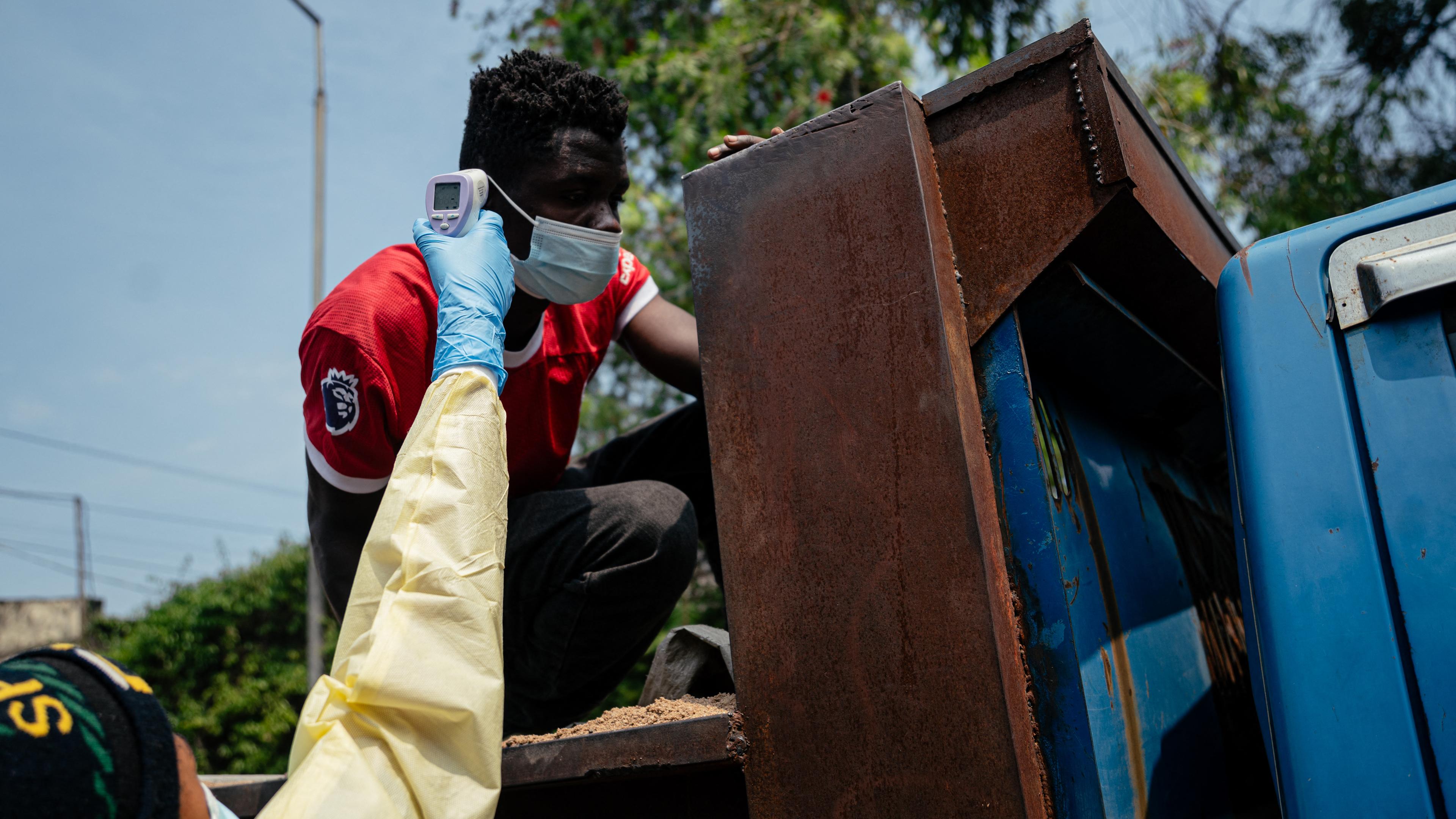
Two active outbreaks are highlighted: an Andes hantavirus event now involving people from more than 20 countries and an Ebola Bundibugyo outbreak in DRC that has killed 131 people and crossed at least one border. CEPI is seeking $2.5 billion to build vaccine-readiness infrastructure under its 100 days mission, with Singapore pledging $12 million over four years and the E.U. nearly 74 million euros over two years. The article is broadly risk-off for global health preparedness, but the market impact is more sector-level than economy-wide.
The market implication is not “pandemic fear” in the abstract; it is an incremental repricing of government and foundation funding toward preparedness infrastructure, which is a slow-burn revenue stream for selected tools-and-platform names rather than a one-off vaccine trade. The clearest beneficiary is MRNA, but the bigger second-order effect is that CEPI’s model validates pre-positioned manufacturing capacity, modular mRNA know-how, and rapid-response partnerships as strategic assets. That supports a higher-quality multiple for firms that can monetize platform optionality without needing a crisis to prove demand. The underappreciated loser is not a single public company but the budget mix: every dollar shifted into “always-on” pandemic preparedness competes with discretionary public-health spending and may further crowd out traditional procurement cycles. Over the next 3–12 months, this tends to favor companies with government-adjacent contracts, validated fill-finish/manufacturing capacity, and broad antigen/mRNA libraries, while smaller one-program biotech names remain exposed to funding volatility and binary trial risk. Geopolitically, outbreaks crossing borders raise the probability of emergency procurement, stockpiling, and travel-related containment measures, which can create short-lived spikes in diagnostics and protective equipment demand but usually mean-revert quickly. The risk is that investors overpay for the narrative before funding translates into orders. A lot of the capital here is multi-year, and without a near-term outbreak of a more transmissible pathogen, the earnings impact for most health-care beneficiaries stays modest; the catalyst window is days-to-weeks for headlines, but quarters-to-years for actual revenue. A contrarian view is that the market may be underestimating how much of the value accrues to manufacturing infrastructure and process IP, not just vaccine developers; the equity winners could be contract manufacturers and enabling-tech suppliers rather than the headline vaccine names. For MRNA, the asymmetry is better expressed as an options overlay than a large outright equity bet: upside comes from renewed platform relevance and preparedness contracts, while downside is limited if the newsflow fades. The better relative-value expression is long platform/manufacturing enablers versus short a basket of lower-quality vaccine/therapeutics names that depend on a single outbreak-driven catalyst. If preparedness funding accelerates, expect the re-rating to come first in forward revenue visibility, then in multiples; if it doesn’t, these trades should be trimmed within 1–2 quarters.
AI-powered research, real-time alerts, and portfolio analytics for institutional investors.
Request DemoOverall Sentiment
moderately negative
Sentiment Score
-0.30
Ticker Sentiment
