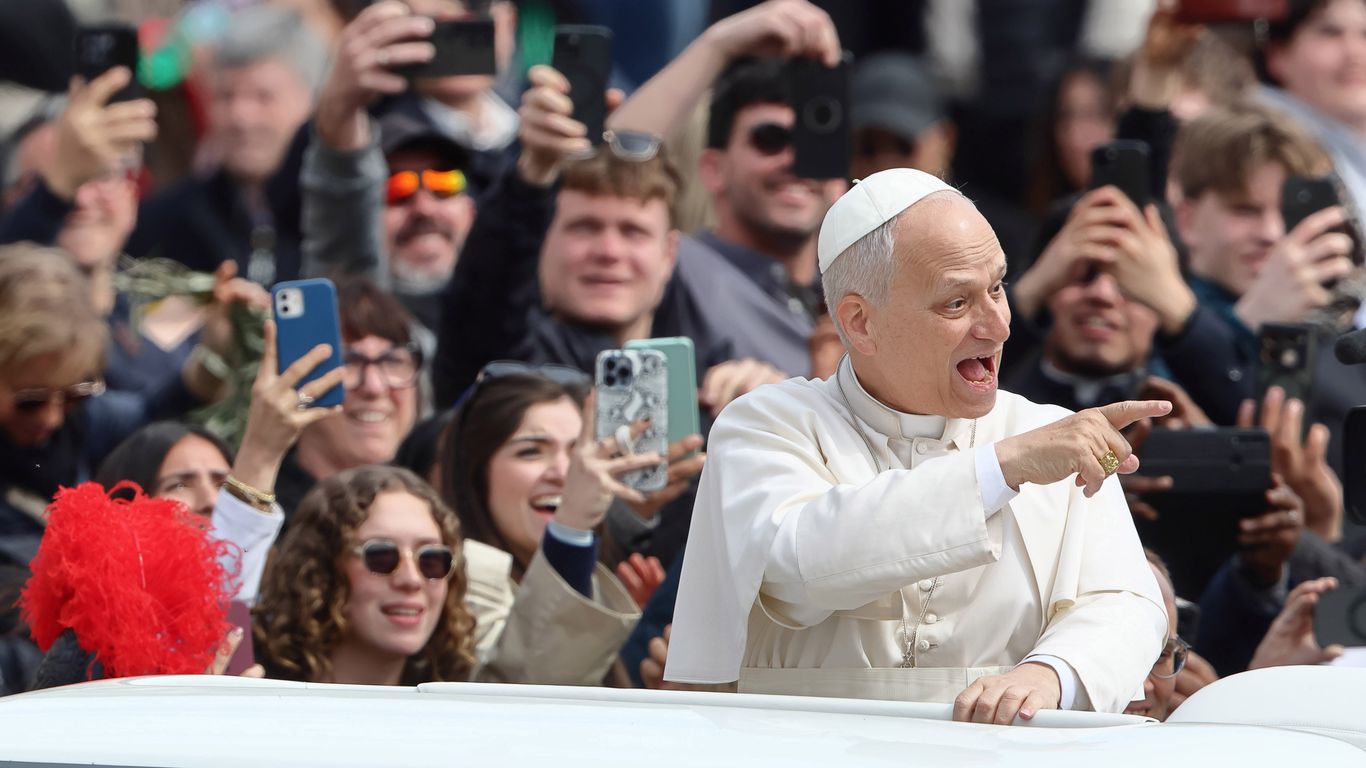
Pope Leo's fluent, native-level English is reducing the Vatican's traditional translation buffer, making his remarks land more directly in U.S. political and media channels. The article says this is amplifying backlash and could increase the pope's influence on American domestic politics, especially around immigration, Iran, and foreign policy. The piece is mostly analytical and has limited direct market relevance.
The market implication is not about the Vatican as an institution; it is about message velocity into U.S. political media. A pope who can speak in culturally native English shortens the feedback loop from statement to partisan weaponization, which raises the probability that Catholic voters, donors, and advocacy groups get pulled into campaign narratives faster and with less room for diplomatic de-escalation. That matters most in battleground states where a relatively small swing among observant Catholics can influence down-ballot races more than the presidential race itself. The second-order effect is asymmetric: the upside for media engagement is broad, but the downside is concentrated in organizations that rely on stable cross-partisan Catholic positioning. Expect more pressure on Catholic-affiliated nonprofits, diocesan communications, and education/charity networks when the pope’s remarks become shorthand for domestic culture-war debates. In practice, this can intensify reputational risk for Republican-aligned politicians who are Catholic, while also creating friction for Democratic Catholic coalitions if papal rhetoric hardens views on immigration, war, or social policy. The more interesting trade is that clarity is a double-edged sword. Precision reduces ambiguity but also reduces the Vatican’s ability to absorb shocks; a single offhand line now has a higher chance of becoming a durable narrative rather than a one-day headline. Over a 1-3 month horizon, the catalyst to watch is any message that maps cleanly onto U.S. electoral themes—immigration, war, or public morality—because that is when cable amplification becomes self-reinforcing and backlash can spread beyond religious media into fundraising and polling. Consensus is likely overestimating this as a ‘soft power’ win for the Vatican and underestimating the political fragmentation it can create inside U.S. Catholic institutions. The bigger risk is not that Leo becomes less influential; it is that his influence becomes more partisan, reducing his ability to serve as a broad moral arbiter and increasing volatility around every public appearance. That argues for treating the situation as a communications-risk event, not a theology story.
AI-powered research, real-time alerts, and portfolio analytics for institutional investors.
Request DemoOverall Sentiment
neutral
Sentiment Score
0.05
Ticker Sentiment
