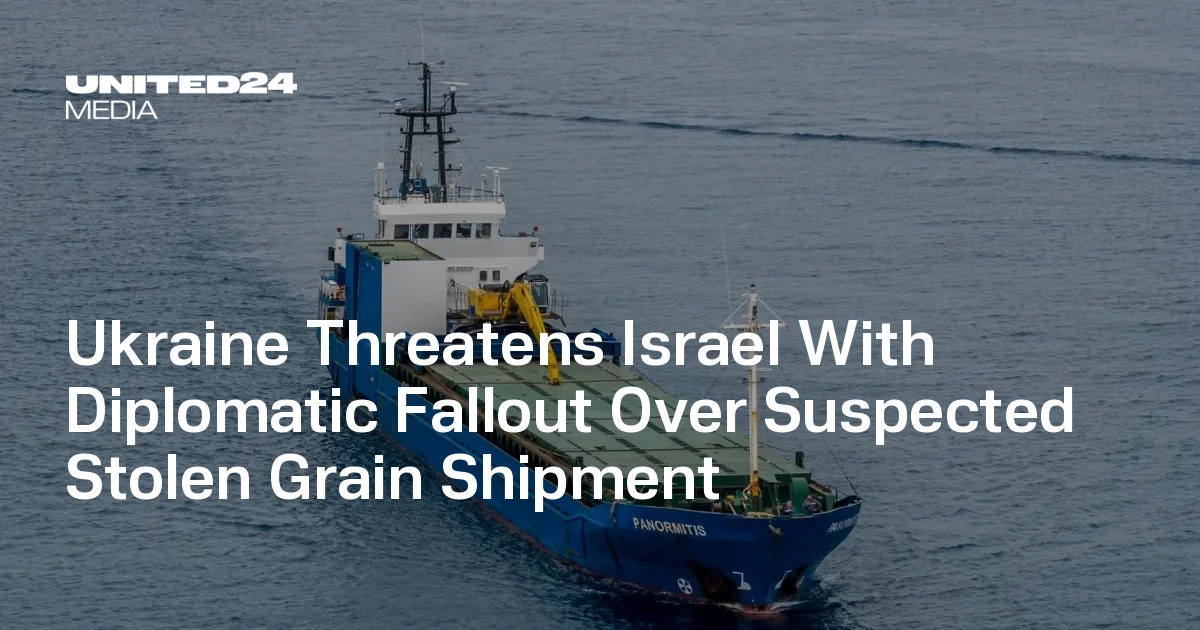
Ukraine has warned Israel of diplomatic consequences if the bulk carrier PANORMITIS is allowed to unload in Haifa, with officials alleging the vessel may be carrying more than 6,000 tons of wheat and 19,000 tons of barley from occupied Ukrainian territory. The dispute adds to prior cases involving alleged stolen grain shipments, including the ABINSK, which reportedly delivered more than 43,000 tons to Haifa after departing occupied Crimea. The issue is primarily geopolitical and legal, with limited direct market impact but some relevance for grain trade and shipping scrutiny.
This is less about one ship and more about a widening sanctions-enforcement gap that raises the expected cost of doing business in Black Sea-origin agri flows. The market implication is not a direct wheat rally so much as a higher risk premium embedded in maritime logistics, port throughput, and any counterparty with exposure to opaque origin certification. If Israel hardens screening, the immediate losers are transshipment hubs and ship-to-ship intermediaries; if it does not, the bigger second-order risk is reputational contagion for banks, insurers, and freight brokers that touch cargo with weak provenance controls. The key timing issue is that this is a diplomatic escalation with operational consequences over days to weeks, while enforcement tightening would play out over months. That creates a window where vessel delay, berth uncertainty, and compliance friction matter more than outright commodity prices. The most vulnerable assets are not grain producers but Baltic/Black Sea-linked dry bulk routes, niche marine insurers, and smaller logistics firms that cannot absorb documentation scrutiny or diversion costs. Contrarianly, the headline may be overstating the probability of a broad trade break with Israel. Buyers of staple cargo tend to optimize for supply continuity, so the more likely outcome is stricter paperwork, rerouting, and a modest increase in freight spreads rather than a permanent cutoff. The real tail risk is if this becomes a template for other destination ports, forcing a wider audit of cargo origin and pushing more grain into longer, less efficient routes that lift freight rates and working capital needs across the trade. From a portfolio lens, the cleaner expression is to own complexity rather than the commodity itself: the supply-chain opacity premium should benefit firms with scale, legal resources, and tracking capabilities, while hurting firms reliant on grey-zone routing. If enforcement broadens, watch for knock-on pressure on Russian-origin export channels and on any insurer whose book has elevated concentration in Black Sea transport. A durable resolution would require transparent chain-of-custody verification, so the downside to the risk premium is slow, not immediate.
AI-powered research, real-time alerts, and portfolio analytics for institutional investors.
Request DemoOverall Sentiment
mildly negative
Sentiment Score
-0.35
