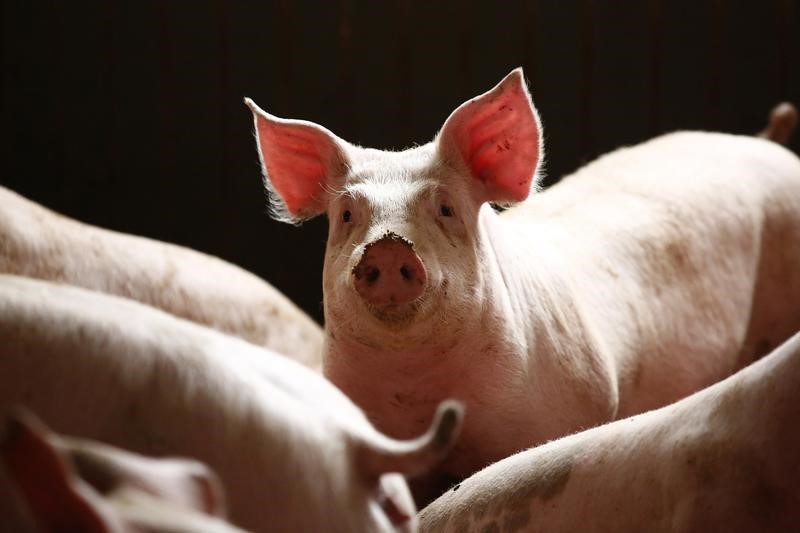
Muyuan Foodstuff rose 3.7% and peers Guangdong Wens, New Hope Liuhe and Fujian Aonong gained 1–3% as pork stocks outperformed while the CSI 300 and Shanghai Composite fell 1.1% and 0.8% respectively. China’s NDRC said it will start a second major batch of frozen pork reserve purchases this year to lift pork prices and support hog farmers amid oversupply and high sow inventories through late-2024 to mid-2025. Government purchases provide direct revenue support to producers and have been used repeatedly through 2025 and once in 2026.
Large, integrated hog producers with in-house cold-chain and slaughter capacity will enjoy outsized margin leverage if realized hog prices stay elevated; their fixed-cost base means a sustained 10–15% improvement in net selling prices typically translates into a 15–30% uplift in operating cash flow over 6–12 months. Scale also creates optionality to monetize inventory into higher-margin frozen channels and to negotiate better feed procurement terms, widening the gap versus small, spot market–exposed farms.
A near-term policy signal that stabilizes prices creates a classic cyclical moral hazard: producers respond to higher margins by accelerating breeding and capacity refurbishments, which historically amplifies the trough 9–18 months out as supply catches up. Cold-storage owners, refrigerated logistics providers and processors with freezer utilization will see demand spikes and potential price-inelasticity in storage rates; conversely, pure feed-input suppliers face ambiguous outcomes—higher hog prices boost demand for piglets but rising feed costs can compress integrated margins.
Key tail risks that can reverse the upcycle are (1) fiscal/operational inability to sustain price-support measures, (2) a planned release of inventories that depresses spot prices, and (3) a shock to feed costs (corn/soy) that re-raps margins—each can play out in 0–6 months for policy shifts or 6–18 months as herd dynamics evolve. Monitor reserve auction cadence, quarterly sow-inventory and cold-storage utilization data as high-frequency signals; probability-weight the policy reversal at 20–30% within six months given fiscal cycles.
The consensus currently underprices the structural timing mismatch: policy-induced short-term price support plus private-sector capacity expansion almost guarantees a pronounced supply bust later in the cycle. Tactical positioning should therefore capture the near-term upside while explicitly hedging the 9–18 month downside created by higher breeding intensity and potential reserve releases.
AI-powered research, real-time alerts, and portfolio analytics for institutional investors.
Request DemoOverall Sentiment
mildly positive
Sentiment Score
0.25
